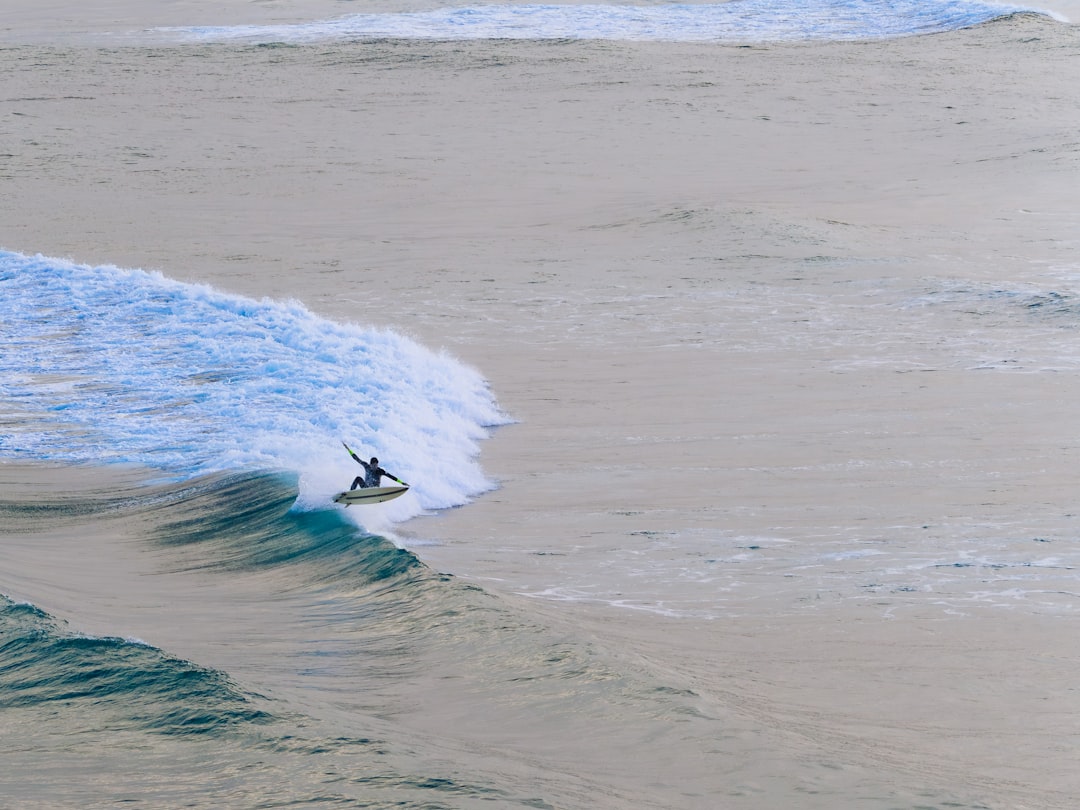
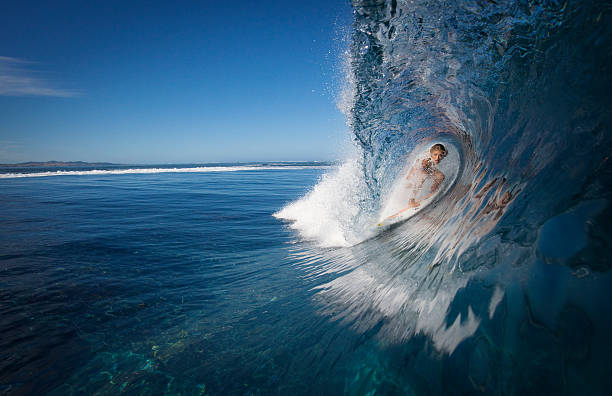
You paddle out on a glassy morning, the ocean a sheet of blue silk. You’re on a proper log, ten feet of foam and fiberglass, and the takeoff is stately, a slow-motion elevator to the sky. The drop feels like a gentle hill, and you’re already walking to the nose before the wave even knows you’re there. The next set comes, and your buddy, the one who swears by his five-eight performance shortboard, is already dropping in, a smudged line of speed, his fins nearly free as he buries a rail in the face. He’s on a different wave, a different planet, a different kind of stoke. This isn’t a war of right and wrong. It’s the great divide of modern surfing, the choice that defines everything you feel out there: the size of your ride.
When you talk about board evolution, you’re really talking about a single, simple idea that’s been twisted and toyed with for decades: volume. It’s not just length, not just width or thickness alone. Volume is the sum of all that foam, the total amount of displacement, the animal physics of how much of you sits on top of the water versus cutting through it. The old timers, the pioneers of ‘The Endless Summer’ era, they didn’t think about volume in liters. A board was a board. You rode what you could afford, and it was almost always a long, heavy plank of balsa or foam. Those boards were all volume, all float. They glided on the pristine, rolling points of the world, and the art was in the trim, the hang five, the subtle shift of weight that kept you locked into the curl for a mile. The evolution from those planks to the wafer-thin, super-pulled-in shortboards of the seventies and eighties was a war on volume. Surfers went from floating like a cork to paddling like a knife. Speed and maneuverability exploded, but the wave count? That plummeted for the average guy.
Fast forward to the modern age, and the industry realized what the soul surfers always knew in their bones: the right board for the right wave makes the difference between a session of pure stoke and a session of pure frustration. So, where do you fall on this sliding scale? Start with the concept of the “pocket.” A big, fat log with a ton of volume sits high in the water. You sit up like a king on a throne. Your paddling is effortless, you catch waves early, and your takeoff is a lazy, forgiving cruise. You’re not racing the wave; you’re letting the wave pick you up. This is the path to the long, drawn-out carve, the cross-stepping ballet, the pure, uncut soul of classic surfing. But try to jam a hard, vertical snap on that same log in a hollow, beach-break closeout, and you’ll be lawn-darted into the sandbank before you can blink. The board is too buoyant, too long to pivot.
Now, drop down to a tiny, highly-foiled shortboard with minimal volume. This is the race car. You sink lower in the water. Your paddle motor has to work twice as hard just to get moving. You need a wave with some push, some juice, to get you into the slot. But once you’re in? The connection is unreal. You feel every bump, every shift in the current through the soles of your feet. You can pivot off your fins, stall, drop in a micro-second late, and slash a turn that sends a sheet of spray halfway to the horizon. The sacrifice is the glide and the paddle-in count. You might catch half the waves your buddy on the retro single-fin catches, but the ones you do ride are explosive.
The real evolution, the secret handshake of modern board shaping, is the middle path. The hybrid, the “funboard,” the asymmetrical step-up. These are the boards that chase the sun. A 6’8” with a bunch of width and foam under the chest paddles like a longboard but turns like a much shorter craft. You can take it to a mellow point break or a punchy reef. It’s a chameleon because it fudges the volume number. The industry realized that a lot of surfers don’t want to be a specialist, a devotee of a single temple. They want to travel, to chase swells from a classic California point to a slab in Mexico, and they want one board that can do it all. The golden rule of volume is that it dictates your available wave count and your speed. More volume gives you glide and early entry. Less volume gives you control and pivot. The trick is to find the sweet spot where you don’t feel like you’re fighting the foam on the drop, but you’re not floating helplessly above the critical section of the wave.
It all comes back to the feeling. You can spend an afternoon on a tiny, high-performance stick and scratch your brain trying to figure out why you feel so paddled out and frustrated, only to paddle in, grab the fat, egg-shaped thruster from the back seat of the van, paddle back out, and catch a dozen dreamy runners on the shoulder. It’s not about which is better. It’s about which board makes the machine of the ocean feel like a part of you. The evolution of board size is simply the evolution of our desire to feel that connection, to glide or to shred, to dance or to sprint. Choose your volume for the wave you’re riding today, and you’ll always be chasing the endless summer sun.