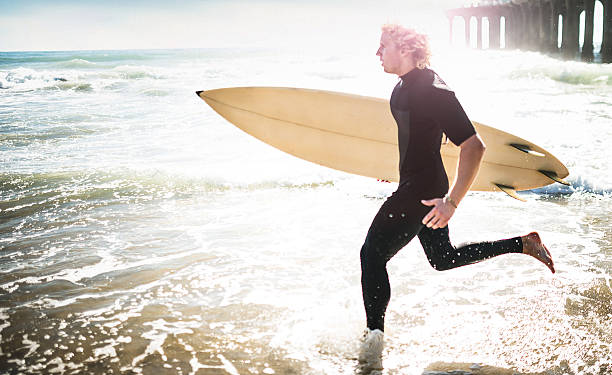
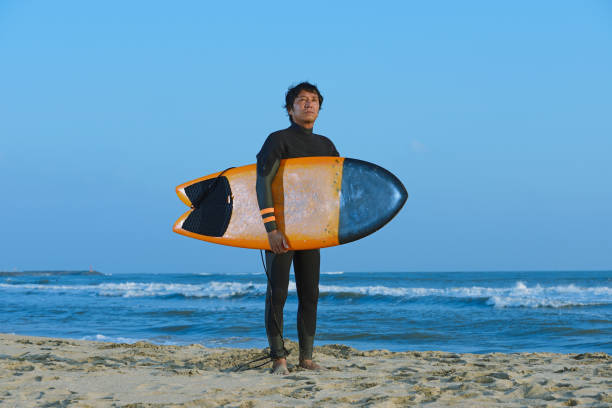
There’s a feeling that hits you before the first set even rolls in. Maybe you’re checking the forecast on your phone while your coffee goes cold, or you’re standing on the bluffs at dawn, squinting at the horizon. Your heart starts to beat a little faster, your shoulders loosen, and that familiar grin spreads across your face. That, brother, is the froth. And nothing—absolutely nothing—gets a surfer frothing like a solid groundswell. It’s the difference between a choppy, windblown mess you paddle out on because you’re desperate, and the kind of day that makes you call in sick, load up the boards, and chase the open road until your tires sing.
To understand why groundswells set our souls on fire, you gotta get the basics. Swells are born out in the deep blue, kicked up by storms that rage across thousands of miles of ocean. A windswell is what you get when local winds have been howling for a few hours—short period, messy, often unpredictable. Sure, you can surf it. But it’s like eating instant noodles when you’re craving a slow-cooked fish taco. A groundswell, on the other hand, is the real deal. It comes from far away—sometimes halfway across the Pacific—and it’s been traveling for days, organizing itself, getting cleaner and more powerful as it moves. The period between waves stretches out to fourteen, sixteen, even twenty seconds. That means each wave carries more energy, more face, more potential for a barrel that you can live inside. That’s the kind of wave that makes your spine tingle before you even touch the water.
When a groundswell arrives, the whole lineup changes. The energy is deeper, more consistent. You can feel it in your gut standing on the beach. The sets come in with authority, pushing through the outer reefs like they own the place. The ocean looks different too—darker blue, with long, organized lines marching toward the coast. Surfers start showing up from every corner, waxing their boards with purpose, eyeing the takeoff zone with a mix of respect and hunger. The chatter on the beach gets quiet, replaced by the low hum of anticipation. That’s the froth in its purest form: a collective, unspoken excitement that bonds everyone in the lineup, from the grom on a foamie to the local charger who’s seen a thousand swells.
Now, the real magic of a groundswell is how it interacts with the bottom. A long-period swell wraps around headlands, bends over reefs, and stands up tall over sandbars. It pulls shape out of the ocean floor in ways a local windswell just can’t. You get those perfectly peeling walls that let you draw long carves or drop into a deep tube. The wave doesn’t just break; it breathes. You can feel the pulse as you paddle for it, that moment when the lip pitches and you’re either in the green room or eating foam. That’s the stoke that keeps us coming back, swell after swell. And when you finally pull into a hollow barrel on a groundswell day, the sound is different—more hollow, more throaty, like the ocean is cheering for you.
But it’s not just the wave quality. It’s the whole experience. A groundswell tells a story. You know that somewhere out in the North Pacific, a low-pressure system spun up for days, generating waves that crossed the ocean just to break on your local reef. There’s a connection to the planet that’s hard to put into words, but every surfer feels it. You’re riding energy that started as wind and has been traveling non-stop, losing nothing but gaining power. That’s heavy. It makes you humble. And it makes you froth like a kid on Christmas morning.
The culture around groundswells is its own thing. Surfers talk about them in hushed tones, like secret treasures. You’ll hear phrases like “long-period groundswell from the northwest” thrown around in parking lots and coffee shops, each word carrying weight. Forecast discussions become rituals. Buoy readings get studied. Charts get pulled up on phones, fingers tracing the path of the swell. The frothing builds over days, peaking when the first sets finally arrive. And when the swell peaks, the whole coast feels alive. People who haven’t surfed in months dig out their wetties. The car park fills up. The vibe is electric.
Sure, there are downsides. Crowds get thick on a groundswell day. Localism can flare. And if you’re not in the right spot, the crowd might be the only wave you catch. But even that is part of the deal. The froth is contagious. You see a lineup stacked with surfers all buzzing on the same energy, and you can’t help but paddle out, even if it’s a battle for every wave. Because when you do get one, it’s a memory that lasts a lifetime.
So next time you see a forecast with a long-period groundswell on the way, don’t fight it. Let the froth take over. Pack the boards, gas up the van, and head to the coast. The ocean’s about to serve up something special. And when you’re sitting out the back, staring at a glassy horizon line, feeling that deep pulse under your board, you’ll understand why we chase it. That’s the endless summer in its truest form—the groundswell, and the frothing that comes with it.