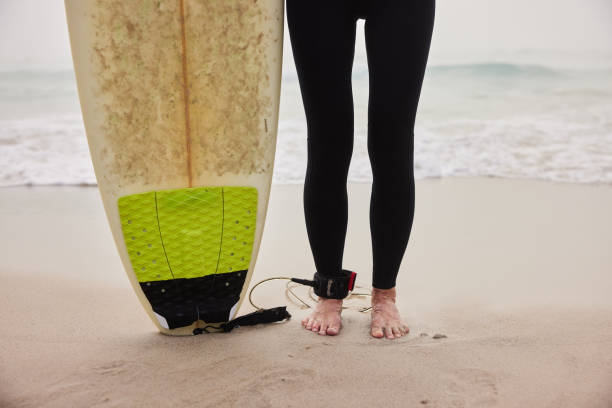
You ever paddle out on a buddy’s board and feel like you’re riding a pool noodle? Or hop on something that feels like a greased-up plank of glass that sinks the second you stop kicking? That’s volume talking, bro. It’s the single most underrated spec in surfing gear, yet it’s the difference between catching every wave that rolls through and spending your session doing the frantic dog-paddle while the set passes you by. Volume ain’t just about float; it’s about how the board interacts with your body weight, your stance, and the type of waves you’re chasing. Get it right, and you’ll be stoked. Get it wrong, and you’ll be wondering why you ever traded in your log for a toothpick.
Let’s break it down in real surfer terms. Volume is measured in liters, and it tells you how much foam your board has—basically, how much water it displaces. A longboard can push fifty, sixty, even eighty liters. A high-performance shortboard for a 170-pound ripper might hover around twenty-five to thirty. The sweet spot depends on your weight, skill level, and the conditions you ride most. But here’s the thing: volume is not just about being able to paddle. It’s about how the board sits in the water when you’re lying prone, how it plans when you start to stroke into a wave, and how it feels under your feet when you pop up.
If you’re a beginner or an intermediate surfer, the number one mistake is going too small. Everyone wants to look like John John on a tiny thruster, but that low-volume board sinks like a stone if you don’t have the paddling power to match. You’ll tire out faster, catch fewer waves, and get frustrated. Meanwhile, your buddy on a funboard with ten more liters is already up and trimming, laughing at the lip. That’s not a flex—that’s physics. More foam means more buoyancy, which means you need less paddling effort to get into a wave. That early entry lets you position deeper, drop in later, and still make the section. It’s like having a cheat code for wave count.
But volume isn’t a one-size-fits-all. Too much foam can make a board feel corky and sluggish. You’ll bounce around on the face, have trouble sinking the rail for a hard turn, and lose that connection to the water that makes surfing feel smooth. That’s why experienced surfers often ride boards with less volume than their weight suggests—they want to sink the board, engage the rail, and generate speed through rail-to-rail transitions. But they also know that a board with too little volume will bog down in weak, mushy waves. That’s where the magic of a proper quiver comes in.
Think about it like this: volume is your board’s engine displacement. A big motor for small, slow waves. A smaller motor for steep, powerful ones. On a knee-high slop day, you want that big floaty hull to glide over flat sections and catch even the weakest pulses. On a six-foot point break with a hard wall, you want something that sinks and bites so you can drive off the bottom and snap the tail. The best surfers in the world often ride boards that, by the numbers, look ridiculously small—twenty-five liters for a 180-pound guy, which would be a leg-breaker for most of us. But they have the fitness, the paddle speed, and the timing to make it work. For the rest of us, a little extra foam is a gift that keeps on giving.
The real secret sauce of volume lies in the distribution. A board can be high in total liters but shaped with a lot of foam in the nose and a thin tail. That helps with paddle power and wave-catching, but still allows you to sink the tail and turn aggressively. Or you can have a board with foam pushed toward the middle and a pulled-in nose, which gives you a pivot point for tight, vertical snaps. Knowing the difference between “floaty” and “corky” comes from understanding how the volume is spread, not just the total number. That’s why you should always, always check the board’s rocker and outline before buying based on liters alone.
Your weight is the anchor point. A general rule: take your weight in pounds and divide by ten to get a rough liter starting point for a shortboard. So a 180-pounder might look for eighteen liters? No, that’s way too low. Actually, many shapers suggest starting at your body weight in kilograms plus twenty liters for a shortboard. For a 180-pound guy (about 82 kg), that’s around 102 liters? That’s absurd. Let’s get real. A better rule: for a standard shortboard, aim for liters equal to your weight in pounds divided by three and a half. So 180 / 3.5 = about 51 liters? That’s still too high for a shortboard. The reality is that volume charts vary wildly. Most intermediate surfers around 180 pounds will ride a shortboard between 28 and 35 liters. A step-up board might be 32 to 38. A groveler or fish might be 35 to 42. A funboard is 45 to 55. A longboard is 60+. The key is to match the volume to the wave type and your fitness.
Don’t be afraid to add a few extra liters to your next board, especially if you’re over forty, surf once a week, or mostly ride soft slow waves. You’ll paddle easier, pop up smoother, and have way more fun. And isn’t that the whole point? We ain’t competing for world titles. We’re chasing that endless summer feeling, catching as many waves as our arms can handle, and riding them with a smile. Volume is the silent partner in that equation. Respect the foam, and the foam will respect you back.