There’s a certain magic to a sandbar that you just don’t get from a reef pass or a point break. The reef is patient, holding its line through millennia. The point wraps the same corner with dependable grace. But a sandbar? She’s a fickle lover. She shifts with every storm, every spring tide, every big south swell that humps her up and then steals her away. And out of that constant flux, a local surf scene is born with a vibe you can’t fake.
Every dawn patrol crew that paddles out at a rivermouth knows the drill. You park your rig, kick off your flip-flops, and stare at the horizon like it’s got all the answers. The sandbar decides. The takeoff zone might be fifty yards south of where it was last week. The tide window might be completely different. There’s no printed chart for this kind of break. You just have to read the water, feel the pulse, and let the bank talk to you. That’s exactly why the regulars get so tight.
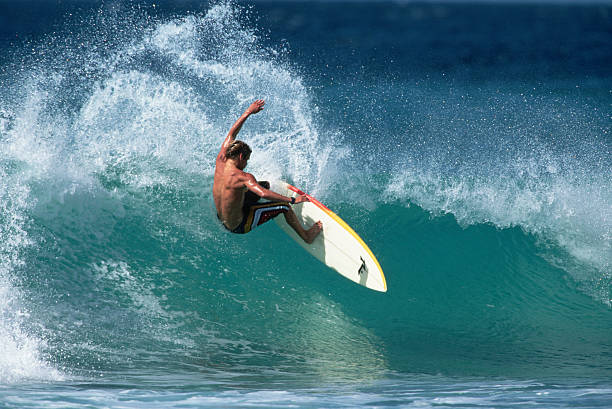
When the sandbar is fat and lined up, the whole lineup feels like a family reunion. The waves pitch hollow, dredging a perfect little barrel that spits sand and spray. Guys and gals hoot each other into bombs. There’s no room for kooks or drop-ins because the wave is so sectiony that you’d just burn your mate. Instead, you take turns, trading off shifty peaks. The channel becomes a lazy river where you float back out, sharing stories of the one that got away.
But the real soul of a sandbar shows up when it’s shitty. When the swell is too big or too north, the bank washes out flat. The surf dries up, and the lineup empties. That’s when the community gets tested. The diehards still sit out there, texting each other from the water, comparing notes on the current. They know the sandbar isn’t gone, just resting. They understand that the ocean’s a living thing, and you have to roll with her moods.
That’s what sets a sandbar’s local scene apart. The uniqueness of the vibe comes from the impermanence. You can’t just show up and expect the same wave every day. So the locals develop this incredible intuition. They watch the swell direction, the wind, the tide. They study the sand movement, noticing where the current carves a new trough or where a new berm is building. They pass that knowledge down through stories, not manuals. The old guys in the parking lot with the rusted longboards become living encyclopedias of the sandbar’s history.
And when the sandbar finally comes back, after a winter of swells piled on top of each other, the stoke is pure. It’s like reuniting with an old friend. The lineup is thick with familiar faces, guys you haven’t seen in months. The first clean glass on a new bank feels like redemption. Hours get lost in the rolling peaks, and the water temp doesn’t matter. You feed off the excitement of the group, the shared secret that this break, this impossible shifting slab of sand, is yours.
There’s a humility that comes with surfing a sandbar too. Because no matter how good you think you are, the sand can turn on you. A perfect-looking wave can close out without warning. A sick barrel can pinch you and put sand in your ears. That keeps egos in check. Unlike a heavy reef where locals claim territory based on seniority, a sandbar earns respect based on patience. The surfer who reads the changes, who adapts, who’s willing to sit out the flat spells, that’s the one who leads the pack.
So when you paddle out at a sandbar, remember you’re not just surfing a wave. You’re surfing a living, breathing relationship between the river, the sea, and the people who’ve fallen in love with its ever-changing face. The community that forms around it is bonded not by a fixed point on the map, but by the shared experience of chasing a perfect bank that may never come back the same way twice. And that’s the beauty of it. The sandbar never lets you get comfortable. It keeps you humble, keeps you sharp, and keeps you coming back for the next chapter of a story that’s written one shifting peak at a time. That’s the unique vibe of a sandbar local scene. It’s not about owning the lineup. It’s about living with the rhythm of the sand, accepting that nothing stays the same, and finding your stoke in the endless dance of moving water and moving ground. The community doesn’t rely on the wave staying put. It relies on the shared love for the mystery of what tomorrow might bring. And that, my friends, is the soul of a sandbar.