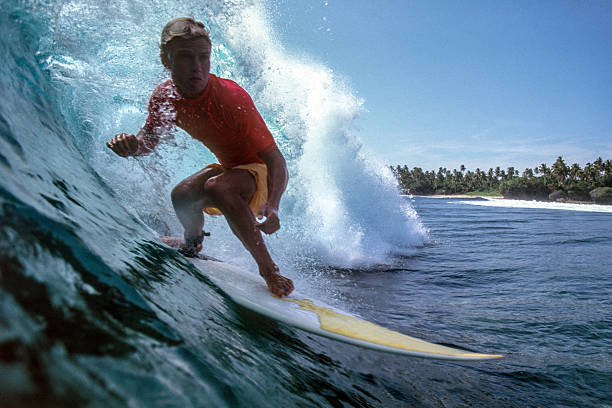
There’s a moment every surfer knows, the one that happens right before you paddle out. You’re standing on the sand, waxed up, leash tied, staring at a rolling, breathing ocean. The water isn’t just water out there. It’s a stage, a cathedral, a proving ground, and a therapist all rolled into one messy, salt-soaked package. And once you paddle past the foam, you’re not just entering the ocean. You’re entering the lineup, a living, moving space with its own set of rules that nobody ever taught you in a manual. You learn them by watching, by getting burned, by sitting in the lineup long enough to feel the vibe. Because surfing, at its core, has never been just about riding waves. It’s about how you carry yourself in that liquid room, and the unwritten code that keeps the whole thing from turning into a total free-for-all.
The lineup is a sacred space because it’s a rare place in modern life where respect still rules. Not the kind of respect you get from a badge or a title, but the kind earned by sitting patiently, taking your turns, and knowing when to pull back. The first rule is simple: the first surfer on the inside has the right of way. If someone is already up and riding toward the peak, you don’t drop in on them. That’s the cardinal sin, the quickest way to get a board thrown at your head or a very unfriendly conversation after you paddle in. It’s not about being aggressive. It’s about acknowledging that the ocean doesn’t belong to anyone, so every surfer has to take a slice of humility with their paddle out. When you respect the right of way, you’re respecting the person next to you, the wave itself, and the shared understanding that everyone out there is chasing the same stoke.
But the code goes way deeper than just who goes when. There’s a rhythm to a good lineup, like a band that’s been playing together for years without ever rehearsing. You learn to read the sets, feel the lulls, and position yourself not just to catch the biggest wave, but to be in harmony with the other souls bobbing around you. When someone makes a sick turn or a long barrel, you hoot. You hoot because that energy feeds the whole lineup. The ocean gives, and you’ve got to give back in the form of pure, unfiltered hype. That’s the stoke, and it’s what separates surfing from every other sport on the planet. Nobody hoots at a golfer for a nice putt. But out in the lineup, a deep barrel is a shared victory, a moment where the whole water holds its breath and then erupts in joy.
Localism is another part of the code, and it’s often misunderstood. Yeah, there are spots where the local crew gets salty and territorial, and that can get gnarly. But the real idea behind localism isn’t just about guarding waves. It’s about guarding a culture. A local lineup has its own history, its own seasons, its own sandbars that shift with every storm. When you paddle out at a new break, you should take time to sit wide, watch how things work, and show respect to the regulars. You don’t have to kiss anyone’s ring, but you’ve got to acknowledge that you’re a guest in their living room. Once you earn that respect, once you share a few waves and laugh at a wipeout, you become part of the tribe, and that’s a beautiful thing.
The lineup also teaches you patience, and that’s a spiritual lesson that bleeds into everyday life. You sit there, drifting in the swells, and you wait. The ocean doesn’t care about your schedule or your deadlines. It breaks when it breaks, and you learn to let go of control. That’s a huge part of surfing culture, the acceptance that you can’t force anything. You just have to be ready, present, and open to whatever the ocean sends your way. That patience, that willingness to wait for the right wave, becomes a way of moving through the world. You stop chasing everything and start trusting the process.
Today, surfing has exploded into a global industry with contests, sponsorships, and boards that cost more than a plane ticket to Bali. But the code remains unchanged. Walk into any lineup from Malibu to Mundaka, from Teahupo’o to Bells Beach, and you’ll find the same quiet understanding. Paddle with purpose. Don’t snake your buddies. Share the stoke. Take the beatings with grace. And once in a while, when a glassy set rolls through at sunset, remember that you’re not just riding a wave. You’re riding a tradition that’s been passed down since the first Polynesian surfers stood up on wooden planks. The lineup is sacred, not because of any religion, but because it’s one of the last places where the soul gets to be raw and real. So next time you paddle out, breathe it in, give a nod to the surfer next to you, and live the code. The ocean will thank you.