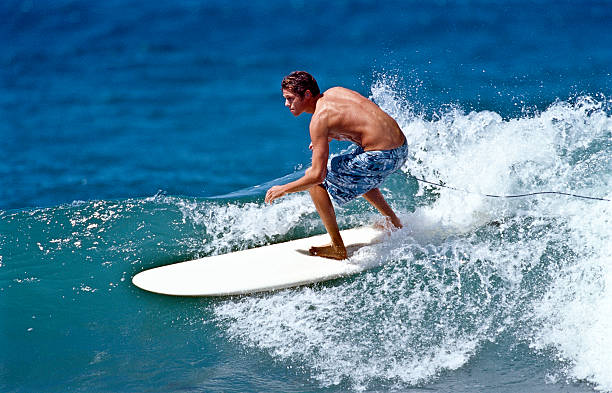
When you’re out there, paddling hard into a set wave that’s jacking up fast, the last thing on your mind is the stuff holding you to your board. But without it, you’d be sliding off faster than a seal on ice, pearling into the foam with your fins whistling past your ear. Surf wax is that quiet hero, the unsung layer between your feet and the glassed foam, and it’s got a story that’s as gnarly as any three-hour session in pumping overheads. This ain’t just about keeping you from slipping. It’s about the ritual, the science, and the soul of staying glued to your stick when the wave decides to throw you a barrel.
Let’s go back to the early days, before the big brands and the color-coded blocks. Back in the fifties, when surfboards were heavy logs of balsa and redwood, the boys at Waikiki and San Onofre were using paraffin candles to get traction. You’d rub a candle across the deck, and if you were lucky, it’d last maybe one wave before your feet started creeping. That was the start of it all, but the real revolution came when a guy named Jack O’Neill—or maybe it was a local shaper, depending on who you ask—realized you could mix in a little something to make it stick longer. Then came the dedicated wax companies, and suddenly you weren’t just buying a candle from the grocery store. You were picking up a block of Sex Wax, Mr. Zog’s, or Sticky Bumps, each with its own scent, its own color, its own secret recipe.
Now, if you’ve ever watched a seasoned surfer wax a board, you know it’s a ritual. It’s not just slapping on a coat and calling it good. You start with a basecoat, a rough layer that creates little bumps or beads of wax that give you that micro-grip. You rub in circles, then cross-hatch it with diagonal strokes, building up a texture that feels like sandpaper under your feet. Some guys swear by a heavy basecoat and a lighter topcoat. Others prefer a single thick layer that they re-scrape every few sessions. And then there’s the eternal debate: do you wax from the nose to the tail, or from the rails inward? The answer depends on whether you’re a goofyfoot or a regular, but really, it’s about what feels right under your soul arch.
The chemistry of wax is a whole other story. Different waxes are formulated for different water temperatures. Tropical wax for warm water like Bali or Hawaii has a higher melting point so it doesn’t turn to goo in the heat. Cold water wax for NorCal or the UK is softer, stickier, so it stays tacky when the ocean is frigid. There’s also “all-temperature” wax, which is, let’s be honest, a compromise that works okay but never perfect. And then there’s the basecoat, which is harder and designed to stay on the board for weeks while you only reapply the top layer. It’s like a relationship—you need a strong foundation, then you can refresh the surface without starting from scratch.
But wax isn’t just about function. It’s part of the culture. That smell of fresh wax—coconut, bubblegum, or some mysterious tropical scent—is the smell of anticipation. It’s that moment in the parking lot before dawn, when you’re rubbing a block into your board and feeling the sun start to crack the horizon. It’s the sound of your fingers running over the beads, that satisfying scratch that tells you your grip is ready. And when you’re out there, dropping into a steep face, your toes digging into that textured surface, you feel a direct connection to every surfer who ever did the same. From the old school soul surfers riding longboards with their feet glued to the nose, to the progressive shortboarders throwing fins and hucking airs, wax is the common denominator.
Of course, you gotta take care of your wax. Sun will melt it, sand will dull it, and too much water pressure from a hose will strip it right off. I’ve seen guys spend a whole session with slipping feet because they didn’t clean off last week’s glob and put on a fresh basecoat. You don’t want to be that person, sliding into a cutback and losing your edge because the wax turned into a slick patina. A simple rub with a wax comb or a scraper can bring back the texture, and if you’re really committed, you’ll strip the whole deck clean once a month and start over. It’s a labor of love, but so is everything about surfing.
So next time you paddle out, give a little respect to that block of colored wax in your boardies pocket. It’s more than just sticky stuff. It’s the grip that lets you feel the wave through the foam. It’s the tradition that ties you to the endless summer. And when you’re locked in, carving a line off the bottom, you’ll know that sometimes the smallest things—a little traction, a little texture—make the biggest difference. Stay stoked, stay stuck.