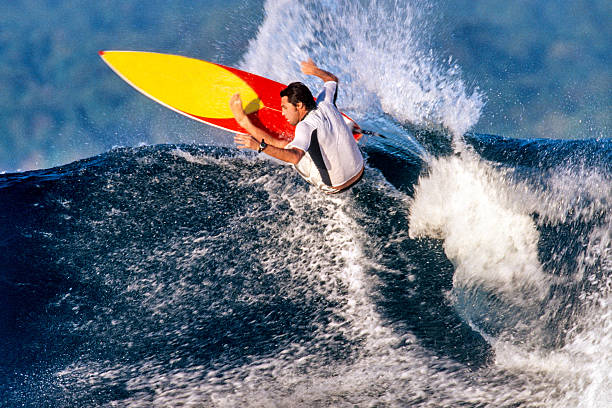
There’s a certain magic in rolling up to a break you’ve never seen before, solo, with no local buddy to whisper the secrets in your ear. The ocean looks the same everywhere, but it never acts the same. Each wave has its own personality, its own mood, its own rhythm. When you’re alone, you don’t have the luxury of a guide, but you do have something better: your own senses, sharpened by the simple fact that nobody else is going to look out for you. Reading a new lineup by yourself is a skill that separates the wandering soul from the tourist, and it’s a skill you can develop long before you ever paddle out.
First off, you don’t touch the water until you’ve spent a solid ten to fifteen minutes just watching from the sand. That’s not wasted time, it’s reconnaissance. You want to stare at the horizon and see where the swells are breaking. Notice if the waves are crumbling all at once, which means a soft, mushy bottom, or if they’re pitching hollow and spitting, which tells you there’s a sandbar or reef doing its thing underneath. Look for the dark, deeper water that runs like a vein through the surf zone, that’s your channel, the freeway back out to the peak. If you see other surfers, watch them, not to copy them, but to understand the rhythm of the sets. Count the lulls. A typical cycle might be a minute of flatness followed by a cluster of three or four waves. Once you know the clock, you can time your paddle out so you aren’t caught inside by a clean-up set on your first breath.
When you finally paddle out, take your time. Don’t charge straight for the takeoff zone. Instead, sit a little wide, on the shoulder, and let the lineup show itself to you. Watch where the other surfers are sitting and notice who catches the most waves. That surfer isn’t lucky, they’ve read the sandbar shift that happened after the last high tide. Move slowly toward them, but keep your distance, nobody likes a stickler who drops in on the first wave they see. If there are locals, and there are always locals, let them take the first few sets. It’s not brown-nosing, it’s respect, and it buys you the goodwill you need to share the peak for the rest of the session. Pay attention to how they angle their takeoffs. If they’re going left, the swell might be wrapping around a point, and the right might be a closeout.
Reading a new break solo also means understanding the wave’s personality in relation to the tide. A wave that is a perfect A-frame at low tide can turn into a fat, unmakeable wall at high tide. The same wave that barrels on a dropping tide can turn into a washing machine when the water drains out and exposes a shallow reef. Never assume a break will work the same way as the one you left at home. The best thing you can do is paddle out on a medium tide, somewhere in between high and low, so you have wiggle room to watch the wave change as the water moves. And always keep an eye on the horizon for the dark lump that means a bigger set is coming. If you’re sitting too deep and you see it, paddle hard for the shoulder, because that wave is going to land on your head if you don’t.
The ultimate solo surf travel tip is simply to trust yourself. You have the stoke in your blood, you’ve done this before, even if it was at a break you knew by heart. The ocean doesn’t change its rules, it just changes its address. If you watch patiently, paddle with purpose, and show respect to the lineup, the wave will give you the ride you deserve. And when you finally catch that first clean one, all alone in a place you’ve never been, smiling ear to ear as you glide across a face of water that has no idea who you are, you’ll understand why we chase the sun in the first place.