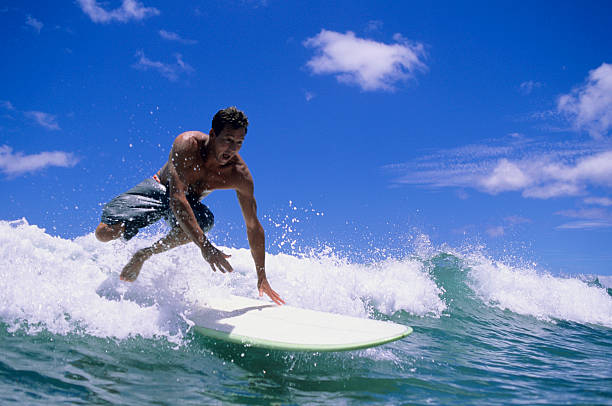
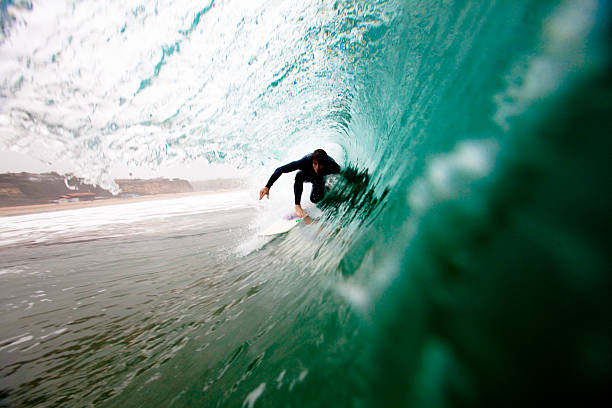
You know the feeling. You’ve got a decent pop-up. You can catch a wave on your own most of the time. You can ride down the line, maybe even trim for a second or two before the wave closes out on you. But something’s missing. You’re stuck in that gray area between being a total kook and actually feeling like you belong in the lineup. You’ve got the basics, but you can’t seem to find the flow. That’s the intermediate hump, and brother, it’s a real thing. Most surfers hit this wall and never really get past it. They paddle out day after day, doing the same moves, making the same mistakes, and wondering why the glassy, perfect chest-high waves feel just as awkward as the choppy closeouts. The answer isn’t more time in the water. It’s smarter time in the water. And the absolute best way to crack that code? Getting yourself into a solid surf camp.
A lot of folks think surf camps are just for beginners. They picture a lineup of soft-tops and instructors yelling “paddle paddle paddle” into the wind. But the real magic of a good, world-class surf camp is when you’re already past that stage. When you show up with a decent foundation, the coaching becomes about nuance. It’s about the tiny adjustments that separate a functional surfer from a fluid one. A camp gives you something you just can’t get on your own, which is an outside set of eyes watching you from both the beach and the water. You might think you’re keeping your weight centered and your shoulders square, but a good coach sees you leaning back on your heels as you drop in, sees that little flinch that kills your speed before you even start. They see the subtle timing of when you’re popping up, how you’re placing your hands on the board. These are the micro-movements that a video on your phone just can’t diagnose.
Beyond the technical fix, a camp forces you into consistency. When you’re on a surfing holiday on your own, it’s easy to let the session slip if the wind is a little offshore or you got a late start. At a camp, you’re on a schedule. You’re in the water for two, maybe three sessions a day. That kind of volume is the secret sauce. You surf until your arms feel like noodles, then you eat a pile of rice and beans, and you paddle back out. Your body starts to remember the movements at a muscle-memory level that an hour-long dawn patrol once a week could never touch. You stop thinking about where your feet go. Your body just does it. That’s when the real riding starts.
Another big part of leveling up in a camp setting is the psych. You’re surrounded by other surfers who are chasing the same wave. You watch them. You see them nail a bottom turn, or get a clean barrel, or struggle with the same section you struggled with. You talk about it after the session, looking at the surf report, maybe watching a replay on the camp’s GoPro footage. That shared stoke is contagious. It pushes you to try a little harder, to drop in on a wave that’s a little bigger than your comfort zone. The camp creates a safe container for pushing limits. You know there’s a coach in the water who can paddle over and give you a tip, or just yell “go, go, go” when you’re hesitating on the shoulder. That confidence boost is priceless.
And let’s not forget the gear. A top-tier camp will have a quiver of boards that are dialed in for the local break. You’re not fighting a wobbly rental that feels like a log. You can try a step-up board for the bigger days, a groveler for the small mushy stuff, a proper shortboard for the hollow peaks. You get to actually feel what a board is supposed to do when it’s properly glassed and sized for your weight and skill level. That experience alone is worth the price of admission. You’ll leave the camp knowing exactly what kind of stick you need to buy next.
So if you’re stuck in that ugly middle ground where surfing is still a struggle but you’re too proud to call yourself a true beginner, do yourself a favor. Book a week at a surf camp that specifically advertises intermediate coaching. Don’t just go to a party spot. Go somewhere that has a solid, consistent swell and a crew of coaches who are legit. Leave your ego on the beach, listen to what they tell you, surf three sessions a day, eat well, sleep well, and repeat. By the end of the week, you won’t be the same surfer. You’ll feel the glide. You’ll feel the connection between your body and the wave. You’ll finally understand what it means to truly ride, instead of just surviving. That’s the breakthrough. That’s the endless summer.