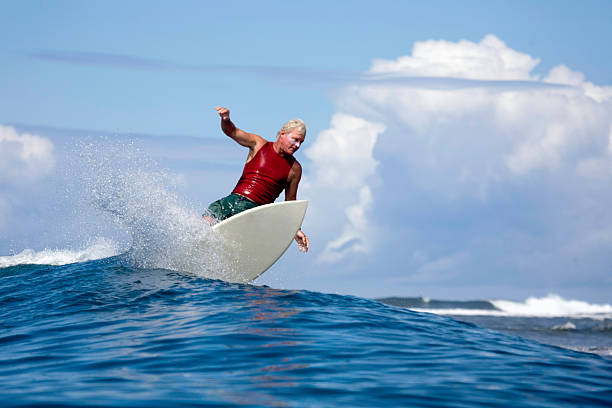
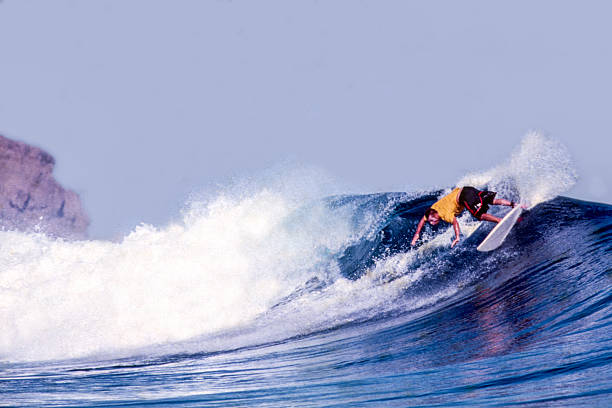
When you think about the Shortboard Revolution of the late 1960s and early 70s, you probably picture the first tube-hunting, rail-to-rail gouges, the radical pivot turns, and the shaving down of foam into those sleek seven-foot guns. But amidst all the hype about dropping length and squaring off tails, there is one humble piece of fiberglass that was the absolute key to unlocking all that new school madness: the single fin. Let’s be real, before the twin fin and the thruster came along to change the game yet again, the single fin was the anchor, the rudder, and the engine that let the first generation of shortboarders take their first real drive down the line.
Back in the longboard era, that big center box was just a stability tool. You had a big, heavy piece of glass hanging off the back to keep that twelve-foot log tracking straight. It was all about trim and glide. But when Nat Young and Bob McTavish started chopping down their boards into the “Plastic Machine” and “V-Bottom” designs, that big single fin suddenly had a whole new job. It wasn’t just for going straight anymore. It became the pivot point. When you sank that back rail and put your weight on the inside edge of that board, that single fin became the center of a circle. It was the fulcrum that allowed a surfer to whip the nose around faster than a log ever could. The whole concept of “turning” changed from a slow, sweeping arc into a tight, explosive hook.
The beef of this evolution came in how the fins were built. Shapers like George Greenough were experimenting with extremely high-aspect-ratio fins. They were skinny, deep, and almost like a dolphin’s dorsal fin. These weren’t the flat, slab-like fins of the fifties. These were foiled. They had a convex side and a flat side, creating a proper foil that generated lift. That lift is what gave the shortboard its “drive.“ As you turned, the water moving across that foil actually pulled the tail of the board around, rather than just dragging it. It was pure physics, but to a surfer on a seven-foot gun, it felt like magic. You could drop into a steep, pitching wave and rather than sliding out, that single fin bit into the face like a knife.
Let’s talk about the physical feeling. Riding a shortboard with a proper, heavy-duty single fin is a tactile experience that is almost lost today. You could feel the torque. In the middle of a cutback, you’d lean on the rail and you’d feel the whole board load up with tension. The fin was holding the line, pushing back against the water. You’d hear a faint hum or a “burr” as the water rushed over the base of the fin. It was a direct connection between your foot and the wave. When you wanted to release, you had to fully stall and pivot. There was no cheating. You couldn’t just stomp on the tail and slide sideways like a thruster does. You had to commit to the arc. This forced surfers to develop a much more fluid, dance-like style in the early 70s.
Of course, the single fin wasn’t perfect for every situation, which is why the revolution kept going. It was a royal pain to get the fin to “release” in a pocket. Surfers like Mark Richards saw that the single fin held too much water in the critical section, which is why he started hacking the back of his fin box off to fit two smaller fins. But before that innovation made the modern squat-stance turns possible, the single fin taught a generation of surfers how to read the wave. It forced you to pick your line early. You either committed to the turn or you got pitched over the falls.
The legacy of the single fin in the Shortboard Revolution is one of precision. It wasn’t about throwing buckets of spray. It was about holding a deep, critical line on a slabby wave. It was about the glide and the drive. Even today, when you see a shaper put a single fin in a modern egg or a retro fish, you are honoring that moment of pure evolution. It was the first time the surfboard stopped being a fragile log and became a weapon for the pocket. The single fin is the unsung hero that let the revolution happen. Without that strong, foiled anchor, the first shortboards would have just been uncontrollable skis. It gave us the drive, the pivot, and the soul of the line.