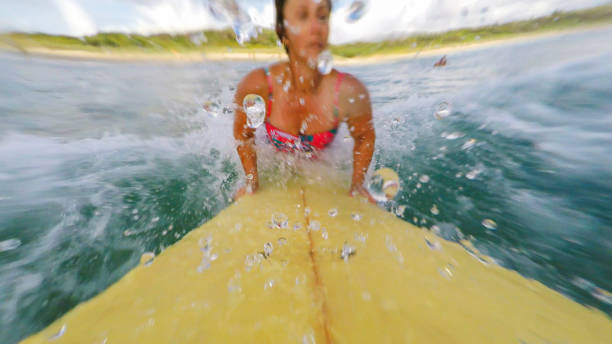
You hear it before you see it—that low, distant rumble that sounds like a freight train running right through the desert floor. The dirt road turns from bad to worse, your suspension groans like an old man getting out of a bath, and then the glare of the Pacific hits you like a warm slap. Los Cerritos. The place where the Baja desert meets the sea in a slow, peeling right-hander that has been whispering to surfers for generations. This isn’t a spot you conquer. This is a spot that tells you who you really are.
Most people roll into Cerritos thinking they are going to score the main peak, the mellow longboard wave that graces every travel magazine from here to Malibu. And sure, on a clean, mid-tide afternoon with a long-period NW groundswell pulsing through, the main point is a thing of beauty. It peels for two hundred yards, sets up perfectly for a noseride, and the water is warm enough to trunk it through Christmas. But the real magic of Los Cerritos, the truth that only the regulars and the lone wolves understand, is that this wave has layers. It has moods. It has a dark side that only shows itself to the surfer willing to paddle past the crowd and take the beatings.
The thing about Cerritos is the desert. The wind howls down the arroyos in the afternoon, turning the glassy morning perfection into a bumpy, lumpy mess by two o’clock. The smart surfer knows this. The smart surfer is in the water at first light, watching the sun crest over the Sierra de la Laguna mountains, turning the water from black to turquoise in a matter of minutes. That first session is sacred. The offshore breeze is still holding, the lines are clean, and the only sound is the hiss of your board slicing through the surface. You paddle out, past the reef break that locals call “The Rock,“ past the sandy channel where the sea turtles surface for a breath, and you sit there, waiting.
But here is the secret they do not tell you in the guidebooks. If you have the legs for it, the walk to the far southern end of the point, past the last row of palapas and the crumbling panga ramp, is where the real Cerritos lives. It is a hike over volcanic rock and loose sand, and it will punish your feet. But when you get there, you find a wave that has no name. It is a slabby, sucky, fast-breaking right that only works on a big winter swell. Most people are too lazy to make the walk. Most people are happy with the long, grocery-run waves in front of the restaurant. But the lone wolf, the surfer who came to Baja to get lost, knows that the best wave of the day is the one you have to work for.
The wave at the far point fires. It jacks up over a shallow, rocky shelf and throws a lip that is as thick as a hotel mattress. The takeoff is critical. If you paddle in too early, the wave pulls you up the face and drops you into the flats with an audible slap. If you are too late, the lip lands on your head and you go on a washing machine ride through the rock garden. But when you nail it, when you drop in square and feel the rail lock in, you are flying. The wave wraps around the point, sections off, reforms, and then opens up into a long, zippy wall that lets you put two or three carves together before it fades into the channel.
The fish love this spot. Not the fish you eat, the fish you ride. A five-six or a five-eight swallowtail, glassed with a single stringer and a glassed-on fin, is the weapon of choice for the far point. It lets you pivot on a dime, drive through the flat sections, and still have enough foam to float you over the shallow spots. A longboard at the main peak is a party wave. A fish at the far point is a conversation with the ocean.
And then there is the silence. When you are out there, far from the crowd, the only things you hear are the wind, the water, and your own breath. You might see a pod of dolphins sliding through the channel, or a manta ray the size of a pickup truck ghosting through the murk below. The desert mountains watch over you like ancient sentinels, and the sun beats down with that dry, pulsing Baja heat that makes every second in the water feel like a reward. You paddle back in, legs shaking from the session, and you sit on the beach with a cold Pacifico, watching the afternoon wind chop the surface to pieces. The crowd has left. The party has moved on. And you are alone.
That is the true spirit of Los Cerritos. It is not the wave itself. It is the willingness to walk a little farther, paddle a little harder, and sit alone in the lineup until the right one comes. It is the desert pulse that runs through every session, reminding you that the endless summer is not a destination. It is a state of mind.