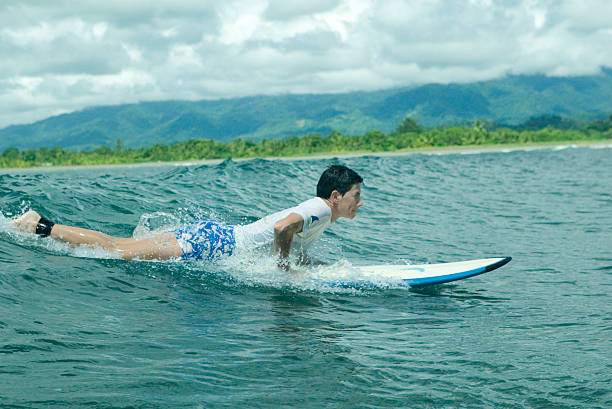
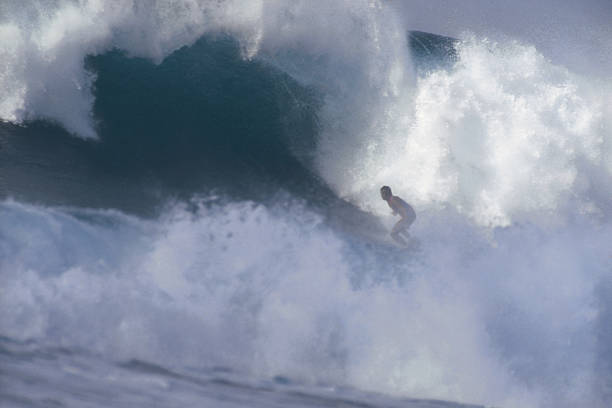
There was a time, not all that long ago, when riding a wave meant paddling a log that was practically a boat. We’re talking ten-foot planks of solid wood that weighed in at eighty pounds or more. You didn’t paddle so much as you wrestled the thing into position, and once you finally caught a wave, the ride was a long, graceful, nose-ride affair that was more about trim and poise than any kind of radical attack. That was the era of the longboard, and to be fair, it had a whole lot of soul. But soul is a funny thing. It evolves. And the way it evolved in the mid-to-late 1960s turned the entire surf universe sideways.
Here’s the deal. The shortboard revolution wasn’t just a change in shape or size. It was a total mental and physical shift in how people looked at a wave. The spark came from a handful of restless souls who realized that the ocean could be played like a musical instrument, not just cruised like a scenic highway. Guys like Bob McTavish in Australia and Nat Young in California started messing with the fundamentals. They chopped down the length, thinned out the rails, and—maybe most importantly—experimented with the bottom contours. Instead of a flat or rounded belly, they introduced the vee bottom, which let a board roll from rail to rail with dizzying speed. That single tweak opened up a universe of turning. Suddenly, you could smack the lip with a quick pivot. You could set your rail deep in the pocket and carve off the bottom with a surge of speed that had never existed before.
And then there was George Greenough. A total madman and genius who showed up with his tiny, stubbly knee board that looked like a pod from a sci-fi movie. His approach was to get as close to the wave as possible, lying in a curled-up position that made no sense until you saw him do impossible baggy twillies inside the tube. His obsession with high-aspect fins and flex patterns led to the development of new fin designs that gave surfers the ability to hold a line on a steep face like nothing else. It was a total mind-meld between materials, hydrodynamics, and pure stoke.
What happened next was pure chaos. The surfboard industry went from crafting custom heavy logs to spitting out lightweight, narrow, pointy-nosed weapons that were a pain in the ass to paddle but absolutely magical when you got them up to speed. Foam and fiberglass replaced balsa and resin almost overnight. Shapers were cutting boards down to seven feet, then six-six, then five-ten. Every week someone had a new idea about rocker or tail width or fin placement. Surfers were constantly adjusting, constantly re-learning. The old guard hated it. The new crew—the groms, the rebels, the ones who grew up in the whitewash fighting for scraps—embraced it. They saw that the ocean wasn’t just a place to glide. It was a canvas for expression, a skate park before skate parks existed, a venue for aerials and rail-less tweaks and full-speed top turns that blasted spray like a firehose.
The shift in style was just as radical. Longboarding was rooted in walking to the nose, hanging ten, and feeling the trim. Shortboarding was about driving off the bottom, hitting the lip at speed, and getting that moment of weightlessness where you’re vertical and the whole world blurs. That style became the template for modern surfing. Everything from power surfing to high-performance freesurfing, from the tube rides at Pipeline to the airs at Teahupoo, traces its DNA back to those few wild years when guys took a razor to the rails and said, “Let’s see how far we can push this.“
Now, you might think the longboard was lost in that shuffle, but nah, it never went away. It just found its own place in the lineup, a beautiful counterpoint to the high-performance shortboard. The evolution of surfboards is not a story of old versus new but of constant feedback, of riding every new shape and discovering what works for different waves and different souls. The shortboard revolution taught us that progression is a state of mind. It taught us that the board under your feet is just a tool, and the real magic is in how you read the ocean and how you let the wave move through you. That stoke is eternal, the same now as it was back when McTavish was shaving foam in his garage with that wild glint in his eye. The wave changes, the board changes, but the endless chase for that perfect, clean, bottom-to-top turn? That’s timeless. That’s surf.