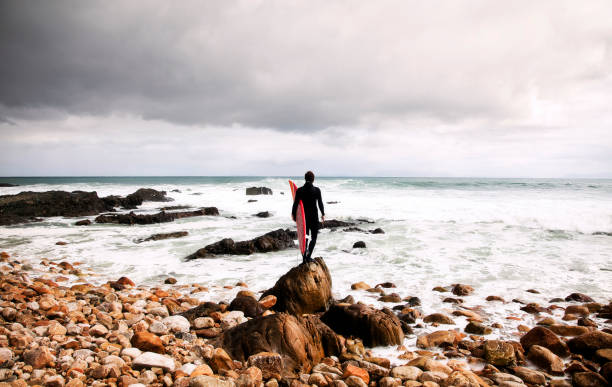
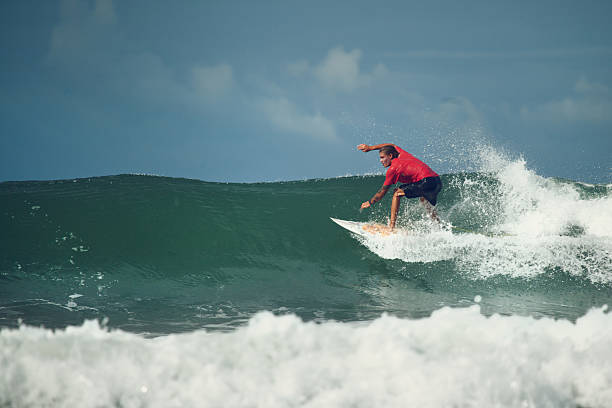
The first set of the morning rolls through the estuary at Punta Mango, and I’m sitting on my board, watching the sun paint the water gold. The waves have a clean, hollow pulse that speaks the local language of swell, wind, and tide. But what I didn’t expect was how the lineup itself would become a classroom for immersion. I paddled in expecting just barrels and cutbacks. I left with something far deeper. When you surf a foreign break, you’re not just a visitor to the ocean. You’re a guest in a community where the sea is not a playground but a provider, a storybook, and an elder. In El Salvador, that truth hits you like a closeout set.
Local surfers—many of whom grew up pulling fish from the shore before ever standing on a foam board—share the waves with an open-handed humility that puts your ego in the sand. The first day, a kid named Rafael paddled up to me and pointed at the horizon. “Mira,“ he said, “the swell is breathing.“ He didn’t speak English, I didn’t speak Spanish, but we both understood the rhythm. That moment of nonverbal connection, that silent nod when a clean wave lines up, is the purest language on earth. We traded waves for smiles, and by the end of the session, he was calling me “hermano” as if we’d grown up on the same shoreline. In the water, hierarchy is based not on age or money but on who respects the wave. And that’s a lesson that transcends borders.
After the session, Rafael invited me to his family’s comedor, a tiny open-air spot where his mother cooked pupusas over a wood fire. I sat on a plastic chair, my board leaning against the wall, grease on my chin, and listened to stories in broken Spanglish. He told me about the civil war, how his grandfather used to fish these waters, how the waves were always here but the world didn’t care until surfers found them. That’s the thing about cultural immersion through surfing—you don’t just observe a place. You arrive with salt in your hair and an empty belly, and everyday rituals become sacred. The food tastes better because you earned it. The heat feels right because you lived in it. The music on the crackly radio makes sense because your limbs are still moving from the paddle out.
The next day, the swell picked up and the lineup filled with a mix of locals and travelers. I noticed the unspoken rules quickly. Respect the local wave count. Don’t snake. When a set rolls in, let the elders go first. There’s a hierarchy not of priority but of relationship. These guys have been surfing this break since they could paddle. Their ocean is their living room. When you drop in on them, you’re stepping on their grandmother’s rug. But when you show respect, when you take the high-line and hoot for their rides, you become part of the colony. By the third day, a couple of the old boys were giving me tips on where to sit for the inside section, and one of them shared a baby banana from his cooler. That’s the currency that matters in a surf village.
One afternoon, a storm rolled in and the swell turned unruly. The locals paddled in, but I stayed out, greedy for shoulder-high sets. A fisherman on the beach, maybe fifty, with a weathered face and a real kayak, shouted at me in Spanish. I caught the gist: “You don’t know this ocean. It changes.“ And he was right. Minutes later, a rip current dragged me sideways. It took me twenty minutes to fight back to the sand, my heart hammering like a kettle drum. He was waiting on the beach, not with a scolding but a knowing smile. “La mar te enseña,“ he said. The sea teaches you. That lesson wasn’t just about currents. It was about humility, about the fact that every culture that lives on the coast has a deep, ancestral respect for the ocean. Surfing lets you tap into that without needing to live it for decades. You get a glimpse through a keyhole, and if you’re smart, you don’t try to barge the door down.
Over the following days, I wandered beyond the break. I walked to a nearby fishing village where the boats were painted in faded blues and oranges. A group of women sat under a palapa, laughing and patting tortillas. They waved me over, handed me a ball of dough, and taught me to shape it with my palms. As I worked, I noticed their hands—calloused, strong, patient. These were hands that had made food for generations, hands that knew the ocean’s moods from the other side of the salt. One older lady told me, in a mix of Spanish and gesture, that her son used to surf, but now he works at a surf camp. She smiled. “He brings people to the water.“ And that’s when I realized that surf travel, when done right, isn’t about taking from a place. It’s about sharing a wave while also learning to knead a tortilla, to say “thank you” in the local tongue, to watch a sunset from the same sand where a hundred fishermen have patched their nets.
Surf travel, done with an open heart, is never just about the wave count. It’s about the moments between sets—the shared bottle of coconut water, the kid who teaches you to say “flexionado” for leg bend, the old fisherman who reads the sky like a forecast. It’s about leaving behind your tourist skin and letting the salt soften it. The best surf trips end with you not knowing what “home” means anymore, because you found belonging in a place you’ve never slept, in a language you barely speak, on a wave that doesn’t know your name but lets you ride it anyway. So next time you paddle out in a foreign break, look around. Watch the line of women washing clothes in the river mouth, the boys playing soccer on the sand, the men fixing nets in the last light. The surf is just the doorway. Walk through it, and the culture will fill you up like a glassy morning tide. That is the endless summer that lives inside you.