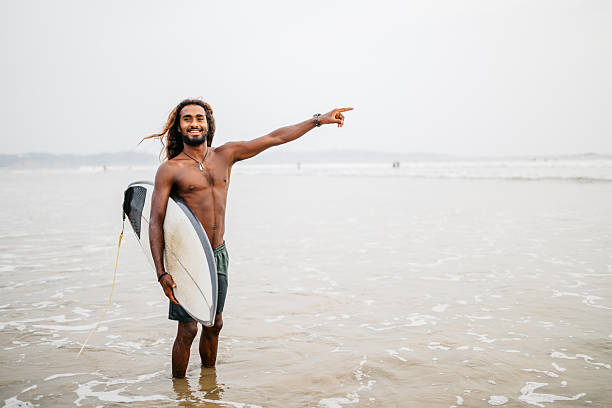
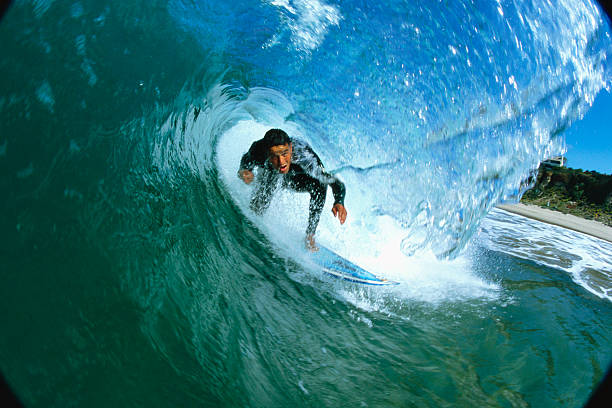
Warm water over your ankles, the smell of salt and sunscreen mixing with that early morning chill—there’s something sacred about the pre-dawn walk down to the beach. You see the horizon start to blush, the clouds turning pink as if the ocean itself is waking up. And if you happen to paddle out at first light on a slow summer day at the old point break, you might just catch a glimpse of a silver-haired local gliding past you on a weathered longboard, his smile as deep as the channel. That’s Big John. And for forty years, he hasn’t missed a single dawn patrol.
Now, you probably know the type. The old soul in the parking lot who tunes his own fins, tells stories about the monster swell of ’78, and always has an extra bottle of water for the new kid shaking out the jitters. Big John is that guy, but he’s more than just a fixture in the lineup. He’s proof that surfing is less about ripping and more about returning. His story isn’t one of barrels or contests or airs. It’s about showing up when the waves are flat, when the wind is howling, when your heart is heavy, and when nobody else thinks it’s worth the paddle. That’s the real stoke, the kind that doesn’t fade.
He grew up in a landlocked town, if you can believe it. Chased the ocean like a mirage for years, working odd jobs just to fund weekend road trips to the coast. When he finally scraped enough cash for a beat-up board, he taught himself to surf in shorebreak that chewed up his ribs and humbled his pride. But he kept coming back. He’d paddle out alone, take his lumps, and paddle back in more alive than when he went out. That’s how it started—a love affair that became a lifelong promise.
The turning point came when he was in his late twenties. A wipeout on a shallow reef left him with a shattered left leg and a doctor telling him he’d never surf again with any real power. Most would have hung it up, sold the boards, taken up golf. Instead, John spent a year in rehab, learning to walk again, then to paddle, then to pop up on his opposite foot. He switched from regular to goofy, completely retrained his brain, and six months later he was riding waves he’d never even attempted before. He didn’t call it a comeback. He just said the ocean gave him a second chance, and he wasn’t about to waste it on dry land.
What makes Big John truly inspiring, though, isn’t his recovery or his longevity. It’s his unshakable habit of paddling out alone, not because he’s a loner, but because he wants to be there for anyone else who needs the water that badly. You see, John lost his wife to cancer fifteen years ago. The morning after she passed, with the sky still dark and the house too quiet, he dragged himself to the beach. He didn’t feel like surfing. He didn’t feel like doing anything. But he remembered the promise he made to her—that he’d always greet the sunrise from the lineup, no matter what. So he paddled out, alone, and sat there bobbing in the gray light. He didn’t catch a single wave. But a pod of dolphins came by, arcing through the glassy water, and for a few minutes, the grief loosened its grip.
Since that morning, John has made it his quiet mission to be the first one in the water every day, so that nobody else has to paddle out alone if they don’t want to. New surfers, old locals, tourists in mismatched wetsuits—he greets them all with a nod and a “good morning, fam.” If you’re struggling, he’ll offer a tip or just wait a few waves back, keeping you company. If you’re crying behind your sunglasses, he won’t ask, but he’ll sit beside you until the shaking stops. That’s his gift. He doesn’t preach. He just paddles.
The funny thing is, John doesn’t chase big waves anymore. He’s content with waist-high peelers and long, soulful glides. He says every wave has something to teach you if you’re paying attention. A closeout reminds you to let go. A soft shoulder shows you there’s always another path. A clean barrel is a gift you earn by waiting. He’s seen surfers come and go, boards evolve from single fins to thrusters to weird little foils, and he still rides that same old log with a single wooden fin and a cracked tail block. It’s not about style. It’s about connection.
Every time you see him, he’s laughing. Even on flat days. Even when the kelp tangles his leash. Even when the north wind chops everything to bits. He’ll say, “Well, the ocean’s still here, and so am I.” That’s the whole secret, honestly. Surfing isn’t a sport. It’s a way of being that teaches you to accept what arrives, to embrace the mess, and to keep showing up for the next set, and the next, and the next.
So next time you paddle out and the lineup feels empty, don’t be surprised if an old guy on a heavy log glides up beside you. Don’t be shy. Give him a wave. He’s probably got a story, or maybe just a quiet piece of wisdom, or maybe he’ll simply sit with you in the silence before the first set rolls in. That’s Big John’s legacy—not a trophy or a title, but a thousand invisible moments of solidarity in the salt. And honestly, that’s the most radical thing of all.