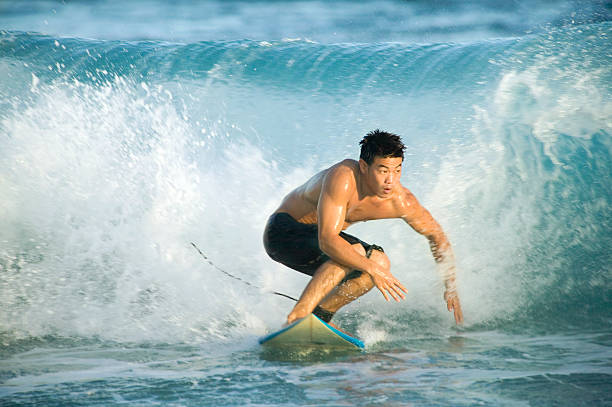
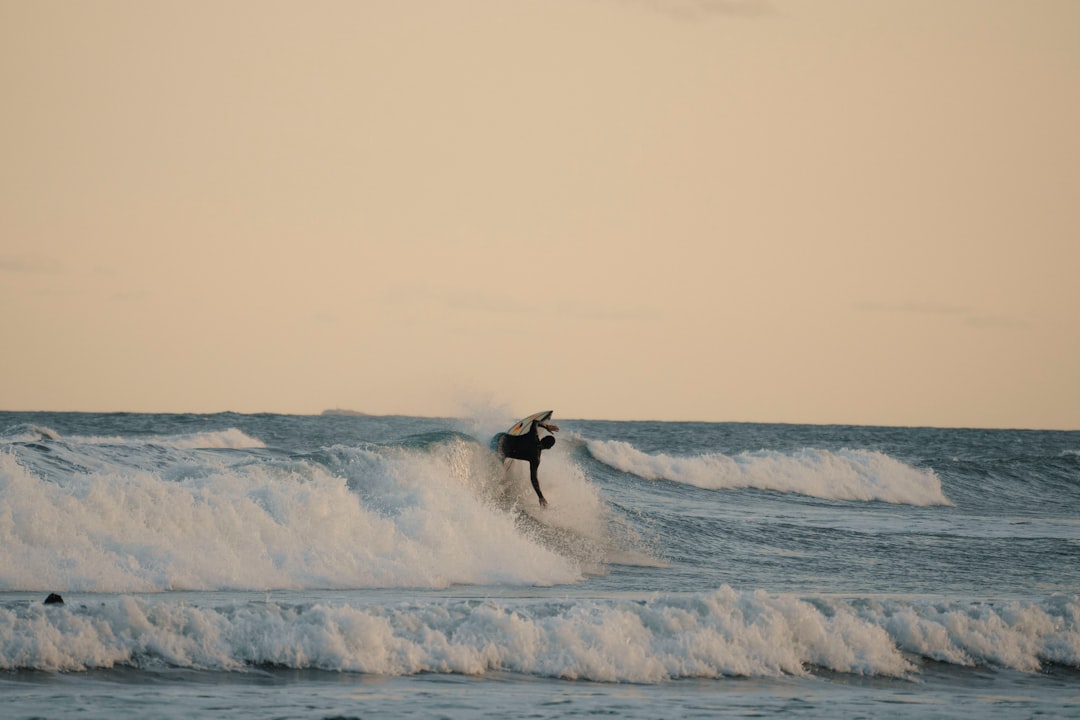
For most of us today, paddling out is about the sunrise, the stoke, the feeling of gliding across a face of water. But long before the dawn patrol was a thing, before leash strings and thruster fins, the ancient Hawaiians saw wave riding as something far deeper than a thrill. They called it he‘e nalu, which translates roughly to “sliding on a wave,” and that slide was a direct conversation with the gods. To understand the roots of our sport, you gotta paddle past the modern lineup and into a time when the ocean wasn’t just a playground—it was a temple.
In old Hawai‘i, everything in the natural world carried mana, a spiritual energy or life force that could be inherited, earned, or lost. The ocean, or kai, was a living entity, and the waves that rolled in from the deep were seen as the breath of the sea god Kanaloa. When a Hawaiian took to the water on a koa wood olo board—sometimes as long as twenty feet and weighing over a hundred pounds—they weren’t just catching a wave. They were entering a sacred space where mana could be increased or depleted. A smooth, powerful ride was a sign of favor from the gods, while a wipeout might be read as a spiritual imbalance.
The ali‘i, or ruling chiefs, were the most serious wave riders of the time. Their boards were carved from the best koa, wiliwili, or ulu trees, and the process of shaping one was a ritual in itself. A kahuna, or priest, would offer prayers and chants while the board was carved, and offerings of fish, coconuts, or even a pig might be made to ensure the tree’s spirit would guide the rider safely. The board wasn’t just equipment; it was a vessel of mana, often passed down through generations. Losing a board in a wipeout wasn’t just a bummer—it could be seen as a spiritual loss, a break in the chain of ancestral power.
Even the act of entering the water was governed by kapu, strict sacred laws. No ali‘i would paddle out without proper chants and cleansing rituals. Commoners could ride waves too, but they used smaller alaia boards made from lighter wood, and they rarely surfed the same breaks as the chiefs. The beach itself had a hierarchy, with the best waves reserved for the highest-ranking riders. If a commoner dropped in on an ali‘i, it wasn’t just rude—it was an offense punishable by death. That kind of respect for the lineup might sound extreme today, but it shows how deeply the ocean and its waves were tied to social and spiritual order.
But the heart of he‘e nalu was never about status. It was about connecting with the ocean’s energy, feeling the mana of the wave as it lifted you and carried you toward the shore. Ancient Hawaiians believed that the shape and power of a wave came from the gods themselves. A long, glassy wall was a gift from Kanaloa, a gift that demanded gratitude. After a session, riders would often leave a small offering on the beach—a piece of seaweed, a shell, or a simple prayer—to thank the sea for its generosity. This wasn’t superstition; it was a relationship. You didn’t conquer a wave in old Hawai‘i. You honored it.
That connection survives in our culture today, even if we don’t always recognize it. When you feel that stoke after a perfect ride, or when you sit in the lineup and watch the horizon for a set, you’re tapping into something ancient. The mana is still there, pulsing under every swell. The best surfers in the world—those who seem to glide with effortless grace—are the ones who understand that surfing is a dance, not a battle. They’re not trying to dominate the wave; they’re asking to ride it.
So next time you paddle out at sunrise, take a moment. Look at the ocean not as a resource but as a relative. Feel the breath of Kanaloa in the offshore wind. Think about the ali‘i who once stood on giant olo boards, chanting to the gods before they dropped in. You don’t have to leave an offering on the sand, but you can carry that sense of reverence with you. Because the waves we ride today were born in the same ancient sea, and the mana we feel is the same mana that filled the hearts of the first wave riders. Respect that lineage, and the ocean will always have a spot for you in the lineup.