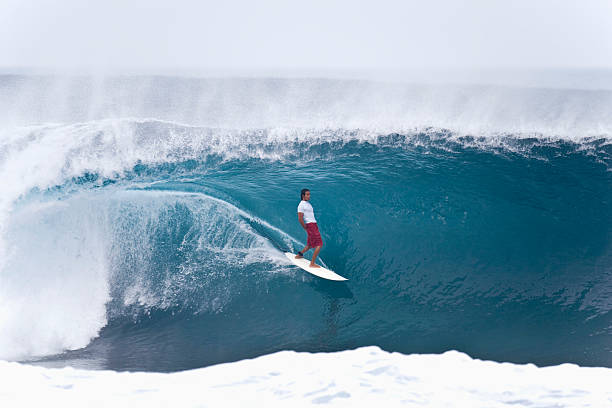
You’re sitting on your stick, looking at the horizon. The sets have been pumping all morning, but this one… this one is different. It doesn’t just roll in; it heaves itself out of the deep, throwing a thick, mean lip that seems to suck the light right out of the sky. Your buddy turns, a wild grin splitting his face, and he yells it over the roar: “That is absolutely GNARLY!” And you know, without a shadow of a doubt, exactly what he means. It’s not just big. It’s not just good. It’s something else entirely.
That’s the power of “gnarly.” In the lexicon of surf lingo, it’s a heavyweight champion, a word that carries the weight of the ocean itself. It’s the ultimate descriptor for the extreme, the intense, the beautifully terrifying heart of surfing. To call a wave gnarly is to pay it the highest respect. It means the wave is powerful, critical, maybe even a little dangerous. It’s throwing a cavernous barrel, it’s got a heaving double-up section, it’s the kind of wave that separates the weekend warriors from the watermen. Think Pipeline on a solid day. Think Teahupo’o standing up. That’s the textbook definition.
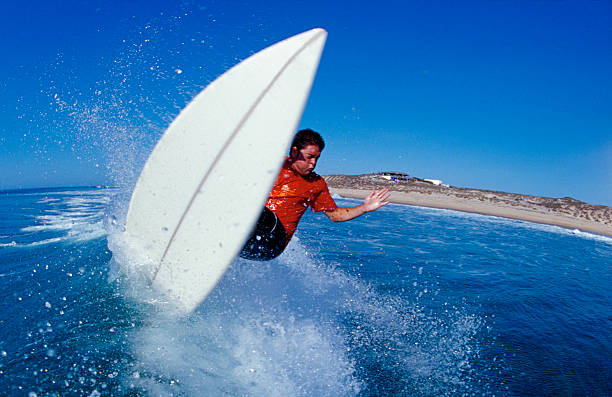
But here’s the beautiful thing about surf slang—it’s fluid, just like the water we ride. “Gnarly” isn’t a one-trick pony. Its meaning shifts with the context, the tone, the situation. Yeah, it describes the wave of the day, but it also describes the wipeout that follows. Eating it on a closeout, getting rag-dolled over the falls, getting held down for what feels like two lifetimes… you surface, gasping, and croak out, “That was gnarly.” It acknowledges the beatdown, respects the ocean’s power, and maybe even laughs at your own temporary defeat.
And the word doesn’t stop at the shoreline. It seeped out of the water and into the entire surf lifestyle decades ago. That’s because the life we chase is, by its very nature, a bit gnarly. It’s the dawn patrol mission in near-freezing water. It’s the road trip in a beat-up van held together by wax and hope, chasing a swell down the coast. It’s the localism you have to navigate at a secret spot. The callused hands, the reef scars, the salt-encrusted everything—it’s all part of the gnarly tapestry. A “gnarly” cut on your foot from a hidden rock isn’t just a cut; it’s a story, a badge of honor from a session you couldn’t resist.
So, when you hear it, listen to the delivery. Is it shouted with stoke, eyes wide at a perfect, pitching A-frame? That’s pure admiration. Is it muttered with a shaky laugh after a brutal hold-down? That’s survival. Is it used to describe the state of your board after a run-in with the rocks? That’s a casualty report.
In the end, “gnarly” is more than a word; it’s a measurement. It’s the scale we use for everything that pushes past normal, past fun, past even “epic,” into that raw, unfiltered zone where surfing becomes something more. It’s the edge where fear and stoke do a crazy dance together. It captures the essence of why we do this—not just for the easy cruisers, but for those moments that test us, that thrill us, that remind us we’re playing in a force of nature. It’s the commitment, the consequence, and the sheer, unadulterated power of the ocean, all wrapped up in two glorious syllables. So next time you see it, feel it, or survive it, you’ll know exactly what to call it. Just keep it in your back pocket for the right moment—the truly gnarly one.