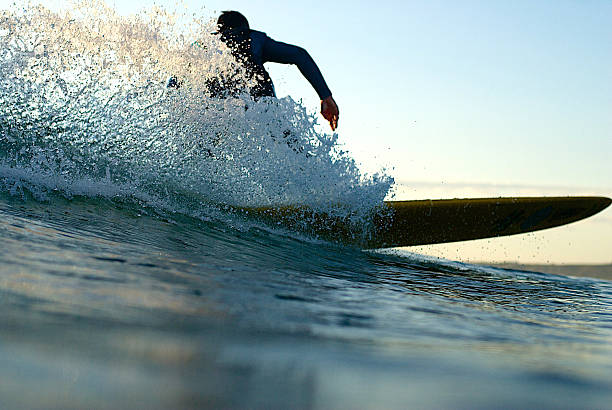
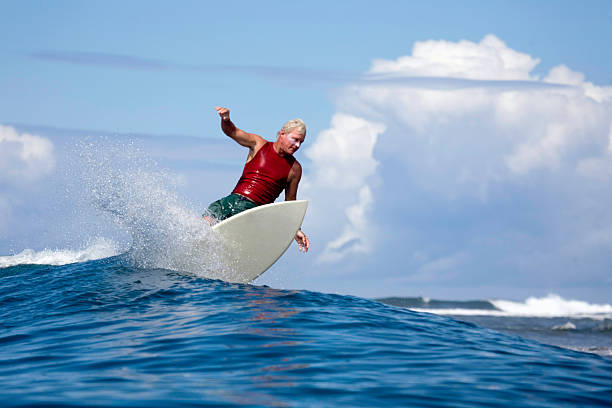
When you’re flying down the line and the wave starts to jack up and pitch, your whole world funnels into a narrow green hallway. You feel the rail lock in, your speed building, and for a beat, you’re the fastest thing on water. But every good barrel sets up a trade-off. If you keep going straight, you’ll outrun the juice, stall out on a fat section, and waste all that precious momentum. That’s when the cutback comes in—not just a maneuver, but the heartbeat of flow-state surfing. And the roundhouse cutback? That’s the masterpiece of turning. It’s not about slapping your board sideways in the flats. It’s about making a full, arcing commitment back toward the foam ball, wrapping it around like you’re drawing a perfect circle in the ocean.
The roundhouse is the cutback’s evolved cousin. A standard cutback might get you back into the pocket, but the roundhouse takes you further, deeper, and with more authority. You’re not just turning; you’re swinging your whole body through a pivot. The magic starts with the setup. As the wave wall starts to flatten out ahead, you drop your weight into a low, coiled stance. Your back knee dips, your front shoulder opens slightly, and your eyes lock on the spot where the whitewater is churning back toward you. You want to connect with that foam—not just touch it, but use it like a traction pad for your exit.
Your fins are your friends here, but you have to trust them. When you initiate the bottom turn of the roundhouse, you’re going to bury your rail hard, letting the face of the wave push back against the inside edge of your board. The moment you feel that resistance, you snap your head and shoulders around in the direction you want to go. The board follows your eyes. It’s a deliberate, almost violent rotation of the upper body while your hips stay quiet. You let the fins slide just a hair—not enough to spin out, but just enough to break traction and allow the tail to whip around underneath you. That’s the sweet spot. That’s where the roundhouse earns its name.
As you complete the arc, you’re now facing back toward the breaking part of the wave. Your weight is centered over the board’s sweet spot, and you’re already pre-loading for the exit. You push down through your heels, lift your toes slightly, and let the board ride the rebound energy from the foam. It’s like a skateboarder pumping out of a bowl—except your bowl is liquid and moving. Done smoothly, you come out the other side with your momentum redirected back into the green face, ready to lay a bottom turn or a deep rail carve. Done with a little extra flair, you can even throw a splash off the top of that rebound, letting the whitewater spray like a signature.
The hardest part for most surfers learning the roundhouse is committing to the pivot. You feel like you’re going too fast to make it all the way around. But that’s exactly where the speed works for you. The faster you’re moving, the more centrifugal force you can generate. A well-executed roundhouse isn’t slow; it’s a controlled whip. Think of a pendulum swinging—you have to haul momentum to the apex before it can swing back. That same physics applies. Don’t feather the brakes. Dig into the compression of the turn like you mean it.
Foot placement matters too. For a frontside roundhouse, your back foot sits right over the fins, maybe a little forward of the tail pad. For backside, you slide that weight forward just a touch and drive through the inside rail. Your front foot guides the direction, but your back foot supplies the drive. And never look down. The wave is your frame of reference. If you stare at your board, you’ll lose the flow. Keep your focus out past the whitewater, on the next section or the horizon beyond. That intention travels through your spine and straight into the water.
There’s a generation of surfers who think of the cutback as a basic, throwaway move. They’d rather spin into a floater or snatch a closeout. But they’re missing the point. The roundhouse cutback is a conversation with the wave. It says you respect the wave’s shape and tempo. It says you’re willing to give up a straight line for a longer, more graceful connection. In a world obsessed with airs and radical verticals, the roundhouse stands as a reminder that style lives in the curves, not the edges. Gerry Lopez mastered it in the heavy tubes of Pipeline. Rob Machado made it look like liquid silk in point break peaks. You can ride that same line at your local sandbar, no matter how small the swell, as long as you’re willing to trust the arc.
So next time you’re flying down the line and see the wave start to fatten up, don’t race toward the shoulder like you’re running from something. Instead, cock your shoulders, set your rail, and wrap it all the way around. Feel the water hiss past your fins. Feel the tail slide just a little, then grab back. That’s not just a turn. That’s a full circle of stoke.