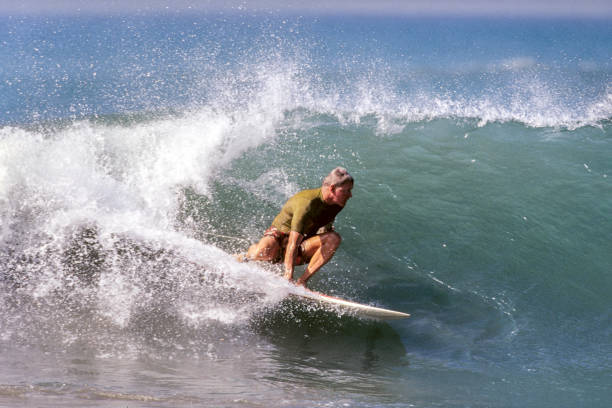
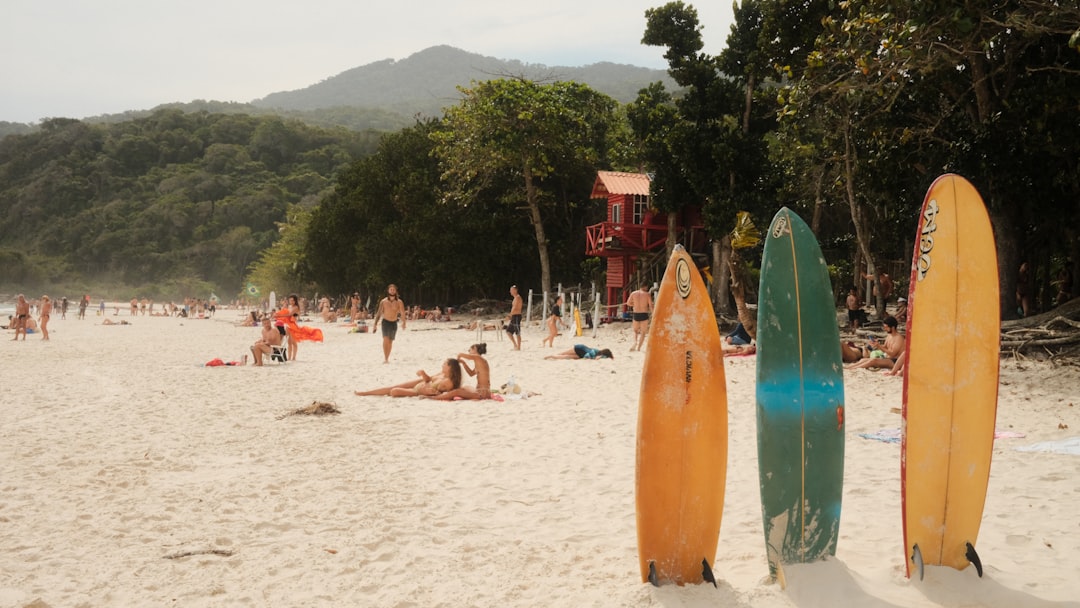
When the shortboard revolution hit in the late sixties, everyone was measuring length. Guys would paddle out on a six-six and act like they’d landed on the moon. But the real magic wasn’t just chopping inches off a longboard. It was in the foil. The foil is the subtle sculpted curve running through every board, from nose to tail, from centerline to rail. It’s why a board can pivot like a skateboard, rail like a sports car, and still float when you’re stuck inside. Without a proper foil, a shortboard is just a plank with delusions.
The thing about foil is that you can’t see it from the beach. You feel it under your feet. A thick, boxy board feels stiff. A board with too much belly feels sketchy. The shapers who cracked it—Bob McTavish, George Greenough, later Dick Brewer—weren’t just making boards shorter. They were redistributing volume. They moved foam out of the nose and tail, thinned the rails, and created a rocker curve that let the board sit in the pocket instead of racing down the line. That change flipped surfing from trimming to turning.
Think of a longboard. It has a gentle rocker, a flat-ish foil, a ton of float. It wants to glide. You hang ten, cross-step, make stylish arcs. But when a wave gets hollower, a longboard is too long to turn in the critical part. You can’t bury the rail because there’s too much foam and length. The shortboard revolution solved that by taking the template, flipping the tail, and, most importantly, foiling the board so the thickest point sits under your front foot, then tapers aggressively toward the tail. That taper lets the board release when you push. The rail thins, so you can tilt it and feel the water bite. The tail becomes a little thinner, with some snap, so you can whip it around in the pocket.
The ocean became a skate park. Suddenly you could do cutbacks, roundhouses, hooks, bottom turns so deep you’d feel the fin release. That wasn’t just length. That was foil. The board’s cross-sectional shape—the belly, the vee, the concave—determines how water flows under the hull. Greenough understood this better than anyone. He didn’t come from the surf industry; he came from an obsession with movement. He built stubby, foiled-out kneeboards with deep fins and an incredible rail-to-rail transition. McTavish saw it and translated it into stand-up boards. The result was the “plastic machine gun” that changed everything.
There’s a reason old-school riders called the first shortboards twitchy. The foil was so new that most surfers didn’t know how to load it up. You have to push into a turn, use the whole rail, let the board flex and unload. Once you find the sweet spot, the foil does the work. A modern high-performance shortboard has an incredibly refined foil: a thin nose, a pulled-in tail, a continuous smooth rocker, rails that are down in the middle and sharp near the tail. All of that is foil. Every shaper has an opinion on where the foam goes, but the core idea is the same: shape the water first, then the board.
The shortboard revolution wasn’t just about living in the pocket. It was about carrying speed. That’s the real gift of a good foil. When you drop into a steep wave, you don’t want a board that flattens out at the tail and stalls. You want a foil that keeps water flowing smoothly from nose to tail, so you fly out of the bottom turn with speed to burn. The faster you go, the more you can turn. The more you can turn, the more radical the maneuvers. That’s the lineage from McTavish to Mark Richards to Kelly Slater to John John Florence. Every generation added a little more foil refinement, rail curve, forward rocker, and tail release.
And the weird part? Foil is still the last thing people look at. They count fins, measure thickness, obsess over volume. But volume is just a number. Foil is how that volume is placed. Two boards can have the exact same liters and feel completely different. One paddles like a kayak and turns like a barge. Another paddles okay but comes alive on rail like it’s reading your mind. The difference is the hidden curve. It’s the soul of the board. When you find one that’s foiled right, you know it in the first ten seconds. Your back foot feels connected to the tail, your front foot feels the wave, and every turn feels like the ocean finally agrees with you. That’s the stoke. That’s the revolution.