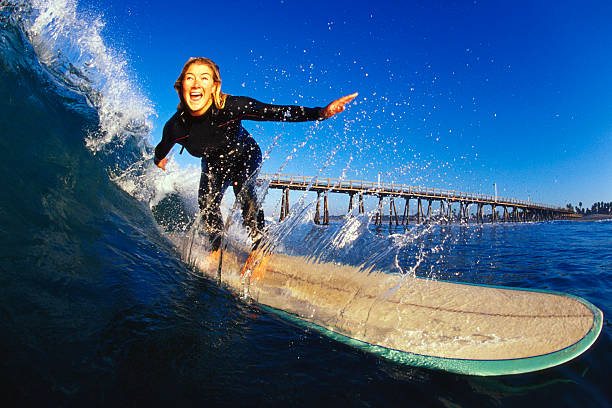
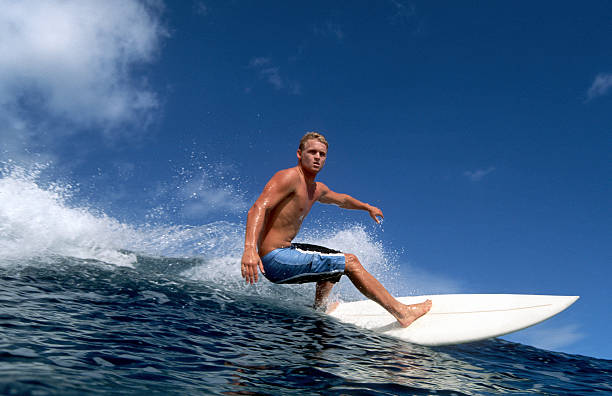
There is something different in the air when you paddle out at a reef break. It is not the same vibe you get bouncing around in the wash of a beach break or gliding down a long, peeling point. A reef break demands your full attention from the moment your feet leave the sand. The ocean floor is not soft forgiving sand but hard, living coral or jagged rock, and that changes everything about the way the wave moves and the way a surfer moves upon it. A reef break is a conversation with the ocean where you better listen close, because if you miss a beat, the ocean will remind you real quick who is in charge.
The magic of a reef break lies in the shape of the wave itself. Because the wave is breaking over a fixed, solid structure below the surface, the water jackes up in a predictable way. The wave stands taller, steeper, and more critical than anything you will find on a sandy bottom. The takeoff is abrupt and powerful, sending you dropping down a wall of water that is as vertical as it is thick. On a good day, the face of a reef wave is a flawless slab, offering a section that you can wrap around, get deep in the barrel, and maybe, just maybe, come flying out the other side feeling like you cheated the sea. This is what every surfer chases, that pit-in-your-stomach drop and the eerie stillness of being shacked while the lip throws over your head in a solid, hissing tube.
But with that perfection comes consequence. The reef is always there, waiting. You learn to tuck your body, to fall flat, to protect your head with your arms when you get pitched over the falls. Every surfer who charges a reef break has the scars to prove it, little white lines on their feet, knees, and hands. It is a rite of passage. You never forget the first time you feel the sharp, scraping touch of the reef under your fins or the burn of coral rash on your forearms. It teaches you humility and respect. A reef break does not care if you are a world champion or a weekend warrior. It will punish the bold and the careless equally.
The lineup at a reef break is a different world too. The channel is your friend, your ticket back to the peak without taking a beating. You learn to read the swells and the sets, watching for the lull between the bombs. The pecking order is real and usually understood without words. The locals have earned their spot through years of paddling out on flat days and charging on big days, and they know every crack in the reef, every current, every sneaky inside section that doubles up. If you pull in as a visitor, the best move is to paddle wide, sit deep, and watch. Watch how the wave bends over the reef, watch where the takeoff zone is, watch how the guys who know the place position themselves. Do not snake the peak on your first set. That is a quick way to get a stern talking to or worse, a cold shoulder for the rest of the session.
The variety of reef breaks around the world is staggering. You have the deep-water reefs that produce those thick, freight-train walls like Pipeline or Teahupo’o, where the wave detonates over shallow coral and the sound of the lip hitting the water is like a thunderclap. Then there are the slab reefs where the wave goes from flat to a double-overhead wedge in seconds, forcing you to commit or get obliterated. And the mellow reef breaks exist too, more forgiving reefs that offer long, gentle walls suitable for a longboard on a small summer swell. They all share that one common thread though, the floor is hard and it will not budge for nobody.
Surfing a reef break is not just about riding a wave. It is about reading the ocean with a deeper intuition. You feel for the channel, you watch the colour of the water change over the deeper and shallower sections. You look for the dark patches that mean coral heads are close. You notice how the swell bends and refracts around the point. It becomes a meditation, a puzzle that you solve with every paddle and every drop. The reward is a wave that feels alive, a wave that has been sculpted by the earth itself into a perfect moving sculpture. And when you connect a clean turn on the face or slide into the barrel and feel the spray hit your back, it is worth every cut, every coral rash, every closeout beating the reef ever gave you. That is the reef break, the place where the ocean tests your soul and the only way to pass is to keep paddling back out.