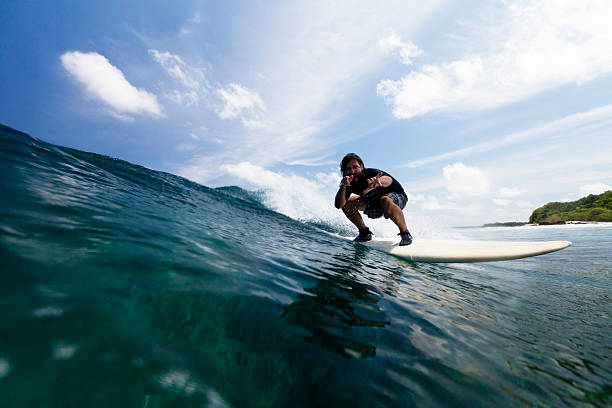
You ever watch a soul surfer slide into a wave and think they got some kind of voodoo working under their feet? The way they rise from prone to standing without a single wasted motion, like water vapor turning into a man? That’s the pop-up, brother. It’s the first and last trick in the book. You can cutback like a god and hang ten like a madman, but if your pop-up is stinkbuggy—hands paddling, knees splayed, nose pearling—you’re fighting the wave before you’ve even found your stance. The good news is, perfection ain’t about raw strength or flexibility. It’s about a concept most shredders overlook: the weightless pivot.
Most groms and weekend warriors treat the pop-up like a vertical push-up followed by a scramble. They shove the board down, push their hips up, and then chase their feet toward the center. This is the classic “push-and-scramble.” It works, sort of, but it’s loud, slow, and burns energy that you need for the drop-in. The real magic lives in the middle of the movement, in that split-second where your body becomes a hinge, not a jackhammer.
Think about the mechanics of a perfect wave start. You’re paddling, dolphin-kicking into the green face. The wave has you. You feel that lift, that sudden acceleration. Your palms are planted flat on the deck, just behind your shoulders, fingers slightly splayed for grip. This is your foundation. Now, forget the instinct to shoot your back foot forward. Instead, drive your hips upward and slightly forward, as if you’re arching your back to touch the sky with your belly button. At the peak of this arch, your lower body is light. Your knees and shins are hanging free, not locked out. This is the pivot moment.
Instead of planting both feet at once—which forces you to hop and land with a thud—you let your back knee glide forward first, landing in the spot where your front foot will eventually go. No, wait, that’s the opposite of what you want. Let me paint it clearer. The front foot is the rudder. It lands first, somewhere between the stringer and the rail, about a foot from the nose or wherever feels right for your height. But here’s the trick: you don’t place it. You slide it. As your hips rise and your back toes still brush the board, your front heel slides forward off the tail pad, grazing the deck like a drift car clipping a curb. This slide, this continuous motion, keeps your center of mass low and over the board. The back foot then follows naturally, landing right on the pad or just behind it, with the toes already pointing where you want to go.
The secret to making this feel weightless is your head. Keep your eyes up. Look at the wave’s shoulder, not at your board. Staring down at your feet is like trying to walk a tightrope while staring at your shoelaces. Your brain will lock up, and your pop-up will turn into a frantic frog jump. Instead, pick a spot on the horizon, or even just the face of the wave three feet ahead. Your body will follow your gaze. If your head stays up, your shoulders stay square. If your shoulders stay square, your hips stay aligned. And if your hips stay aligned, your pop-up becomes a single fluid unit: paddle, arch, slide, stand.
Now, let’s talk about the elephant in the lineup: the toe drag. That awkward moment when your back foot catches the rail or the tail, sending you into a wobble or a wipeout. This happens because you’re trying to plant that back foot too far forward or too wide. The fix is counterintuitive. Bring your back foot in close, almost on top of the stringer, with your toes pointing slightly inward. This narrow stance gives you a rocket base. You can always widen out once you’re standing, but starting narrow means your weight is centered, and your rail is free from your heel’s interference.
Practice this on the sand, but not like a robot. Do it with a board on grass or carpet, but close your eyes. Surf by feel. The pop-up should be as natural as rolling out of bed. Start in the push-up position with your hands planted. Now, as you arch into that pivot, whisper to yourself: “Slide the front, then the back.” Do it a hundred times. Then do it a hundred more. The motion should feel like a slow-motion waterfall, not a series of separate parts.
Why does this matter on the wave? Because a clean pop-up eats up less time. It preserves your momentum. When you’re surfing a steep, pitching wave, that half-second you save is the difference between a clean drop and a pearl dive into the abyss. It also puts you in the pocket, right where the wave is throwing its most powerful energy. A scrambling pop-up usually lands you too far back, forcing you to shift your weight forward while simultaneously trying to control your speed. That’s a recipe for a thumping.
The ultimate goal is flow. The pop-up should feel like you never left the water. You were paddling, now you’re riding. There’s no break, no stutter. The board is an extension of your torso, and your feet just appear where they need to be. This is the endless summer in microcosm—a smooth transition from the primal act of paddling into the purest form of standing on water. Get that pivot right, and you won’t just be getting to your feet. You’ll be arriving.