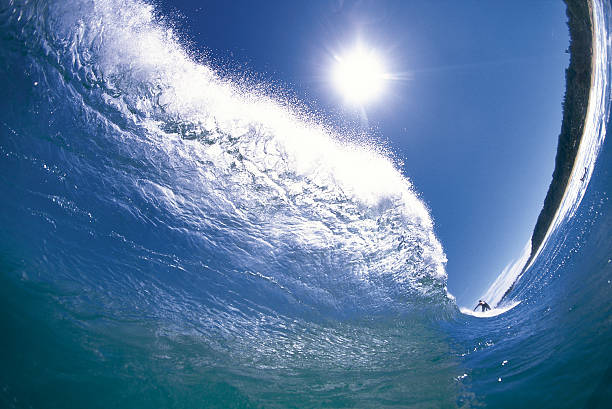
You ever paddle into a wave, feel that familiar lurch as the face steepens, and then... freeze. That half-second hesitation on the takeoff costs you the best part of the wave. The pop-up is not just a movement. It’s the moment where all your surf fitness pays off or falls apart. In the lineup, we talk a lot about paddling muscles and leg strength for carving, but the truth is the pop-up demands a unique kind of explosive power that you can’t build in the water alone. You gotta train it on land.
Think about it. Your board is moving, the wave is pitching, and you’ve got less than a second to go from lying down to standing with your feet in the exact right spot. That’s a full-body explosion. Your arms need to push your chest off the board, your hips need to rotate, and your legs need to tuck under you faster than a hungry seal. If any link in that chain is weak, your pop-up turns into a bellyflop or a low-crouch scramble that kills your flow.
So how do you build that pop-up power? Start with your legs. The push from your arms gets you half way, but it’s your legs that snap up under your shoulders. Box jumps are your best friend here. Step off a sturdy box, land soft, then explode back up onto it. Do that in sets of ten, focusing on the quickness of the rebound. You’re not trying to jump high – you’re trying to jump fast. Add some squat jumps with a pause at the bottom to work that explosive drive from a dead stop, just like when you’re lying flat on your board.
But your core is the real hero. A powerful pop-up is a rotational movement. Your trailing leg swings around while your front leg plants forward. That rotation comes from your obliques and deep stabilizers. Planks are okay, but they don’t teach rotation. Instead, do woodchoppers with a medicine ball or a light dumbbell. Stand with your feet wide, hold the weight at one hip, then swing it diagonally up over the opposite shoulder, twisting through your torso. That mimics the yank your body does when you whip your hips into the standing position. Do it on both sides, and do it with speed.
Don’t forget your hip flexors and ankles. A lot of pop-up issues come from tight hips. If you can’t get your back knee underneath you quickly, you’ll land in a weird stance. Work on dynamic stretches like walking lunges with a twist, and deep squats with a hold at the bottom. Ankle mobility matters too. Hit some calf raises and ankle rocks to keep your feet nimble, because your front foot needs to land flat and then immediately push into the first turn.
Now, the secret weapon: burpees. Yeah, I know, everyone hates burpees. But they are the perfect pop-up trainer. That movement from lying down to jumping up is literally your pop-up without a board. Do a set of fifteen burpees and tell me your heart isn’t pounding like a shorebreak. The key is to do them smoothly and quickly, not just for time. Each rep should feel like a wave you’re taking off on. Push up, tuck the legs, explode into a jump, then land and go down again. That continuous flow builds the exact muscle memory you need when the wave chooses to throw you a curveball.
Finally, don’t underestimate the mental side. The pop-up is a commitment. You can’t go half strong. When you train on land, visualise the wave. See the blue wall, feel the board under you, and explode up with total certainty. This mental rehearsal wires your nervous system to fire all those fast-twitch fibers in the right order. So next time you’re in the surf and you feel that drop, your body will know exactly what to do. No thinking, just power.
Training for pop-up power isn’t about getting huge or slow. It’s about being snappy, reactive, and light on your feet. The more explosive you are off the deck, the more waves you’ll ride, and the deeper you’ll carve on every turn. So hit the box, rotate that core, and do those burpees. Your paddle sessions will thank you, and so will your stoke when you’re dropping into a glassy set with total control. The ocean will always throw you challenges, but with a powerful pop-up, you’ll be ready to meet every one of them standing up.