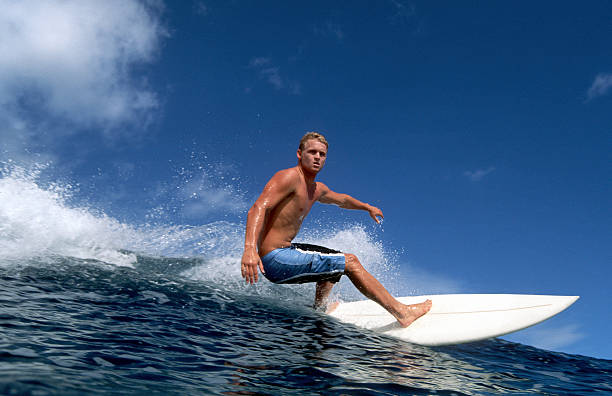
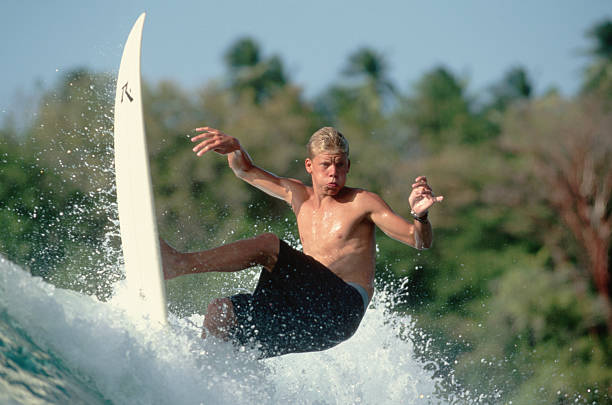
There’s a moment in every good wave where it all slows down. You’ve taken off, you’ve dropped in, and you’ve laid a bottom turn that sends you rocketing down the line. The wall stands up in front of you, pitching and hollow, and for a split second, you’re flying. But then you feel it—that familiar surge of speed, that built-up momentum that’s about to outrun the wave itself. The section is running away from you, the face is flattening out, and you have a choice. You can either fade, stall, and watch the whole thing collapse into soup, or you can dig that rail in, throw your weight back around, and execute the smoothest, most stylish move in the surfer’s playbook. You can pivot back into the pocket.
We’re talking about the cutback, sure, but more than that, we’re talking about the pocket. Because without the pocket, a cutback is just a skid mark on the face of a wave. The pocket is the engine room, the sweet spot, the power zone where the wave has the most energy and the steepest, most critical part of the face allows for the deepest turns. Understanding the pocket is the difference between a surfer who looks like they’re fighting the wave and one who looks like they’re dancing with it. It’s the difference between cutting a ho-hoy turn that kills your momentum and winding up a rail grab that sets you up for the next hit.
Think of the pocket as the wave’s beating heart. It’s not just the curl, not just the steep part. It’s the spot where the wave’s energy is trying to throw you forward, but you’re holding steady right there in the meat of it. When you’re deep in the pocket, you feel that incredible pressure against your feet, a compression that lets you load the board up and then unleash that energy in a burst of spray. A proper cutback isn’t about pointing your board back toward the whitewash and hoping for the best. It’s about recognizing the shape of the pocket, feeling the way the wave is bending, and then placing your arc right on that curved plane. You set your pivot point high on the face, let the wave start to pass you, and then you drive your back foot through the turn, carving a perfect circle that brings you right back into the pocket you almost left behind.
The real art comes from the style you bring to that return path. Some guys, like the old-school legends from the 70s and 80s, put a massive truckload of weight over the rail, burying the fin until the spray goes horizontal and the whole board feels like it’s going to squirt out from under them. That’s a power cutback, a statement of raw force. But there’s also the drawn-out, laid-back version where the surfer stretches the turn across the face, almost gliding as they change direction, keeping their chest open to the wave and their eyes locked on the next section. That’s flow, that’s style. It’s about not rushing the turn. You let the wave tell you when to snap out of it and when to just carry that momentum through a long, sweeping arc.
And that’s where the endless summer mindset comes in. Chasing the sun, chasing the good waves—it’s really about chasing that feeling of finding the pocket, again and again, on waves all over the world. Every beach break, point break, and reef offers a different pocket. Some are deep and spitting, demanding a fast, vertical cutback. Others are fat and forgiving, begging for a slow, drawn-out carve you can almost stand up through. Learning to read that pocket, to anticipate its shape from the moment you paddle in, is the deep work. It’s the meditation of surfing.
So next time you’re out there and you feel that speed building, don’t panic and slam on the brakes. Look down the line. Find the pocket. Then, with a relaxed but committed weight shift, turn back into the power. Make your cutback a return to the good stuff, not an escape from the flat. That’s where the real juice lives. That’s the style that keeps the soul of surfing alive.