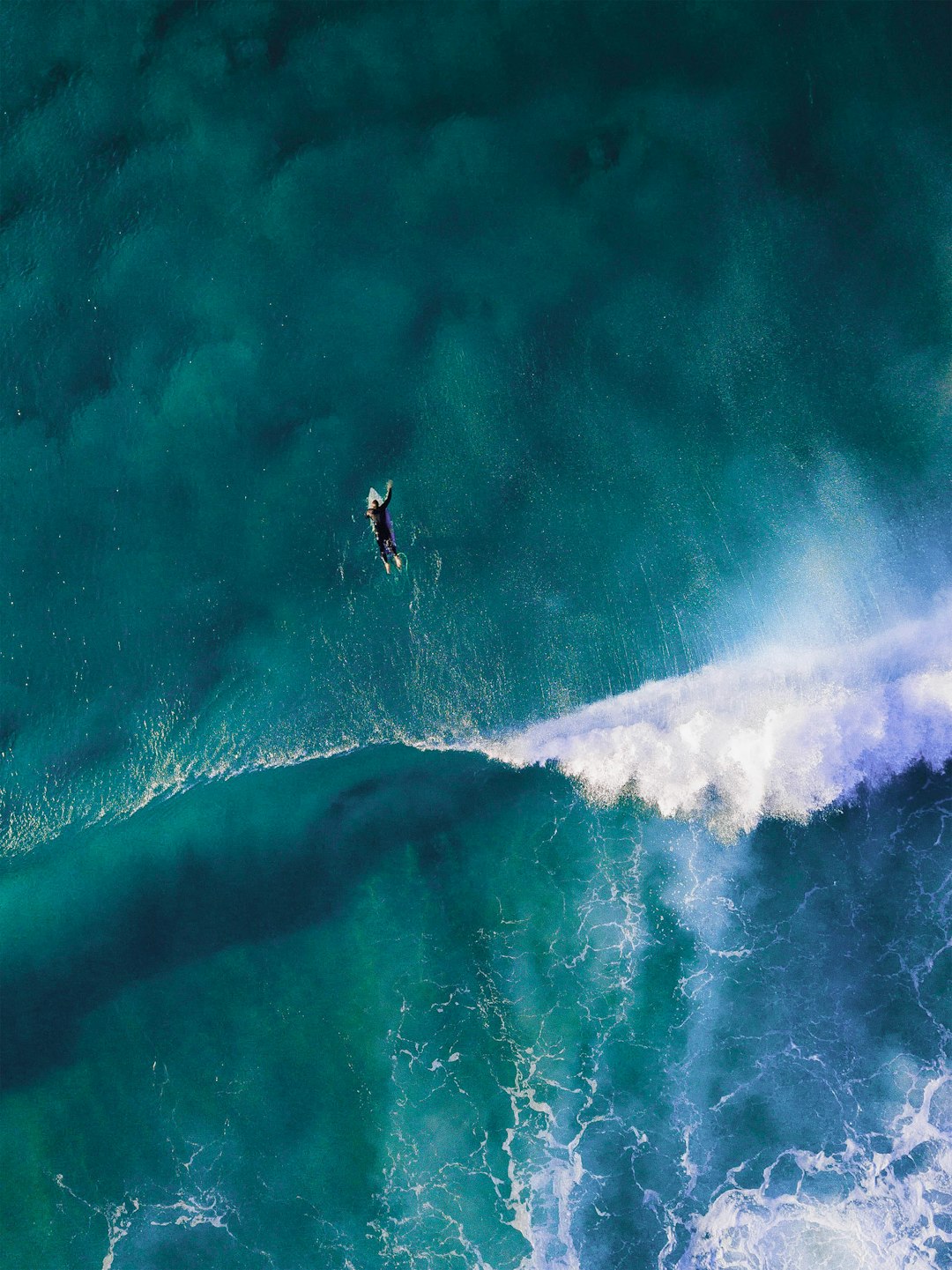
Before fiberglass, before leashes, before the North Shore became a proving ground for the world’s best, there was just the wave and the soul of the surfer. In ancient Hawai‘i, riding a wave wasn’t a sport, it wasn’t a lifestyle brand, and it sure wasn’t a contest for sponsors. It was a deep, spiritual conversation between a person and the ocean, a ritual called he‘e nalu, which means “wave sliding.“ To drop into a wave back then was to touch the mana, the divine power, that flowed through the sea, the land, and the people. It was a practice reserved not just for fun, but for connection, status, and even survival.
The ancient Hawaiians didn’t just paddle out to get a tan. Every board was a living thing, carved with prayers and chants. A koa log was chosen with reverence, often blessed by a kahuna, a priest, before a single adze hit the wood. The building process could take weeks, maybe months, because you weren’t just shaping a plank. You were shaping a vessel for the spirit. And the wood itself was your partner. The trees came from the forest, the gift of the gods, and you had to respect that gift. If you didn’t, the ocean would remind you, probably with a nasty wipeout that sent you scrambling for the shore with a mouthful of salt and a bruised ego.
The boards themselves tell a story of a different kind of surfing. The long, heavy olo boards, sometimes reaching twenty feet in length, were not for the kama‘āina, the common person. Those were reserved for the ali‘i, the chiefs and royalty. The mana from the tree, the mana from the lineage of the chief, and the mana of the wave all had to be in harmony. A chief on an olo board wasn’t just surfing; he was demonstrating his divine right. He was connecting his royal bloodline to the power of the ocean, proving his worth to his people and to the gods. The shorter, more maneuverable alaia boards were for the commoners, the skilled fishermen and villagers who knew the ocean as a provider. They were lighter, thinner, and made for speed, not for the long, regal glides of the ali‘i.
But the real magic of he‘e nalu wasn’t in the board. It was in the relationship. The Hawaiian people understood the ocean in a way that’s hard for modern surfers to grasp when we’re checking Surfline on our phones. They knew the ocean had a heartbeat, a pulse that shifted with the moon, the wind, the season. They didn’t just read the swell; they felt it. They knew exactly where the reef would make the wave stand up, where the rip current would carry a tired paddler, and which sandbar held the cleanest face. The line between the surfer and the sea was blurry, almost non-existent. When you dropped into a wave in ancient Hawai‘i, you didn’t just ride it. You became part of it.
This wasn’t some carefree, endless summer vibe either. The ocean was a teacher, a judge, and a relative. It could give you life with a feed of fish, or it could take it away with a single, unexpected set. Surfing was a way to honor that force, to show the ocean you understood its power and respected its rhythm. He‘e nalu was practiced at dawn, when the water was glassy and the spirits were said to be most present. It was a form of prayer, a moving meditation. The stoke you feel today when you drop into a perfect, hollow barrel? That’s a faint echo of what the ancient Hawaiians felt, but for them, it was layered with something deeper. It was gratitude. It was humility. It was a direct line to the gods.
Legend has it that the famous chief Keopuolani, a woman of immense power, was known as a graceful wave rider. She didn’t just paddle out for exercise; she did it to assert her mana in a world that was both physical and spiritual. And then there’s the story of Duke Kahanamoku, the father of modern surfing, who carried this ancient spirit into the 20th century. But before Duke paddled out at Waikiki, there were generations of Hawaiians who rode waves on boards made of breadfruit and wiliwili wood, who knew the names of every curl and every shorebreak. They passed down the feeling in their bones, not in a book.
So the next time you paddle out, think about the ancient ones. Think about the mana in that bump of swell that’s lifting you. Think about the prayers carved into the trees that became your board. The wave you are about to ride isn’t just a piece of energy moving across the face of the earth; it’s a story that has been told for a thousand years, and you, right now, are just the latest soul to slide into that line. Show respect. Honor the mana. And surf with your whole heart.