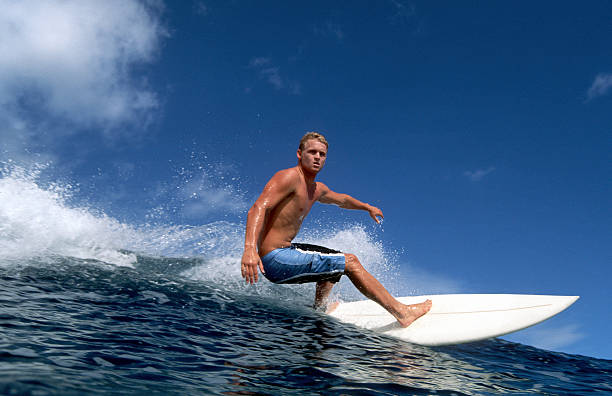
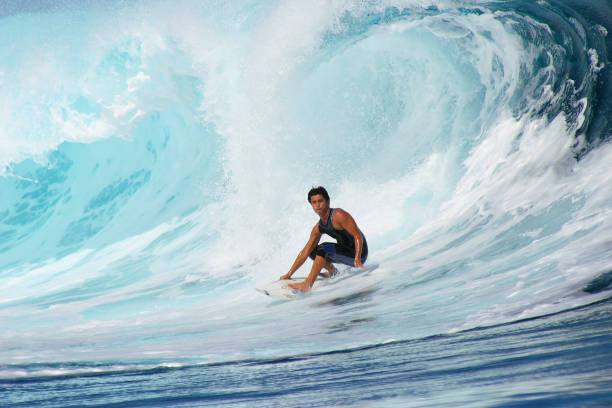
There are waves that give you a ride, and then there are waves that give you a whole philosophy. Malibu’s first point breaks along that stretch of pale sand and beachfront mansions isn’t just a wave—it’s a slow-burning canvas that taught surfers to walk. The rest of the world chased the barrel, but here, in the gentle glass of a southern California autumn, a different kind of radical was born. It started with a simple question: what happens if you step toward the nose while the board keeps humming? The answer rewrote the language of stoke.
Malibu doesn’t jack up out of deep water like Pipeline. It doesn’t heave with the frothing malice of a Tahitian slab. The wave peels off a rocky point with a soft, shoulder-shedding patience, the kind of long arc that lets you breathe, think, and stroll. For decades, riders in heavy redwood planks would drop in, trim high, and ride straight to the beach, their noses scooping up foam only when the wave stalled. But then someone figured out that a slow wave rewards a slow dance. Eavesdrop on any old film from the late fifties, and you’ll see the first tentative shuffle of ankles—the genesis of the walk toward the tip.
The nose itself was the problem. For years, boards had enough rocker to keep you from pearling, but they were logs. You couldn’t just saunter forward; you’d bury the front rail and take a saltwater tumble. You needed a hull that displaced water cleanly, with a broad, flat nose that could plane like a skiff. The shapers answered—as they always do when the lineup whispers a need. They thinned the tail, widened the tip, and arched the deck so your weight shifted from your heels to the arch of your foot. The result was a board that could balance on a single point of water, a platform for finesse rather than force.
The first noserides were ugly, clumsy things. Guys would sprint two steps and freeze, arms flailing like a tightrope walker in a windstorm. But the wave at Malibu gave you time to correct your mistakes. A late takeoff would still pinch open into a forgiving shoulder, and that forgiving shoulder became a classroom. You could hang your toes over the edge, feel the hum of the fiberglass, and then correct your line before the whitewater suckled you back. That’s the secret of the Malibu right—it doesn’t punish the experimenter. It rewards the patient.
By the early sixties, the nose was sacred. Surfers like Dewey Weber and Mickey Muñoz weren’t just riding; they were choreographing. The hang ten became the crown jewel, a act of total commitment where both feet leave the tail and the board tilts into a delicate equilibrium. To hold that stance, you had to read the face like a weather map, trimming high on the upper shoulder to keep speed while the wave does its slow-burning dance. And when the nose pearled? You’d stick an arm out, pivot on your back foot, and swoop back into the curl—a move that took on the name “the Malibu cutback.“ It wasn’t a move of aggression. It was a move of conversation, a back-and-forth between rider and wave that grew out of the point’s rhythmic pulse.
You can’t separate the noseride from the wave itself. Malibu’s sections run long and tapering, with seams that crumble just enough to push you forward. The takeoff zone sits over a rocky reef, but the open stretch beyond the sandbags is pure sand and cobble, which smooths the swell into a continuous roller. That consistency is rare. A point break that works half a dozen times a year feels like a treat, but Malibu delivers with a seasonal reliability that turned it into a proving ground. Surfers from Santa Cruz to Hawaii shipped their boards down to test themselves on that clean green canvas. They’d paddle out, watch the locals clip their toes over the tip, and go back home with a new obsession.
Now, there’s a certain soul to it that the performance epoch nearly erased. Modern shortboards are rockets; they float over the face, and in the hands of a world-tour athlete, they spin and gouge with violence. But the noseride is a different generation—a meditation on patience, weight, and the joy of hanging on the edge of a whisper. When you see a grainy black-and-white photo of a guy in multicolored trunks, toes wrapped over the front block, arms outstretched like a bird, you understand that Malibu taught surfing how to be artful. The wave never asked for speed. It asked for balance.
That legacy lives on. Every longboarder who walks to the nose and feels the tail lift is channeling the ghosts of a point break that refused to rush. You can paddle out today and find the same glassy afternoon, the same seagull cries, the same sand-bottomed perfection. Just don’t forget to look down at your feet. The dance floor is still there, a thin strip of fiberglass that turned a gentle right-hander into the cathedral of stoke.