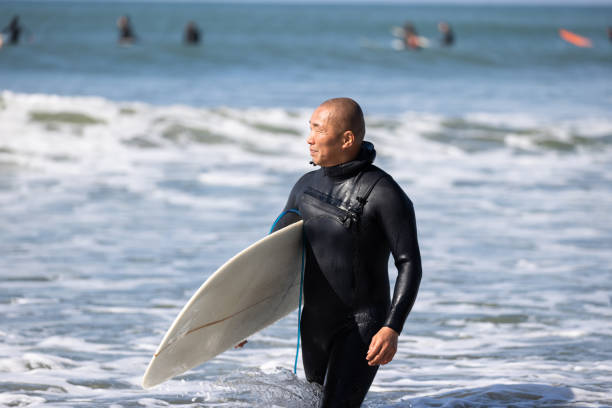
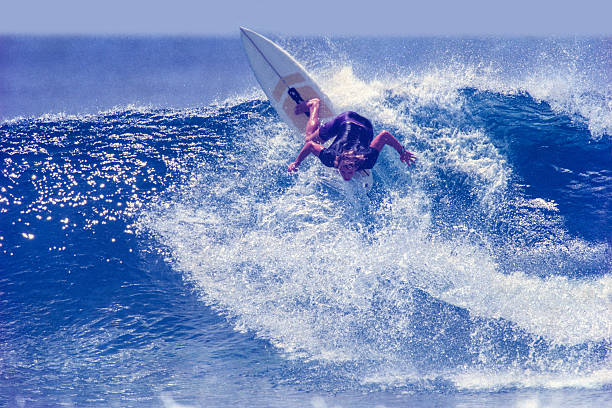
You paddle out on day three of camp with a weird mix of stoke and frustration. The wave looks right. You pop up. You do the thing. But it feels clunky, like your body is speaking a different language than your brain. Back on the beach, the coach hands you a phone. You watch yourself. Oh. There it is. Your back knee is driving into the turn about a half-second too late, and your weight is sitting over the tail like a sack of potatoes. The wave, a beautiful peeling right-hander, just rolled on without you. This, my friend, is where the real magic of a surf camp kicks in. It is not just about scoring perfect empty waves on a beach so stunning it makes your eyes water. It’s about the feedback loop.
Solo surfing often builds bad habits. You feel like you are ripping, but the footage shows a very different story. You might be looking down at your board instead of down the line. You might be leaning back on your takeoff, dragging that fin. Without a coach on the sand watching your every move and a camera capturing the truth, you are basically flying blind. A good camp tears down that illusion fast. The best ones do it not to crush your ego, but to show you the skinny on what a proper bottom turn or a smooth cutback actually feels like. That is the heart of the improvement equation.
Think of it like this. Every wave you catch at camp is a little piece of the puzzle. When you paddle in, the coach has already watched the whole ride. They saw the fade, the drop, the first carve. They are not just a cheerleader. They are a pair of sharp eyes that catch the one thing you need to fix right now. Maybe it’s your head. Maybe you are staring at the nose of your board like it holds the secrets of the universe. The coach says, “Bro, look where you want to go.“ On the next set, you force your head to swing. Suddenly, your whole body follows. Your shoulders open. Your hips rotate. The board responds like a different piece of glass. That is the direct feedback from a human who knows what to see.
Then comes the video. This is where the real wave of truth washes over you. Watching yourself on a slow-motion replay is humbling and electrifying at the same time. You see the wave you thought was a perfect top-to-bottom attack was actually a half-speed pump with a limp finish. But you also see the flicker of potential. You see the turn that worked, and you can compare it to the one that did not. Your brain starts to make new connections. The coach can freeze the frame and point to your feet. “See that? Your front foot should be over the stringer for that turn. You were a couple inches back.“ That visual memory sticks with you in a way that a shouted tip from the beach never will. It burns the proper movement into your muscle memory.
Beyond the tech and the analysis, the camp environment removes the pressure to just survive. You are not fighting a crowded lineup full of locals who know every rip current. You are in a controlled space with other people who are stoked to learn. This changes your whole approach. You stop surfing scared. You start surfing loose. That looseness is the key. When your mind is quiet and your body is relaxed, the technique you just learned on the replay can actually flow through you. You start experimenting. You try that hard bottom turn the coach showed you. You might eat foam, but that is okay. You are in a safe sandbox.
That is the real gift. The feedback loop turns your surfing into a conversation. You try something. You get information. You adjust. You try again. Over a week, this loop tightens from a slow, awkward dance to a smooth rhythm. By the final day, you are not just repeating moves. You are flowing from one to the next. You are reading the wave a second earlier. You are making subtle adjustments without thinking. The camp gave you the tools, but the feedback loop gave you the wisdom to use them.
So when you are looking at camps, do not just look at the dreamy photos of empty waves. Ask about the coaching ratio. Ask about the video setup. Ask about how they break down your sessions. The best camp is not the one with the nicest resort. It is the one that gives you a mirror into your own surfing. Because once you see what you are actually doing, and once you learn how to fix it, you stop being a guy who goes surfing and start being a surfer who knows exactly what his body is doing on that board. And that, my friend, is the start of a whole new endless summer.