There’s no feeling quite like the first paddle of a dawn patrol, the ocean glassed off like a mirror, and your favorite board tucked under your arm. You hit the lineup, wait for that set to feather, swing around, and stroke into a clean little runner. As you pop to your feet, the last thing you need is your back foot sliding out from under you like a greased pig on a diner floor. That, my friend, is a wax problem. And more often than not, it ain’t the wax itself that’s failing you—it’s the temperature game. Surf wax isn’t just some random goop you scrape on your deck from a bar that smells like candy. It’s a finely tuned piece of gear that shifts its personality based on the water temp you’re riding in. Treat it like a one-size-fits-all deal and you’ll be eating foam before you can say “rebound.”
Let me break it down for you in true surfer speak. Wax comes in a few basic moods: tropical, warm, cool, and cold. Each one has a specific melt point and tackiness level engineered for a range of ocean temperatures. Tropical wax is hard and brittle because it’s meant to stay put when the sun beats down like a hammer on a summer glass-off. Cold water wax, on the other hand, stays soft and gummy even when your hands are numb and the air temps drop. If you slap tropical wax on your board in a 52-degree NorCal session, it’ll crack into little dry flakes and offer about as much grip as a smooth river rock. If you use cold water wax in Hawaii, it’ll turn into a mushy, messy paste that slides right off your deck and balls up under your toes like day-old oatmeal.
The trick is to match your wax to the conditions, but also to layer it properly. That’s where the basecoat comes in, and it’s an art that too many dudes skip. The basecoat is your foundation, the gritty, rough layer that gives your top coat something to bite into. You don’t need a whole bar for it—just a couple of quick passes in a crisscross pattern, pressing hard enough to leave a thin, rough texture. This creates the “tooth” that your softer top coat can grip into. Think of it like putting sandpaper on a skateboard deck. Without that tooth, the top coat just rolls around like a slip-n-slide. After the basecoat cures for a few minutes, you apply the top coat with lighter, quicker strokes, using a circular or crosshatch motion to build up those little beads of wax that give you traction under your feet.
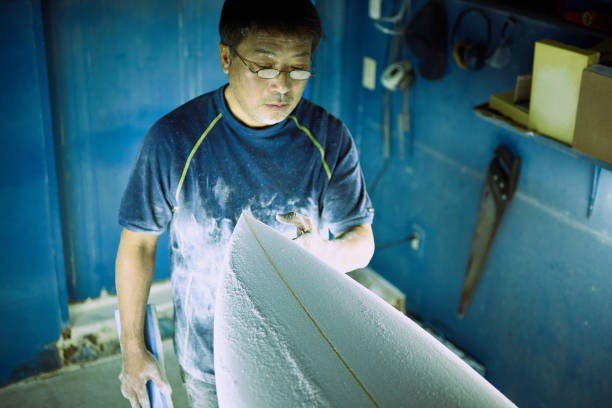
Now, here’s where a lot of surfers trip up. You see, the grip doesn’t come from a thick, smooth layer of wax all slathered on like peanut butter. It comes from those tiny, raised bumps that dig into the bottom of your feet and the pads of your hands. That’s why the comb is your best friend during a wax job. After you’ve built up those bumps, take a wax comb (or an old fork in a pinch) and rake through the deck in a grid pattern. This creates little channels that redirect water away from your traction points, so your feet don’t hydroplane the second you hit the face of a wave. It also roughs up the surface even more, giving you that “sticky” feel that makes you confident enough to drive hard off the tail or drag a crazy claim on the lip.
You also gotta think about where you’re waxing. Rail to rail, nose to tail—yes, but most of your grip comes from areas where your feet land and your hands grab. For a standard shortboard, that’s the tail pad zone and the nose where you throw your hand during a snap. But don’t neglect the middle of the deck if you’re a knee-paddler or if you ride a longboard and like to cross-step up and down the stringer. A solid, uniform wax job across the whole deck not only helps with grip but also with durability. Uneven wear means you’ll be re-waxing constantly, and nobody wants to spend their golden hour scraping off yesterday’s melted mess.
Here’s another cold truth: the sun is wax’s biggest enemy. Leave your board baking in the parking lot under a blazing summer sky, and even tropical wax will turn to goo. That’s why you see gnarled old salts hanging their boards in the shade or tossing a towel over the deck between sessions. When your wax starts to melt into a smooth, shiny sheet, you’ve lost the texture that gives you grip. A quick trick is to slap a little cold water wax as a top layer during a hot afternoon, just to add some extra tackiness without having to strip the whole deck. It’s a hack that works in a pinch, but it won’t save you from a bad basecoat.
The history of surf wax is a story of gritty trial and error, from the old Hawaiians using tree sap and fish oils to the 1960s pioneers who discovered paraffin’s sweet spot. These days, you can get eco-friendly plant-based waxes that don’t pollute the lineup, and they work just as well as the old petroleum-based bars. But no matter what you use, the golden rule remains the same: match the temp, build a solid base, layer it up, comb it out, and keep it out of the sun. Do that, and your feet will stay locked, your turns will feel alive, and you’ll spend more time slotted in the pocket than sliding sideways toward the reef. The ocean gives you the wave, but it’s your wax that keeps you on it. So next time you’re checking the buoys for water temp, remember to check your bar too. Your board will thank you, and so will your face when you’re not eating a rollie.