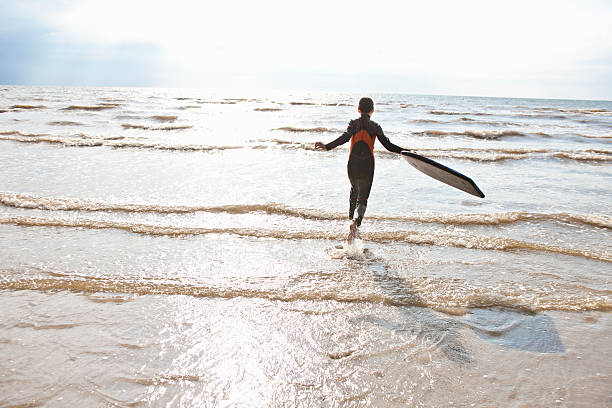
Every lineup has one. That little blur of energy, all elbows and knees, paddling like a maniac on a board that looks way too big for their tiny frame. They take off on waves that would make grown surfers think twice, eat a beating, and paddle right back out with a grin so wide it could swallow the horizon. This is the grommet, the young blood of the surfing world. It is a term that gets thrown around the beach like a loose leash, but being a grommet is more than just being young. It is a state of being, a badge of honor worn with board wax under the fingernails and saltwater crusting the hair. Understanding the grommet is understanding the purest, most unfiltered heartbeat of our entire surf culture.
The word itself has a hazy origin, like a wave breaking too far out to see clearly. Some old salts trace it back to a slang term for a young apprentice or a ship’s boy, a term borrowed from the British Royal Navy and the Australian bush. Others claim it comes from the grommets in a sail, those metal rings that hold everything together, essentially the small but crucial parts that keep the whole rig from falling apart. Both explanations work. A grommet is an apprentice to the ocean, learning the ropes, getting tangled up, but absolutely essential to the spirit of the lineup. They are the future of the tribe, learning the dance between the tides and the wind.
But being a true grommet isn’t just about age, though you’ll typically find them between the ages of eight and sixteen. It is about that relentless, almost annoying, level of stoke that has no off switch. You see it in the way they run down the sand, board under one arm, not a care in the world for the hot sand or the sharp shells. They don’t walk to the water. They sprint. A grommet is the kid who asks a thousand questions between sets. How do you read a rip? Why is this spot a left and that one a right? What does goofy foot mean again? They absorb information like a dry sponge hitting a puddle.
The grommet hierarchy is a funny thing. You have the sand grommets, the ones still learning to pop up in the whitewash, wearing baggy board shorts that belong to their older brother. Then you have the reef grommets, the fearless ones who have graduated to the main peak, paddling into the lineup where the adults sit. The locals might give them a hard time, an occasional paddle battle or a stern word about etiquette, but there’s a secret respect for the little kid who hucks themselves over a ledge without blinking. That grommet is earning their stripes, one wipeout at a time.
The language of a grommet is unique. They speak in a rapid-fire dialect of pure joy and chaos. They will yell about getting pitted, describe a barrel as super shacked, and talk about a new fin set up like it’s a sacred text. They are ruthless critics of their own performance. You will hear a twelve-year-old paddle past you, muttering about how they totally mooned that last wave, beating themselves up for sliding out on a cutback that most adults would have celebrated. This self-analysis, this drive to improve, is the engine that pushes the entire sport forward. Every pro surfer you watch on the World Tour started out as a grommet, probably getting stuck inside a closeout set or having their leash snapped by a cranky local.
The relationship between a grommet and their board is sacred. That first board, usually a soft-top or a heavy, waterlogged foamie, is a vessel of dreams. They wax it obsessively, sometimes putting on three layers because they heard pros do it. They carry it around the house, sleep next to it, and draw on the bottom with permanent markers. The board takes a beating. Dings from rocks, rails crushed from poor landings, sun-bleached deck pads. But to the grommet, that board is perfect. It is the key to a world where the only rule is to have fun.
The social etiquette of the grommet is a work in progress. They are learning the code. They might snake a wave because they didn’t see you, or paddle right through the middle of the lineup like a little bull in a china shop. But the good ones, the ones who will stick with surfing for life, start to pick up the vibe. They learn to sit on the inside, to wait their turn, to give a respectful nod to the surfer who just shredded a set wave. They learn that the lineup is a shared space, a rotating door of waves and karma. A grommet who learns this lesson early earns the respect of the whole beach.
Ultimately, the grommet is the soul of surfing. They remind us why we paddle out in the first place. Before the contest jerseys, the sponsorship pressure, the cold morning commutes to a crowded break, there was just the sheer, unadulterated joy of being in the ocean. When you see a grommet take off on a wave, arms flailing, laughing before they even make the drop, it hooks you back into that primal feeling. They are the keepers of the stoke, the torchbearers of a lifestyle that is all about chasing the sun and the next wave. So next time you see a little blur paddling out, give them a nod. That’s the future of the sport, and right now, they are living the dream better than anyone.