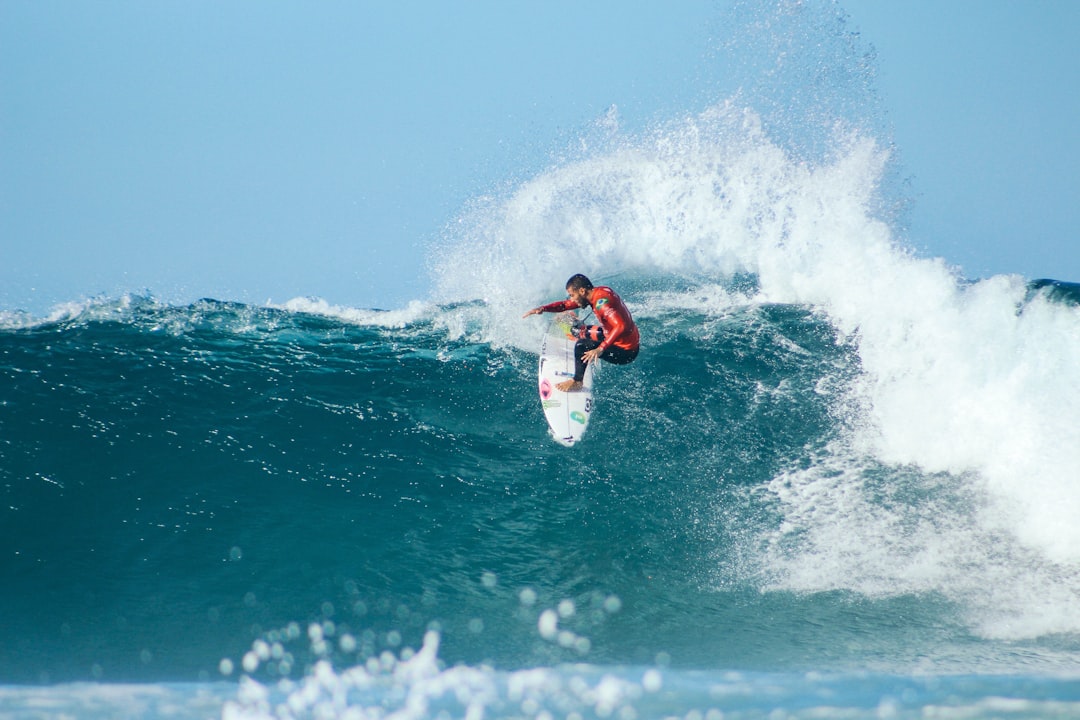
The real juice of surfing, the part that separates the foam-riding tourists from the guys and gals who truly shred, doesn’t happen on the lip. It doesn’t happen in the barrel, and it sure doesn’t happen on the walk to the beach. The magic, the raw horsepower, the heart of a radical ride, all begins in one single, sacred movement: the bottom turn. This isn’t just a maneuver; it’s the fundamental building block of every single powerful move you’ll ever pull off. Without a solid bottom turn, you’re just a leaf in a washing machine.
When we talk about shredding with power, we’re talking about harnessing the ocean’s energy and converting it into speed and trajectory. The bottom turn is your torque wrench. It’s the moment you stop being a passenger and become the driver. As you drop down the face, looking at the flat, green wall of water rushing past you, the instinct is to lean away from the wave, to slide out to the shoulder where it’s safe. But that’s not shredding. Shredding demands you lean into the pit. You have to drive your rail, that hard edge of your board, deep into the base of the wave where the water is steepest and the energy is most raw.
Think of the wave as a curved wall of glass. Your bottom turn is the arc at the very bottom of that wall. You start at the top, feeling that familiar drop of gravity as you pop to your feet. Your eyes are locked on the horizon, or the section you want to hit. As you reach the trough, the low point of the wave, you don’t just turn. You load up. You squat low, pushing your back foot down hard on the tail to engage the fin and drive the rail. Your front arm points where you want to go, up the face. Your torso twists open, coiling like a spring. This compression is key. By sinking low and pushing against the water, you are literally storing energy in your legs and core.
This is the “load” phase. You feel the board grip the water. There’s a distinct tension in the stringer of your board as it flexes against the pressure. Then, you release. You explode upward, driving off that back foot, uncoiling your body like a whip. This is the “project” phase. The board follows the arc you carved at the bottom, and you are shot up the face with maximum speed and trajectory. This isn’t a gentle carve. This is a power carve. You aren’t just turning; you are using the wave’s own structure to launch yourself. When you see a surfer do a massive, vertical snap on the lip, throwing a huge sheet of water, that was created entirely by the speed and angle generated in the bottom turn that came three seconds before.
The term “shredding” itself implies tearing, ripping, and destroying the wave. But to truly shred, you need to respect the power source. A weak bottom turn will only get you a weak snap, a half-hearted cutback, or worse, a pearling into the trough. The best surfers on the planet, the guys who make it look like they’re dancing with the ocean, have bottom turns that are deep, deliberate, and brutally powerful. They are not afraid to touch the bottom of the wave. They bury the rail so deep that the water cascades over the inside edge of the board. It’s a full commitment. It’s a conversation between the surfer and the wave, where the surfer says, “I see your power, and I’m going to use it.”
This isn’t just technique; it’s the soul of the style. Different bottom turns create different effects. A roundhouse bottom turn, where you draw a wide, flowing arc, sets you up for a cutback that brings you back into the power source. A tight, vertical bottom turn is what you need for a snap or a re-entry. A long, drawn-out bottom turn, where you trim across the flat section before the turn, is classic point-break style, building speed over distance. But the principles are always the same: get low, look where you want to go, drive the rail, and explode.
So next time you paddle out, don’t just think about the lip. Don’t just think about the barrel. Think about that bottom corner. Spend a session just focusing on that one move. Try to feel the water pushing back against your fin. Try to get your shoulder all the way down to the water as you compress. Try to create so much speed off the bottom that you fly past the section you were trying to hit. That’s when you know you’ve found it. That’s the feeling of truly riding with power. That’s the feeling of shredding. The wave gives you the energy, but the bottom turn is your tool to cash it in. Get that right, and every other maneuver on the wave becomes a whole lot easier, a whole lot faster, and a whole lot more fun. Stoked.