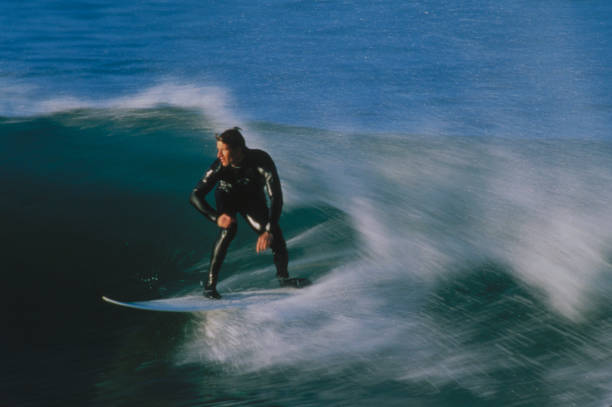
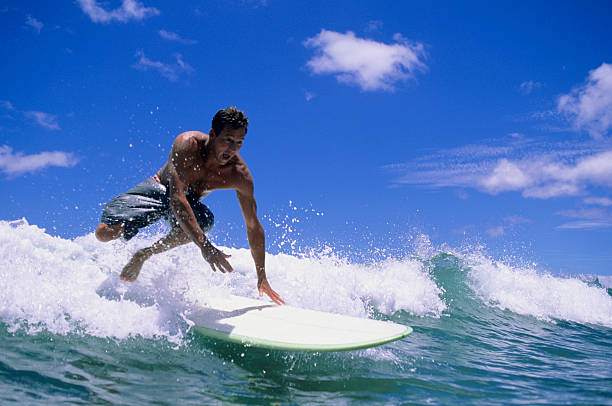
When you paddle out on a solid overhead day, you hear the old salts talking about getting shacked, getting pitted, or spending some time in the green room. These are not different things. They are all pointing to the same transcendent moment that every surfer, from the grom just learning to stand up to the gnarled veteran with more reef scars than tattoos, is chasing. The green room is the hollow space inside a breaking wave, that cylindrical chamber where the lip has pitched out far enough over the wave’s face to create a temporary, moving cave of water. It is the holy grail of surfing, a place where time seems to slow down and the rest of the world goes silent except for the roar of the ocean pressing in all around you.
Getting inside the green room is not just about being in the right place at the right time. It is a complex dance of reading the ocean, committing fully to the drop, and making a series of micro-adjustments with your body and board that happen faster than conscious thought. When a wave stands up and begins to pitch out, forming what surfers call a barrel or a tube, you have a brief window where you can either pull into the safety of the shoulder or drop down into that spinning vortex. Choosing to go for the barrel is a decision that separates the casual wave rider from the dedicated soul surfer. There is a moment, right as you take off deep and start your bottom turn, when you can see the curtain of water beginning to throw over your head. If you hesitate even a fraction of a second, the lip will land on your head and you will find yourself in the washing machine, getting worked by a set that seems to have no end.
But if you commit and keep your composure, you make that bottom turn and drive your board up and into the tube, tucking your body low, dragging your inside hand on the face of the wave for stability and balance. From that point on, you are not really steering anymore. You are reading the wave, shifting your weight forward and back, adjusting your angle to stay in the pocket where the wave is most powerful. The green room is alive, constantly changing shape. It can be a perfect, crystal-clear glass cylinder, like a tunnel in an aquarium, or it can be a dark, foaming maelstrom where you can barely see your own hand in front of your face. In that moment, you are completely isolated from the outside world. The beach is gone. Your friends on the shoreline are gone. There is only you, the wave, and the decision of whether to wipeout or earn the spitout.
Getting spat out, also known as getting shot out or getting launched, is the reward for a well-ridden barrel. You know you have made it when the wave releases you from its grip, propelling you out the end of the tube like a cork from a bottle. That feeling, that moment of emergence back into daylight with your arms raised in pure stoke, is why surfers paddle back out into seemingly impossible conditions. It is why we drive for hours to remote reefs and beachbreaks, chasing swells that the weather charts say might not even arrive.
The term “green room” itself has deep roots in surfing culture. Some say it comes from the color of the water when you are looking out from inside a perfect tube, that translucent green glow that illuminates the chamber like a cathedral of glass. Others trace it to the legendary Newport Beach surfer and filmmaker Bud Browne, whose 1960s surf movies captured the first real footage of what it looked like from inside a barrel. Whatever the origin, the phrase has become synonymous with the highest level of wave riding. It is a place that demands respect. Beginners do not find themselves in the green room by accident. It takes years of practice, dozens of beatings, and a willingness to paddle into waves that scare you just a little bit more each time.
There is a dark side to the green room as well. Getting trapped inside a collapsing barrel, what surfers call getting worked or getting held down, is one of the most humbling and dangerous experiences in the ocean. When a heavy wave closes its door on you, you can be tumbled along the reef or the sand bottom for what feels like an eternity. The green room can turn from a place of beauty into a washing machine of whitewater, foam, and raw force. That is why experienced tube riders develop a sixth sense for when to bail, when to cover their head, and when to stay calm and conserve oxygen while the ocean decides where it wants to spit you out.
Yet despite the hazards, the allure of the green room remains undiminished. It is the ultimate expression of harmony between human and nature, a fleeting moment where you are completely inside the energy of the ocean. For those who have felt it, there is no turning back. You become addicted to that feeling of being shacked, of living inside the wave for just a few seconds that feel like an eternity. It is not about showing off or impressing anyone on the beach. It is about a private conversation between you and the sea, a shared secret that only those who have experienced it can truly understand. The green room is waiting. All you have to do is paddle out, take a deep breath, and drop in.