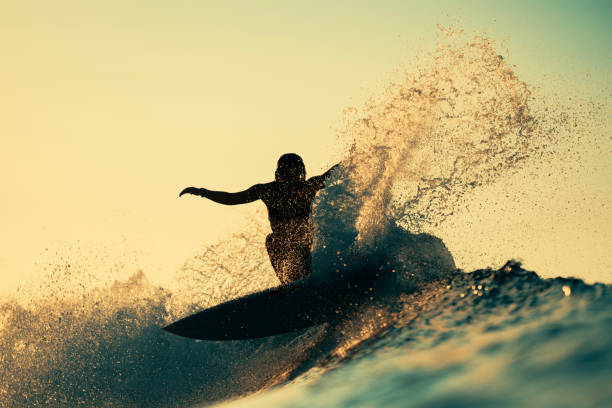
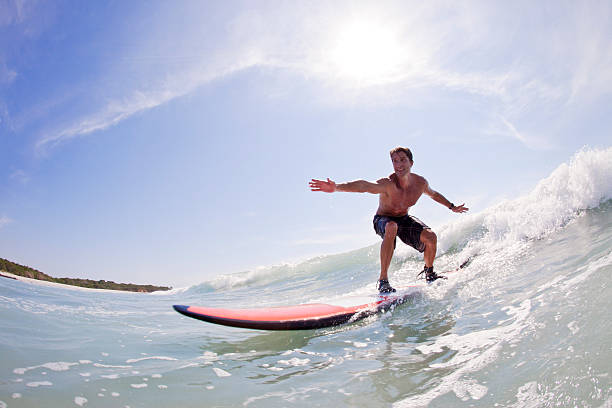
You see it all the time at the break. Some kook with arms like ropey spaghetti is scratching for every wave that rolls through, burning out his shoulders, huffing like a sea lion, yet still missing the set. Meanwhile, some mellow old salt on a beat-up log just gives two casual strokes, tilts his rails, and glides straight into the throat of a double-overhead bomb. No frantic flailing. No epic battle against the ocean. Just pure, effortless attendance. That, my friend, is the glide phase — the holy grail of paddling power that most surfers never even know exists. And it has nothing to do with how many pull-ups you can crank at the gym.
Here’s the real deal: paddling for waves isn’t about brute force. It’s about timing your entry into the wave’s energy field so that the ocean does most of the work. Think about it like a pendulum or a skateboarder pumping into a bowl. You don’t muscle every inch of the transition. You feel the apex, the moment where gravity and momentum sync up, and you unleash your strongest strokes just as the wave’s face starts to lift you. That is the glide phase — a narrow window, often only two to three seconds long, where your board accelerates without you having to paddle harder. If you miss it, you’re stuck in the trough, trying to drag a planing hull uphill through water that’s already pitching forward. If you hit it, the wave literally sucks you up the face and spits you out onto the open shoulder.
So how do you dial in that perfect timing? First, stop staring at the horizon. Watch the lump — the dark knot of water that rises a hundred yards out. Every wave has a tell. As it approaches shallower water, it will jack up, then steepen. The moment your board is still on flat water but the wave’s energy is already pushing underneath you, that’s the signal. You don’t paddle then. You wait. Let the wave lift your tail and tilt your board upward. Feel the surge — that weird sensation of being grabbed from below. When your nose starts to point down the line and the water suddenly becomes slick, that’s when you explode. Three rapid, powerful, crane-your-neck-forward strokes. No more. No less. Those three strokes are the difference between dropping in clean and getting pitched over the falls.
Now, here’s where the glide phase gets subtle. The angle of your board matters just as much as the power of your stroke. If you’re paddling dead perpendicular to the beach, you’re forcing the wave to hit your rail flat, which kills your momentum. Instead, aim slightly down the line, maybe twenty to thirty degrees off the peak. This lets the wave’s face slide under your board as you gain speed, turning that raw surge into forward motion. It’s like trimming a sailing boat. You’re not trying to fight the wave — you’re using its slope as a ramp. That’s why the best paddlers always look like they’re barely moving their arms. They’re not. They’re just angled correctly, letting the glide phase do the heavy lifting.
But here’s the kicker that trips up most surfers: you have to start paddling before you actually see the wave break. If you wait until the white water is already bubbling at your feet, you’re done. The glide phase is all about anticipation. You have to commit to your line while the wave is still a clean, unbroken slope. That means reading the bump as it moves over a sandbar or reef, predicting where the wave will hit its steepest point, and positioning yourself a few feet deeper than you think you need. When the wave finally lifts you, you’re already moving at speed. Then the glide phase kicks in, and all you do is give those three strokes to fine-tune your position.
Another factor that separates the wave-hungry from the wave-rich is breathing. Paddling with your lungs half-full of stale air is like driving a car with the emergency brake on. Take a deep breath right before the surge hits. Then exhale slowly as you paddle. This keeps your torso loose and your arms fluid. Tension is the enemy of the glide. When you’re clenching your shoulders and gritting your teeth, you create drag — both in the water and in your body. Relaxed arms stroke faster with less effort. Your chest stays flat, your hips rotate slightly, and your board skims.
Finally, never underestimate the value of a good paddle handle — your hand shape. Cups, not claws. Don’t slap the water; slide your hand in like you’re sneaking into a cool ocean. Pull back all the way past your thigh, then recover low and smooth. This creates a constant, laminar flow under your board, which extends the glide phase even longer. Before you know it, you’re on your feet, dropping down the face, wondering why you ever thought surfing was hard.
So next time you’re out there, ditch the ego, slow your roll, and find the glide. The wave will come to you. You just have to be super patient and super stoked.