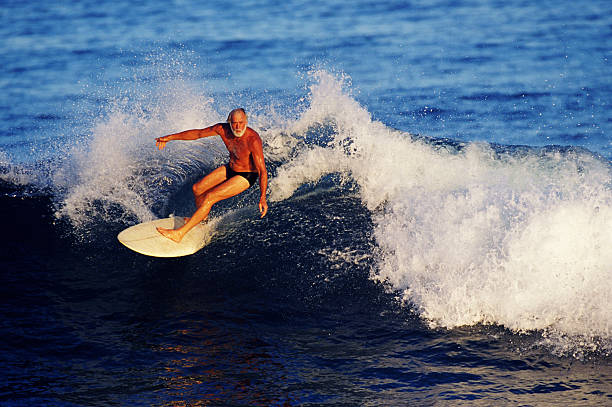
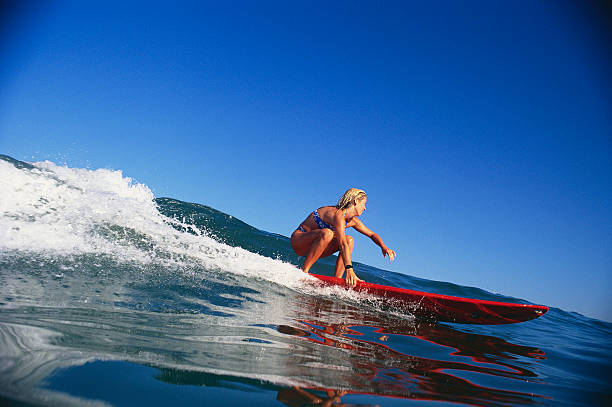
You’ve got the stick. You’ve got the wax. You’ve got the rash guard that smells like a wet dog and a thousand sunrises. But if you really want to unlock the soul of a wave, you need to look beneath the board. Right there, between you and the ocean’s pulse, are the fins. Most groms treat them like an afterthought, something to slap on before paddling out. But the deep-water knowledge, the kind that separates a smooth drop from a sketchy tail-slide, lives in the foil, the rake, and the placement of these little pieces of plastic, fiberglass, or honeycomb composite.
Think of your fins as the rudder of a longboard, the stabilizers on a jet, and the claws on a cat, all rolled into one. They do more than just stop you from spinning out. They channel the energy of the wave through your rail, give you drive off the bottom turn, and hold that line during a cutback. When you see a pro casually floating down the face, it’s not just their legs; it’s the perfect marriage of template and template. For the traveling surfer chasing that endless summer, your fin quiver is just as important as your board quiver. One slabby reef in Mexico wants a completely different setup than the crumbling point break in your local spot back home.
Start with the basics: the thruster. That three-fin setup is the great equalizer, the balanced middle path. It gives you pivot, hold, and a predictable release off the top. For the traveling surfer hitting a mystery wave, the thruster is your safety net. It’s forgiving when you’re tired, and it works in everything from knee-high slop to a solid overhead drop. But if you want to push the limits of speed, look at a quad. The quad, with its four smaller fins, is like adding a turbocharger. It creates less drag and more drive down the line. You lose a little bite on the pocket, but you gain a smooth, train-on-tracks feeling that is pure joy on a long, walled-up point break. And if you ever find yourself on a fat, mushy day, the twin-fin is your soul. That loose, skatey feel allows you to slide the tail out with zero effort, just a subtle head fake.
Now, let’s talk about the actual shape of the fin. The foil—how the fin curves from tip to base—is the hidden secret. A flat inside foil gives you a solid bite, great for steep, hollow waves where you need that immediate control. A 50/50 foil, symmetrical on both sides, is the lazy river of fins. It slides easier, which is perfect for turning hard in soft surf. And the rake? That’s the angle. A fin that sweeps way back, with a long base, is a cruiser; it’s stable and straight. A fin that stands up tall with a straight back, like a 7.5-inch pivot fin in a classic single-fin longboard, gives you that sharp, tight pivot.
For the surfer packing a bag for an island trip, the rule is versatility. You don’t need eight sets of fins. You need a solid, medium-sized thruster set (like a set of FCS II Performer or Futures Alpha), and a quad set that matches the volume of your board. That covers ninety percent of the planet’s waves. But never underestimate the power of a single fin. On a log or a mid-length, removing the side bites and riding on a large center fin teaches you something crucial: patience. You learn to engage the rail, to feel the water, to guide the board rather than muscle it. It’s a meditation on subtleties.
Ultimately, your gear is a conversation with the ocean. The board is your canvas, but the fins are your brush. A simple change—swapping a stiff, upright fin for a flexible, raked one—can transform a morning session from a frustrating fight into a glide symphony. So next time you’re standing in the parking lot, staring at a lineup, take a second. Feel the fiberglass. Check the screw tension. Your next best wave might be hiding in a tiny adjustment to the hardware you never see.