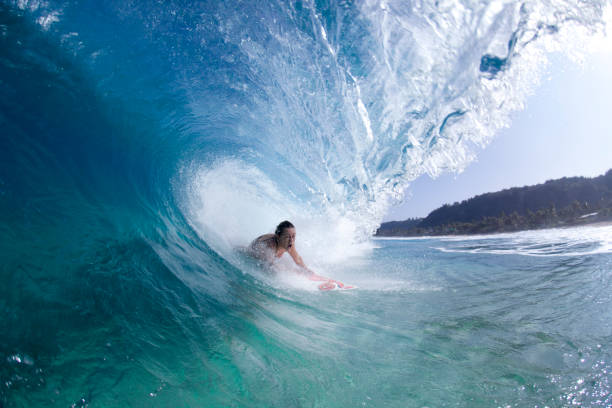
Let’s cut straight to the chase. You can have the sickest bottom turn in the lineup, but if you can’t get to your feet, you’re just a spectator. The absolute, non-negotiable bedrock of surfing isn’t some radical aerial; it’s the humble, grueling, and utterly essential art of paddling. Think of it as the engine of your entire surf experience. Master this, and you unlock everything else. This is about paddling to perfection, the no-nonsense foundation for mastering the waves.
First off, forget looking cool. Paddling is work. It’s the grind before the glory. But it’s a grind you can optimize. It starts before you even hit the water, with your position on the board. Lie too far forward, and the nose pearls, turning you into a human submarine. Lie too far back, and you’re plowing water, fighting for every inch. The sweet spot is where the board lies flat and level on the water. A good rule of thumb: when you’re lying down, the nose should be about an inch or two above the surface. Your chest should be just behind the center of the board. This is your command post.
Now, the stroke itself. This isn’t a frantic doggy-paddle. It’s a deep, purposeful, reach-and-pull motion. Reach forward, not out to the sides. Your hand should enter the water near the nose of the board, fingers together like a blade. Pull your arm back through the water in a long, smooth arc, all the way past your hip. The power comes from engaging your back and shoulder muscles, not just your arms. Think of it as climbing a ladder in the water, hand over hand, with a slight body rotation for extra reach. Keep your head up and your eyes on the horizon—this keeps your spine aligned and your board flat.
Efficiency is king. A long, strong stroke will always beat a frantic, short one. Rhythm is your best friend. Find a steady, sustainable tempo you can hold for the long haul, from the beach break through the channel and out back. This is your cruising gear. When you need a burst of speed to catch a wave, that’s when you shift down and unleash a powerful, rapid-fire sprint. But that sprint is built on the foundation of that efficient, long-distance technique.
Then there’s the duck dive or turtle roll—your passport through the impact zone. For shortboards, the duck dive is a must. As the whitewater approaches, paddle hard to build speed, then push the nose down with both hands, using a knee or foot on the tail to sink the rest of the board beneath the foam. For longboards or funboards, the turtle roll is your move. As the wave hits, flip the board over, holding the rails, and let the wave pass over you and the inverted board. Both maneuvers are about using the wave’s energy against itself, conserving your own. Flailing and fighting the whitewater is a surefire way to get worked and end up back on the beach, gasping.
Finally, understand that paddling is your connection to the ocean’s rhythm. It’s how you read currents, how you position yourself in the lineup, and how you conserve energy for when it counts. A surfer with impeccable paddling technique moves through the water with a quiet confidence. They’re not wasting energy, so they have more in the tank for those critical pop-ups and the ride itself.
So, next time you’re staring down the beach, don’t just dream of the carve. Dream of the paddle. Dial in that position, lengthen that stroke, find your rhythm, and own your duck dives. Because the truth is, the wave is only half the equation. The other half is you, and your ability to get to it. Hone your engine, and you’ll find yourself catching more waves, feeling less burned out, and truly starting your journey to mastering the waves. Now get out there and put in the miles. The lineup awaits.