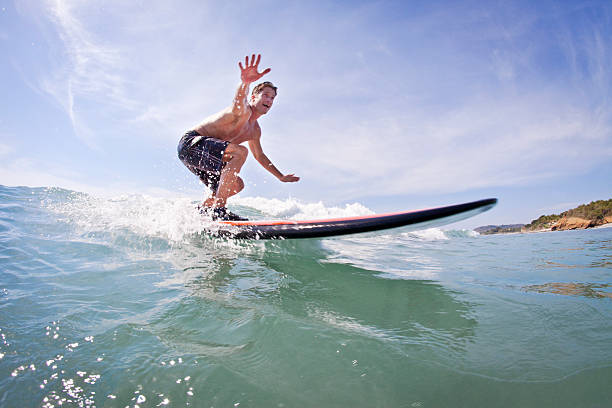
When you paddle out at dawn and the ocean goes glassy, catching that first set wave of the day, you might feel a sense of peace that has been passed down through generations. No one embodies that feeling more than Duke Paoa Kahanamoku, the legendary Hawaiian waterman who brought surfing to the world and forever changed the way we chase the sun.
Duke didn’t just ride waves; he glided across them with an elegance that made the ocean look like a dance floor. Born in Honolulu in 1890, he grew up in the warm waters of Waikiki, where surfing was not just a sport but a sacred part of Hawaiian culture. In those days, the ancient art of wave riding had been nearly forgotten under colonial influence, but Duke and his crew kept the stoke alive. They shaped their own boards from solid koa wood, some over sixteen feet long and weighing over a hundred pounds. Yet they handled those heavy logs with the grace of a swallow dancing on the wind.
His big break came in 1912 at the Stockholm Olympics, where he won gold in the 100-meter freestyle and silver in the relay. That athletic fame gave him a global platform. He toured the world, giving swimming exhibitions and anywhere he found decent swell, he’d paddle out and show the locals how it was done. From California to Australia to New Jersey, Duke introduced people to the pure joy of riding a wave. He didn’t just teach technique; he shared a philosophy. In his mind, surfing was a way to connect with nature, to find balance, and to spread aloha.
Now, when we talk about the lineup, we often think of steep drops and barrel riding, but Duke’s style was all about soul. He could hang ten on those massive boards, a skill that seemed impossible back then. People called him the human torpedo in the water, but on the waves, he was pure poetry. Witnesses swore they had never seen anything like it. He had a smile that could light up the whole beach, and his presence made the ocean feel like a friend rather than a foe.
Beyond the sport, Duke was a cultural icon who broke down barriers. He used his fame to challenge the racism of his era, becoming a symbol of hope for native Hawaiians. He never lost his humility, always calling everyone “bruddah” and “sistah.“ He traveled the world, but his heart remained in the islands. When he wasn’t traveling, you’d find him at Waikiki, taking visitors out for rides on his big redwood board, sharing the stoke for free. He believed surfing should be accessible to everyone, regardless of status or skill.
As the years rolled on, Duke continued to surf well into his sixties, proving that the ocean doesn’t care about age as long as you show respect. He also helped revive the sport in Hawaii, organizing the first surfing competitions and mentoring young wave riders. His legacy lives on in every surfer who ever caught a wave. When you see a longboarder walking the nose or a kid catching their first white water, that’s Duke’s spirit flowing through the lineup.
The famous Eddie Aikau would later say, “The best surfer out there is the one having the most fun.“ That’s pure Duke. He didn’t measure a surfer by the height of the wave or the complexity of the turn. Instead, he looked at the joy in your eyes and the aloha in your heart. That’s why he remains the ultimate icon of our sport. He didn’t just surf. He lived a life that was the endless summer, traveling the globe with a board under his arm and a smile on his face.
Even today, when the trade winds blow and the sets march in at Waikiki, you can almost see his silhouette gliding across the water. Duke Kahanamoku wasn’t just a legendary surfer; he was the soul of the ocean. He taught us that surfing is more than a pastime - it’s a way to harmonize with the natural world and with each other. His famous statue stands on the beach, watching over the shoreline, reminding every surfer who paddles out to carry that same spirit of respect, joy, and aloha. So next time you catch a nice glassy wave, give a shout out to the Duke. He’s the one who showed us all how it’s done.