Most folks picture Duke Kahanamoku at Waikiki, riding those rolling South Shore bombs with that timeless grace, his hair slicked back, a grin on his face that could melt the heart of a hurricane. But one of the most radical chapters in his story didn’t happen in Hawaii. It happened on a chilly June morning in 1915, on a two-mile stretch of boardwalk in Atlantic City, New Jersey, where Duke paddled out into the Atlantic Ocean and introduced the East Coast to the stoke of surfing for the very first time.
Back then, most Americans had never seen a surfboard up close. They’d heard wild stories from the islands about men walking on water, catching waves on massive slabs of wood, but it sounded like myth. Duke, already a gold-medal swimming hero from the 1912 Stockholm Olympics, was touring the mainland for exhibition swims and vaudeville shows. Atlantic City promoters caught wind of his Hawaiian roots and begged him to show them this “surf riding” thing they’d read about in the papers. Duke, being Duke, said “Shaka” and shipped his eighteen-foot, solid redwood board—a hundred pounds of pure koa if you can believe it—across the country by rail.
The morning of the demo, a crowd gathered on the famous Steel Pier. Reporters, photographers, and curious locals lined the railings as Duke stripped down to his swim trunks, a simple man with a board thicker than a tree trunk. The Atlantic was flat as glass by Hawaii standards—maybe three-foot mushburgers at best—but Duke didn’t care. He was an ambassador of aloha, not a wave snob. He paddled out with that same long, easy stroke he used in the Olympics, the locals watching in disbelief as he sat on his board, arms crossed, waiting.
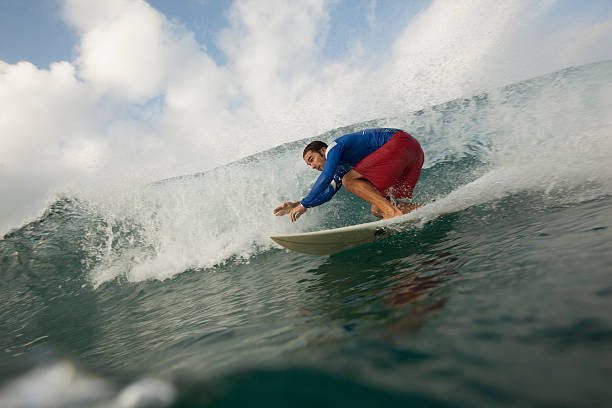
When a small bump finally rolled through, Duke popped up with the same fluid motion he’d used on Waikiki’s biggest swells. He stood tall, arms out, surfing that little sliver of Atlantic energy like it was a ten-foot Pipeline barrel. He turned, he carved, he even dropped to his chest and balanced on one leg. The crowd went absolutely bonkers. Newspaper accounts from the next day called it “Hawaiian wizardry” and said Duke “rode the waves as if born on the foam.” He must have paddled back out and done it a dozen times, each ride earning louder cheers.
But the real magic came when Duke did something unexpected. He pulled his board up onto the sand, grabbed a couple of local kids, and taught them the basics of paddling out. On that beach, in that cold, churning Atlantic, he passed the torch to a generation that had never even heard of the word “surfboard.” Those kids became the first East Coast surfers, though it would take another forty years for the sport to truly catch on out there. Duke didn’t care about building a scene. He just wanted to share the feeling.
That single demo planted a seed. It showed the mainland that surfing wasn’t some exotic island oddity—it was a real, accessible, rippable sport that could work anywhere there was a wave. Duke went on to perform similar exhibitions in California, Australia, and New Zealand, but the Atlantic City event holds a special spot. It was the first time surfing hit the Eastern seaboard, the first time a finless, hundred-pound plank rode the thin, winter-fed swells of Jersey. Duke’s aloha spirit turned a publicity stunt into a cultural bridge, linking the Pacific to the Atlantic in a way no one had imagined.
Years later, a surf historian asked Duke which of his mainland demos meant the most. He smiled, looked out at the water, and said something like, “Every time you share a wave with someone new, you keep the stoke alive. Atlantic City was just me being a kid again.” That’s the Duke way. He never bragged, never claimed credit. He just paddled out, rode whatever the ocean offered, and let the joy do the talking. That morning in 1915 was more than a demo. It was the moment surfing’s endless summer stretched all the way to the East Coast, carried on the shoulders of the man who taught the world to ride the sea.