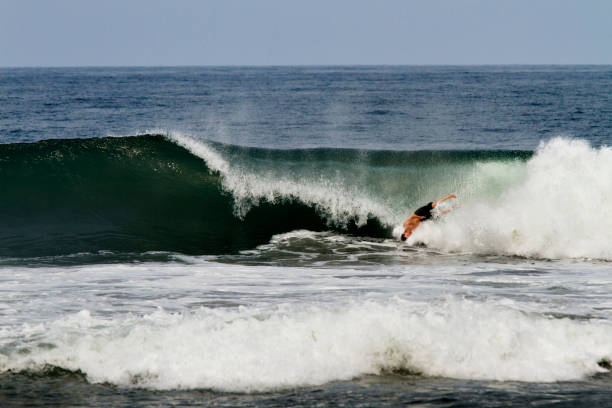
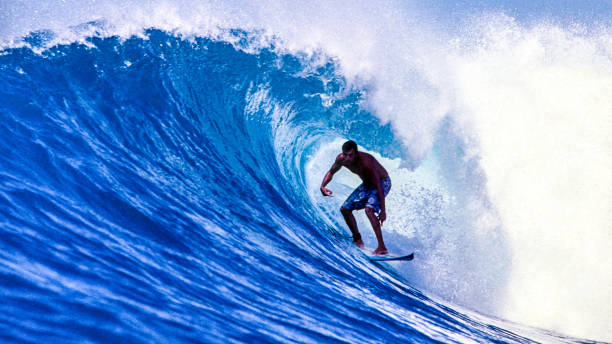
You paddle over the lip, feel that moment of weightlessness, and then you commit. The drop is a blur of rushing water and vertical wall, and for a split second you are just falling. But the real conversation, the one that separates the groms from the guys who actually earn the title of shredder, doesn’t even start until you reach the bottom. That’s where the magic happens. The bottom turn is not just a turn. It is the single most consequential move in all of surfing, the alpha and the omega of riding with power. If you don’t own your bottom turn, you don’t own the wave.
Think of it as the launching pad for every single maneuver you will ever attempt. A cutback, a re-entry, a tube ride, an air—they all rely on the speed and projection you generate at the base of the wave. Without a solid bottom turn, you are just a passenger, sliding sideways, hoping for the best. With a proper one, you become the driver. You harness all the potential energy of the falling water and convert it into pure, controlled velocity.
The mechanics are beautiful in their simplicity. As you come off the drop, you are in a crouch, low and compact. Your eyes are already locked onto the section you want to attack, not down at your feet. You shift your weight to your back foot, driving the rail of your board into the water. The trick is not to stomp. It is to sink the rail with a smooth, deliberate pressure. You want to feel the water grip the fin cluster and start to bend the board around the curve of the wave’s face. The spray should be a clean, white rooster tail, not a messy splash. That clean line of spray is the signature of a surfer who knows how to compress and release.
As you complete the arc of the turn, you are essentially loading the spring. You have compressed your body, buried the rail, and now you are at the bottom of the wave, looking up at a ramp of open face. This is the moment of release. You uncoil your body, extending your legs and pushing off the bottom of the wave. The energy that you stored by sinking the rail is now translating into speed. You are projecting out of the turn, flying up the face with a burst of power that feels almost effortless.
This is where the term “shredding” stops being just a word and becomes a physical feeling. You are not just riding the wave; you are attacking it, carving a signature into the water. A weak bottom turn produces a weak wave. A powerful bottom turn, one where you drive the rail deep and throw a massive sheet of spray, changes the entire experience. It allows you to get ahead of the curl, to pick your spot for a full-rotation carve, or to set the trajectory for a deep barrel. The best surfers in the world, the ones who make it look liquid and smooth, have spent thousands of hours honing this single move. It is the foundation of their flow.
The environment also dictates the art of the bottom turn. On a fat, rolling wave, you might keep it high and wide, using the turn more for trim and position. But on a steep, hollow, maxing-out beast, your bottom turn becomes a survival tool. You have to get low, drive that rail all the way to the bottom of the pit, and commit to a hard, high-line turn that shoots you right into the barrel’s mouth. That is the essence of power surfing. It is about adapting the same foundational principle to the conditions.
Never underestimate the feeling of a perfect bottom turn. It is a full-body commitment. You feel it in your hamstrings, your core, and the soles of your feet. When you feel the board release from the water at the top of the arc, that moment of light weight before you pivot back down, you understand why we chase this feeling. It is the most direct conversation you can have with the ocean. So next time you paddle out, forget about the fancy stuff for a minute. Focus on the bottom. Sink the rail. Compress. And then let it go.