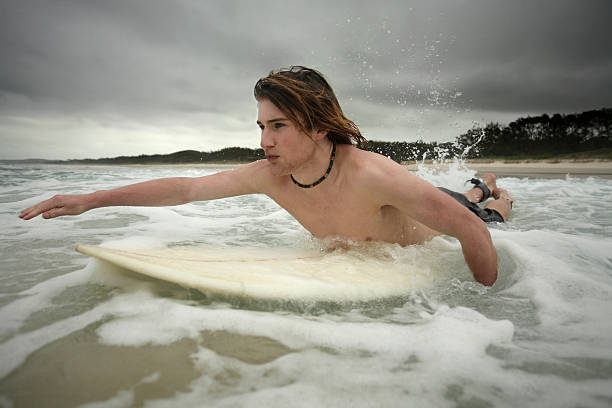
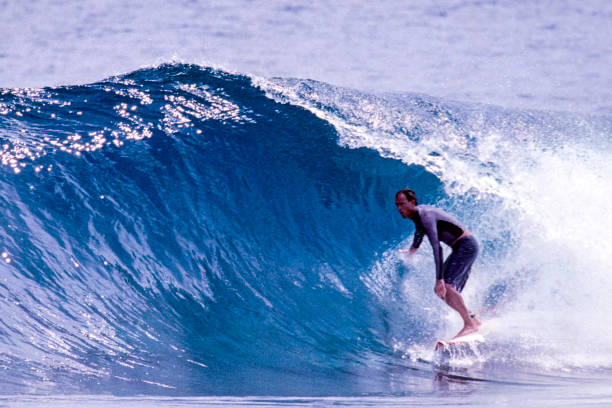
There is a moment that happens before the bottom turn. It is not the turn itself, not the hard carve that sends you back up the face, but the moment you commit to the wave. That split second when you pop to your feet, feel the board engage, and decide whether you are going to survive the drop or get pitched over the falls. Most surfers assume the bottom turn is where the magic happens, and sure, that’s where you generate speed and set your line. But the truth is, the bottom turn is already written in the way you drop in. If your takeoff is sketchy, your bottom turn will be a scramble. If your takeoff is dialed, the turn becomes a graceful extension of the momentum you already own.
Think of the drop as the first sentence of a story. You cannot write a ripping second paragraph if the first one is gibberish. When you paddle for a wave, you are already setting up your ride. Your hands press into the deck, your back foot finds its sweet spot over the fins, and your eyes lock onto the steepest part of the face. This is where anticipation meets action. The best surfers in the world do not just react to the wave. They read it before they even stand up. They know whether the bottom turn will be a wide, sweeping arc or a tight, vertical snap based on the angle of the drop alone. That awareness comes from years of feeling the water, but it can be trained by anyone who pays attention to the subtle clues the wave gives you.
Here is the thing about setting up your ride. On a typical beach break wave, your first move after popping up should not be a bottom turn. It should be a controlled descent. You want to ride the steepest part of the face with your weight centered, your knees bent, and your eyes looking down the line. If you look at the whitewash or at your feet, you lose the wave’s energy. Instead, fix your gaze on where you want to go—the pocket, the open face, the section that is about to pitch. That look tells your body where to position itself. It also tells your board where to go. Surfboards are remarkably sensitive to where you are looking. Your shoulders follow your eyes, your hips follow your shoulders, and your feet follow your hips. It is a chain reaction that starts with a single glance.
Now, a lot of surfers rush the bottom turn. They feel the wave steepening and they panic, jamming the rail into the water before they have any speed. That is a sure way to stall out or get hung up in the foam. Instead, let the wave do its work. As you drop, your board will naturally accelerate. That acceleration is your fuel. Do not burn it all at once. Wait until you feel the board settle into the trough, then begin to lean into the turn. The moment you decide to turn should feel like you are being pulled into the wave’s orbit, not forcing yourself into it. If you have set up your drop properly, your back foot will already be over the fins, your front shoulder will be pointing down the line, and your knees will be stacked like springs. From that position, a bottom turn is not a separate action. It is simply a continuation of the drop.
One trick that separates intermediate from advanced surfing is the concept of the “late drop” versus the “early drop.” An early drop puts you high on the face with plenty of time to set your line, but it can rob you of the intensity that makes bottom turns powerful. A late drop, where you paddle straight down the face as the wave is about to pitch, forces you to compress hard and absorb the shock with your legs. That compression is exactly what you need for a snappy, vertical bottom turn. You are loading your legs like a spring, and when you release that energy at the bottom, you explode off the top. So if you want a better bottom turn, practice dropping in a little deeper. Let the wave feel scary. That fear is your friend as long as you channel it into controlled weight distribution.
The fins matter, but not as much as the timing. A longboard with a single fin can make a beautiful, drawn-out bottom turn if you set your drop with patience. A shortboard with thrusters can pivot on a dime if you drop in with aggression. Neither is wrong. What matters is that your takeoff matches your intention. If you plan to hit the lip hard, drop in with your back foot already driving. If you plan to cruise and carve, drop in with your weight more centered and let the wave carry you. You can change your mind mid-drop, too. That is the beauty of surfing. The wave is constantly talking to you. The best surfers listen and adjust the bottom turn on the fly.
Ultimately, the bottom turn is not a move you think about. It is a feeling you cultivate. And that feeling starts the moment you paddle for the wave. If you focus on a clean, balanced takeoff, if you commit to looking where you want to go, and if you trust the speed the wave gives you, then the bottom turn will happen naturally. It will be smooth, powerful, and connected. You will not have to force it. You will simply ride the arc of the wave, and the ride will feel endless.