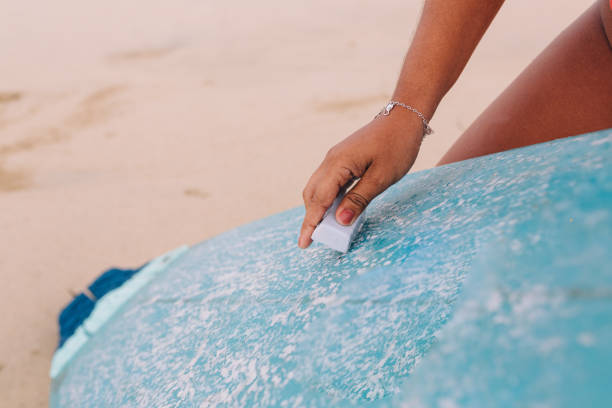
It’s a quiet morning, the wind is glassy, and you’re paddling out with a fresh stick under your arm. You might not think about the goop holding that thing together, but that goop—the resin—is where a whole lot of surfboard evolution lives. The old guard, polyester resin, has been the backbone of board building since the 1950s, handing down its legacy through generations of glassers and shapers. But then came epoxy, the new kid on the block, and it flipped the game on its head. For the average surfer, the choice between these two isn’t just a technical mumbo-jumbo; it’s the difference between feeling the wave through your feet or floating over it like a pelican.
Polyester resin is the salty veteran of the shaping room. It’s the stuff that made the longboard revolution possible, the magic that turned a block of foam into a glider. When you ride a classic poly board, you feel that immediate, direct connection to the wave face. The flex is there, that subtle chatter through the tail that tells you everything about the water’s texture. Polyester boards are stiffer and more responsive, meaning every ounce of your weight and every twitch of your ankle translates into drive through the turn. The reason these boards feel so alive is that polyester is a brittle resin. It doesn’t have a lot of give, so the energy from your rail goes straight into the water with zero lag. But that stiffness comes with a cost. You drop that rail on a reef or ding a fin box and you’ve got a spiderweb of cracks that spread like gossip at a point break. Polyester is repair-friendly, sure, but it’s also a fragile soul.
Enter epoxy resin, and the whole vibe shifted. Epoxy is a tougher beast. Technically it’s a thermosetting polymer with a lot more flex and a much higher impact resistance. When you shape a board with an EPS blank and epoxy, you end up with something significantly lighter. Your arms stay fresher on long sessions, and that float isn’t just from the foam core—it’s from the entire construction package. The buoyancy is insane. A six-foot epoxy shortboard paddles like a seven-foot poly board. But here’s the trade: that weight reduction and floatiness can make the board feel disconnected. Some call it “dead” underfoot. The flex pattern is different, more springy than snappy, which means the board wants to project you forward rather than let you pivot hard in the pocket. For days with gutless waves, or for the surfer who just wants to catch more waves and glide easier, epoxy is the king. It bounces off rocks, shrugs off dings, and lasts a whole lot longer than a traditional poly board.
The materials themselves are a story of chemistry and culture. Polyester resin uses a catalyst called MEKP to kick off its cure, which gives off that strong styrene smell we all know from a shaping bay. That smell is practically the cologne of surf history. Epoxy uses a different hardener, often one with a slower kick time, which means the glasser can take their time laying the cloth just right. The finish on an epoxy board is often clearer and glossier because there’s less yellowing over time. But the real split happens in the heat. Leave a poly board in a closed car on a summer day and you might come back to a board that’s warped into a funky taco shape. Epoxy handles temperature swings way better because its resin system has a higher glass transition temperature. So for the traveling surfer chasing good waves in harsh sun, epoxy is a no-brainer.
In the lineup, the debate still hums. You’ll hear old salts grumble that epoxy boards don’t “surf” like real boards, that they’re for kooks who can’t paddle a poly. Meanwhile, you’ll see a crew of local shredders on high-performance epoxies because they can swing the board around in the pocket with less effort. The truth is, neither one is better—they’re just different tools for different moments. The real evolution isn’t about abandoning polyester for epoxy or vice versa. It’s about understanding that the resin is just the glue in a system that also includes the foam, the glass cloth, and the shaper’s touch. Whether you’re floating down the line on a log or slashing a steep wall on a potato chip, the resin is what holds the soul of the shape together.
So next time you wax up, give a moment to the stuff that’s keeping your bottom contour locked and your rails crisp. Polyester and epoxy are two sides of the same endless coin, each with its own personality and purpose. And that’s the beauty of the evolution: we’ve got options, and every option leads to a better day on the water.