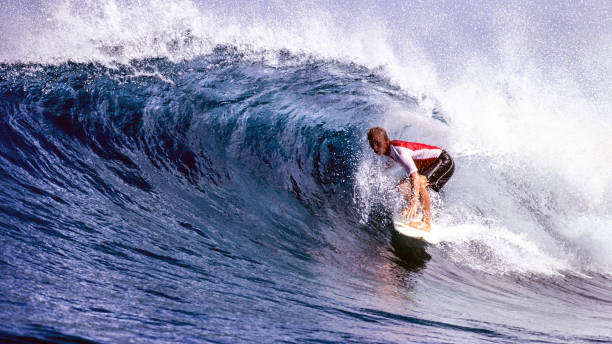
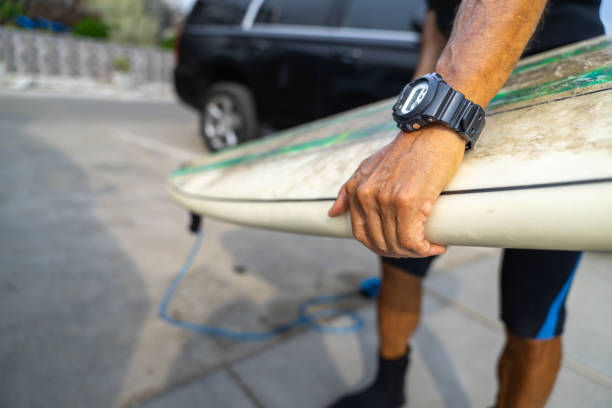
There comes a moment in every surf camp session when the stoke shifts from pure adrenaline to something deeper. You’ve been out there for an hour, your arms are noodles, and you’ve caught a handful of waves that felt more like survival than flow. Then your coach paddles over, looks you in the eye, and says something like, “Bro, you’re chasing the whitewater. You need to sit deeper and read the set.” That one sentence changes everything. Surf camps are not just about popping up faster or turning sharper. The real improvement happens when you learn to see the ocean not as a series of random bumps but as a living language of swells, currents, and shifting peaks.
The first lesson any solid surf camp will drill into you is that positioning beats power every time. Beginners often paddle frantically at every lump on the horizon, burning their energy before the real wave even arrives. The advanced surfers in your camp group sit there, barely paddling, but they catch twice as many waves. Why? They know the rhythm of the set. They understand that the ocean sends waves in groups, usually three to five per set, with smaller bumps in between. Instead of fighting for every ripple, they let the first wave of the set roll under them, using it to see where the next, bigger wave will peak. That patient approach is called the check-down, and it’s the single most underrated skill you can develop at camp.
When you’re at a dedicated surf camp, especially one in a place like Costa Rica, Bali, or the North Shore of Oahu, the instructors have seen thousands of surfers make the same mistake. They watch you paddle out, drop in on a closeout, and then spend ten minutes trying to get back out through the whitewater. They’ll paddle over and show you the lineup, almost like they’re guiding you through a maze. They point to a darker patch of water, a subtle bump that looks like nothing to you but screams “set wave coming” to them. Over the course of a week, your eyes start to change. You stop staring at the horizon waiting for a perfect peak and start feeling the ocean underneath you. You notice the pulse of the swell, the way the water pulls back before a set, the subtle rise and fall of the sea floor beneath your board.
Surf camps also force you to confront the reality of your own fitness and equipment. You might show up with a thruster that’s too small for the conditions, thinking it will make you look like Kelly Slater. But after a few sessions, your coach will hand you a bigger board, a step-up or even a longboard, and tell you to just sit on it and feel the glide. Suddenly, you’re catching waves earlier, paddling smoother, and your pop-up doesn’t feel like a desperate heave. The camp environment strips away your ego and rebuilds your approach from the ground up. You learn that a smaller board doesn’t make you a better surfer, but a board that fits the swell window does. That realization alone is worth the trip.
Then there is the mental game. The best surf camp instructors are part coach, part surf therapist. They know that fear and frustration are the biggest skill blockers. You’ll have sessions where the conditions are bigger than you’re used to, and your instinct screams at you to paddle back to shore. But the coach stays right next to you, telling you to breathe, to watch the horizon, to wait for the right one. They teach you to break the wave down into parts: the drop, the bottom turn, the top turn, the exit. Instead of panicking at the size, you start thinking, “Okay, I need to paddle hard here, plant my hand, look where I want to go.” That shift from reactive fear to proactive thought is the difference between a surfer who improves and one who plateaus.
Beyond the technical stuff, surf camps immerse you in a culture that values progression over shredding. You share waves with strangers who become friends. You learn the etiquette of the lineup, how to avoid dropping in on someone, how to read the hierarchy of the peak. You realize that improving your skills isn’t just about nailing a cutback. It’s about understanding the ocean’s mood, respecting the other surfers around you, and finding that flow state where wave riding feels less like sport and more like conversation. After a week at a good camp, you’ll go home not just with a better bottom turn but with a new way of seeing the world, through the lens of swell direction, tide charts, and the deep satisfaction of sitting in the lineup, waiting, and knowing exactly when to paddle.