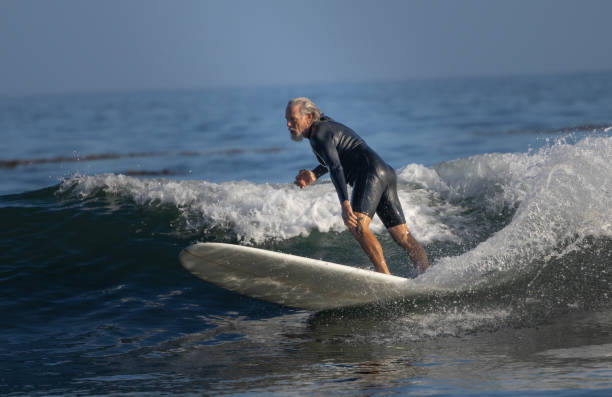
When you think of surfing, your mind probably jumps to carving a spray-laden bottom turn or getting shacked on a flawless, glassy day. But that magic moment is only possible after hours of paddling. Paddling is the true engine of a surfer. It carries you past the foam, into the lineup, and onto the wave. It also builds the fire in your shoulders and the iron in your core that powers every pop-up and pump. If you’re serious about mastering the waves, you need to treat paddling not as a chore, but as the most important part of your surf fitness. That means training your body to move through the water with strength, rhythm, and endurance.
Most surfers mistakenly believe that paddle power comes solely from the arms. You feel the burn in your lats and biceps, so you assume you just need stronger arms. But the real drive starts in your core. Every stroke is a rotation. As your hand reaches forward, your shoulder turns, your obliques fire, and your hips stay anchored. That rotational chain is what connects your upper body to the board. A weak core means wasted energy and a shaky platform. A strong core gives you a stable base to pull from. Think of your body as a spring. Your arms are the tips, but your torso is the coil. Spend time on plank holds, rotational twists, and deadbugs. These exercises mimic the paddling position and build the stabilizing muscles that keep your board gliding true.
Your back is another crucial piece of the paddle puzzle. The lats, rhomboids, and rear deltoids are what actually pull the water back. To build those muscles, you need explosive pulling strength and plenty of endurance. On the water, that means paddling sprints. Do twenty hard strokes, rest for ten seconds, then repeat. This simulates the effort of racing a friend for a set wave. On land, pull-ups, bent-over rows, and resistance band pulls are your best friends. Keep the reps high, around fifteen to twenty, and keep rest short. That builds the stamina you need to paddle out for hours without turning to jelly. Remember, the ocean never stops throwing currents and whitewater at you. Your back has to be ready for all of it.
Don’t neglect your legs either. While you’re paddling, your legs are steering and balancing. A strong lower body gives you a solid base, especially when you shift your weight to catch a wave or kick through a broken wave. Squats, lunges, and box jumps are excellent. You can even do glute bridges to keep your hips powerful. When you finally pop up, that leg strength explodes you onto your board. When you’re carving down the line, it pushes you through turns. So train your legs with the same passion you train your shoulders. Your paddle is only as strong as the foundation it rests on.
To dial in your paddle strength, try a circuit three days a week. Start with ten minutes of light paddling to warm up. Then do three rounds of thirty-second planks, fifteen pull-ups, twenty Russian twists, and thirty-second squat holds. Rest two minutes between rounds. Finish with stretching for your lats and hips. This routine hits all the key muscles and improves your power-to-weight ratio. You’ll notice a big difference in the water within a couple weeks. Your strokes will feel longer and more connected. Your pop-up will explode. And you won’t get blown off the wave when the set hits.
Finally, the rhythm of your paddle makes all the difference. Good surfers don’t thrash the water. They use long, smooth strokes with a steady cadence. You can practice this anywhere. Lie on the floor and simulate the stroke, engaging your core and rotating your shoulders. Breathe out as you pull, breathe in as you recover. This keeps you relaxed and efficient. And don’t forget the best training ground: the ocean. Every surf session is a paddle workout. The more time you spend in the water, the more your body adapts. So chase the stoke, hoot for your friends, and paddle until your arms sing. That paddle power is the key to unlocking your full potential in the surf.