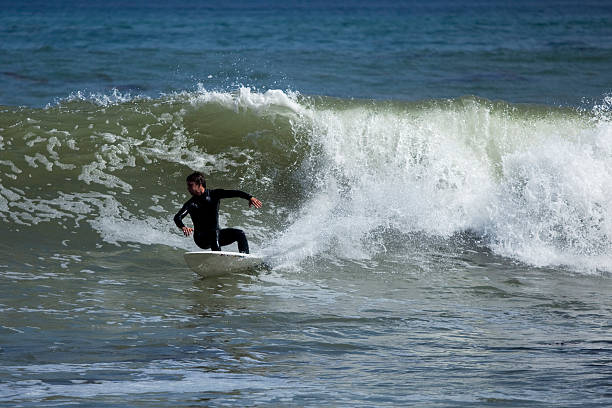
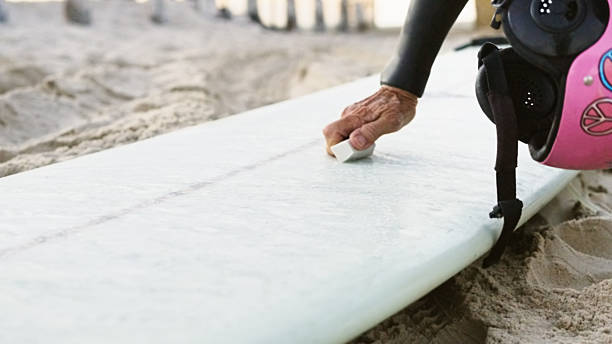
Every surfer remembers the first time they heard the word. Maybe it was muttered under someone’s breath as you paddled out for the first time, or maybe it was the harsh reality check you got when you dropped in on a local’s wave without even realizing what you had done. The term “kook” is one of the most essential pieces of surf lingo, and it carries a weight that goes far beyond simply calling someone a beginner. In the lineup, where the rules are unwritten but universally enforced, being labeled a kook is the ultimate social faux pas. But what does it really mean, and why does this single word hold so much power in the surfing world?
At its most basic level, a kook is someone who doesn’t know what they’re doing in the water. But it’s deeper than that. It’s not about being a beginner. Everyone was a beginner once, raw and unrefined, struggling to pop up on a foamie while the veterans watched from the channel. That’s not a kook. That’s a grom, a learner, or even just a newbie who shows respect. A kook, on the other hand, is defined by a combination of ignorance, entitlement, and a total lack of self-awareness. A kook paddles right into the peak without understanding the hierarchy of the lineup. A kook drops in on someone else’s wave not once, but repeatedly, because they simply do not see the surfer already gliding down the face. A kook leaves their board leashed to their ankle on the beach, drags the fin across the sand, and shows up to a solid six-foot day at a reef break with a brand new, still-stickered shortboard they can barely stand up on.
The term itself has a hazy history, like a fog rolling in over Mavericks. Some say it comes from the old sailing world, describing a clumsy sailor. Others trace it to the early days of California surf culture, when the original beach bums started seeing waves of new faces from the inland valleys flooding their home breaks. What’s certain is that the word has stuck around for decades, evolving into the most versatile piece of surf terminology in the lexicon. You can call someone a kook to their face, and if they truly are one, they likely won’t even understand the insult. You can say someone is “kooking it up,” describing a series of clumsy wipeouts and poor wave selection. You can spot a kook by their gear long before they hit the water: too much neon on the wetsuit, a board that looks like it came from a department store, and a brand-new, huge and garish surfboard bag slung over the shoulder.
But the real heart of the term lies in the unwritten codes of the surf. When you paddle out, you are joining a community that has its own laws. Respect the lineup. Don’t snake another surfer. Yield to the person deepest on the peak. The kook, in their innocence or arrogance, ignores all of this. They paddle for every wave, paddle straight through the inside during someone else’s ride, and lose their board constantly, putting everyone in danger. That is the cardinal sin. Surfing is already dangerous, with currents, reefs, and the sheer power of the ocean. A kook makes it more dangerous for everyone, treating the lineup like a swimming pool rather than a dynamic, moving ecosystem of energy and etiquette.
There is a fine line, though, between being a kook and being a learner with a good attitude. The true surfer, even on their worst day, understands that the ocean demands humility. If you paddle out and take your lumps, apologize when you mess up, and spend more time watching than speaking, you’ll earn respect. The kook has none of that. They talk loudly on the beach about how they “charged” a wave that was barely waist-high. They argue with locals about who was in the right. They are the ones who make you shake your head and mutter under your breath.
The beautiful thing about surf culture is that everyone has been a kook at least once. Maybe not the full-blown, drop-in-on-everyone kind of kook, but certainly the clumsy, wobbly, don’t-know-which-way-to-paddle version. The difference is whether you learn from it. The kook stays a kook because they never recognize their own flaws. The surfer evolves, sheds that label, and becomes part of the tribe. So if you ever hear that word thrown your way, take a look in the mirror. Check your stoke. Check your wave count. And for the love of all that is glassy and clean, stop paddling out with your leash wrapped around your fin.