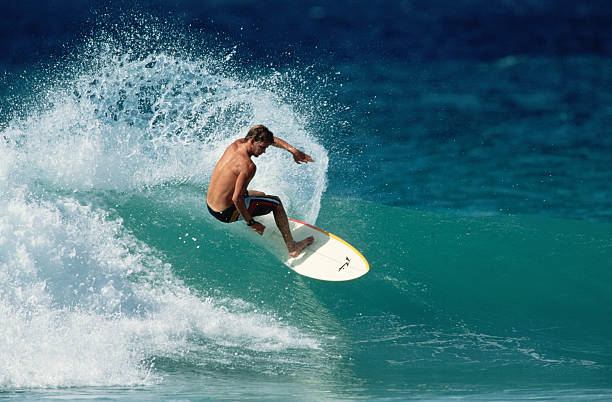
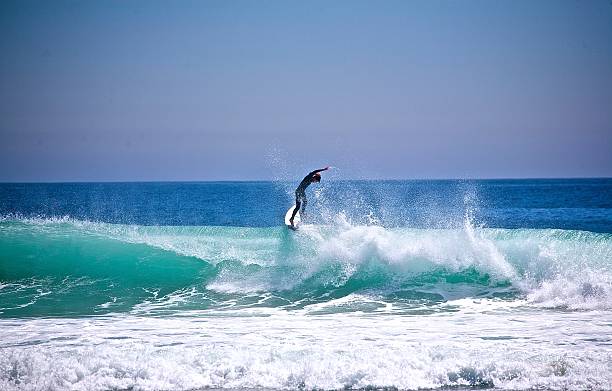
Let’s cut straight to the chase. You want to talk about surfing, you gotta start in Hawaii. This ain’t just some tropical postcard; it’s the beating heart of the sport, the hallowed ground where ancient he’e nalu (wave sliding) evolved into the global pursuit we live for today. The waves here aren’t just sets; they’re characters in surfing’s story, demanding respect and separating the dreamers from the watermen.
Forget the gentle rollers you learn on. Hawaii’s legendary breaks are a different beast. They’re born from deep ocean swells that travel thousands of miles unimpeded, slamming into volcanic reefs with raw, unadulterated power. This is where the concept of “big wave surfing” was born, not as a stunt, but as a way of life. The water is warm, the sun is hot, but the consequences are very, very real.
On the North Shore of Oahu, you’ll find the Seven Mile Miracle—a stretch of coast that hosts a gauntlet of the most famous waves on the planet. Pipeline is the king. It’s a thick, hollow, left-hand barrel breaking over a shallow, razor-sharp reef. Getting tubed here is the ultimate prize, but the takeoff is a committed drop into a pit where the lip throws out like a freight train. It’s as beautiful as it is terrifying, and it has claimed more than its share of boards, and worse. Just down the road, Waimea Bay is the cathedral of big waves. When it’s “on,“ it’s not about the barrel; it’s about the sheer, mountainous drop. The Bay calls the shots, and when it hits 20-foot-plus, the entire surfing world watches in awe.
But it’s not all about Oahu. Over on Maui, Jaws (Pe’ahi) redefined what was possible. This is the wave that brought tow-in surfing to the mainstream, allowing surfers to be whipped into waves so massive and fast they were previously unmakeable. Watching a surfer drop down a 60-foot face at Jaws isn’t just surfing; it’s a spectacle of human audacity against nature’s raw force.
Then you’ve got the outer islands, the less-crowded gems. Kauai’s Hanalei Bay offers a more forgiving, but no less perfect, longboard paradise. The Big Island’s Banyans serves up a powerful, rippable right that reminds you that Hawaiian power is everywhere.
Surfing these waves isn’t a vacation; it’s a pilgrimage. The lifestyle here is dialed into one thing: the swell forecast. Dawn patrol is a religion. You’ll see pros, legends, and local chargers all sharing the lineup, where an unspoken hierarchy and deep respect govern the takeoff zone. Paddle out without that respect, and you’ll get a harsh lesson in “localism” faster than you can say “kook.“
Chasing these legendary waves is the core of the surfing dream. It’s the pursuit Bruce Brown captured in The Endless Summer, just with a heavier, more critical edge. You come to test yourself, to feel the energy of the ’āina (land), and to connect with the sport’s deepest roots. You might not paddle out at Pipe, but watching it from the beach, feeling the boom of the shorebreak, and breathing in the salt spray—that’s part of the journey too.
So pack your board, respect the culture, and study the charts. Hawaii’s waves are waiting. They’re legendary for a reason. They build legends, they break boards, and they’ll give you a story you’ll tell for the rest of your life. Just remember, in these waters, the ocean always has the last word.