Forget the passport. You don’t need to chase a tropical cyclone in Indonesia or brave the sharky reefs of South Africa to get your fix. The good ol’ U.S. of A. serves up a smorgasbord of waves that can satisfy any surfer’s hunger, from the sun-drenched points of California to the chilly, powerful slabs of the Northeast. This is a guide for the everyday surfer, the weekend warrior, the guy or gal just trying to connect with the ocean in their own backyard. So, let’s take a quick drive down the coastline and talk about what makes each stretch unique.
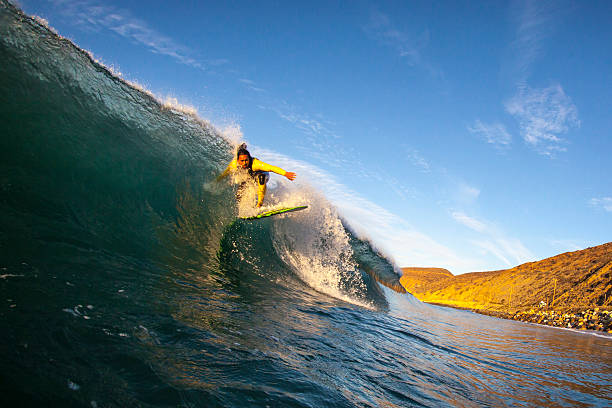
We kick it off where modern surfing planted its flag in the mainland: California. The whole state is basically a surf highway. Southern California is the postcard—warm water, palm trees, and a vibe that’s more about style and sun than survival. Spots like Malibu, with its perfect right-hand point break, are where longboarding culture was born and still thrives. It’s a scene, for sure, but catch it on a good day and you’ll understand the hype. Head south to San Diego and you’ve got beach breaks like Blacks, a heavy, powerful wave that demands respect and a good paddle fitness. It’s a different beast entirely, proving that SoCal isn’t just about nose rides. Then you cruise up the coast to Central California, where things get a little more rugged and the water a touch colder. Santa Cruz is the heart of it, with the iconic Steamer Lane offering a view from the cliffs that’s as good as the ride. This is where the West Coast’s soul-surfer mentality mixes with high-performance surfing.
Now, point your board east. The Gulf Coast might not be on every surf mag’s cover, but don’t sleep on it. When a hurricane or a strong low-pressure system spins up in the Gulf of Mexico, places like the Texas Gulf Coast or Florida’s Panhandle can light up with clean, fun waves. It’s fickle, for sure, but when it’s on, it’s a party in the water with a super friendly crowd. It’s a reminder that stoke isn’t measured by wave height alone.
But for a real change of pace, you gotta talk about the East Coast proper. This is where surfing gets gritty. From the Outer Banks of North Carolina up through New Jersey, Long Island, and Rhode Island, this is a world of sandbars, nor’easters, and cold water. The waves here are often faster, hollower, and less predictable than their Pacific cousins. A spot like The Cove in Rhode Island or Montauk, New York, on a good fall swell, offers a rush that’s hard to beat. You’ll be suiting up in a 5mm wetsuit, booties, and a hood, but the payoff is empty lineups and incredibly powerful waves shaped by the continental shelf. It’s a purist’s game out here.
And we can’t forget the outliers—the Great Lakes. Yeah, you read that right. When the conditions align, Lake Michigan and Lake Superior can produce legit, surfable waves. It’s a bizarre and beautiful experience, surfing a freshwater wave with a city skyline or pine forest as your backdrop. It’s the ultimate proof that if there’s wind and a fetch of water, a surfer will find a way.
The beauty of surfing this country coast to coast isn’t just about the different breaks; it’s about the whole journey. It’s the taco shack next to the SoCal break, the crab shacks near the Outer Banks, the post-surf dive bar in a New England fishing town. It’s understanding that the stoke is the same everywhere—that moment of glide, of connection—but the flavor of the experience changes with every coastline. So, load up the wagon, check the swell forecasts, and get exploring. Your own endless summer is waiting, no airline ticket required. Just drive.