There’s a moment that every surfer chases, sometimes for years, sometimes for a lifetime, and it happens in the blink of an eye and the breath of a wave. You take off on a wave that looks like it’s about to unload, you feel the draw of the tide pulling at your fins, and then you make the drop, bottom turn like your life depends on it, and suddenly the whole ocean is curling over you. The sky disappears. The noise goes from the roar of whitewater to a weird, hollow hiss. You’re inside the barrel. The green room. The spit of the sea. And for a few sacred seconds, you’re not on the ocean—you’re inside it, wrapped in a moving cave of pure energy.
Getting barreled isn’t just about getting deep. It’s about reading the whole canvas of the wave from the moment you paddle in. The best barrel riders, the ones who make it look effortless, they don’t just react. They’re already in position before the wave even pitches. They’re watching the curve of the swell, the way the wind feathers the lip, the angle of the bank, the bounce of the tide. The wave gives you signs. If the face is fat and mushy, forget it—the barrel is just going to close out like a door slamming. But if you see that little shadow forming on the inside, that dark crescent where the water is getting sucked up and overhead, then you know the wave is breathing. It’s telling you to commit.
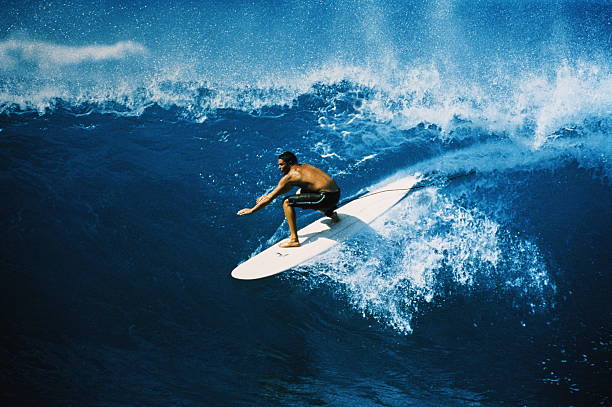
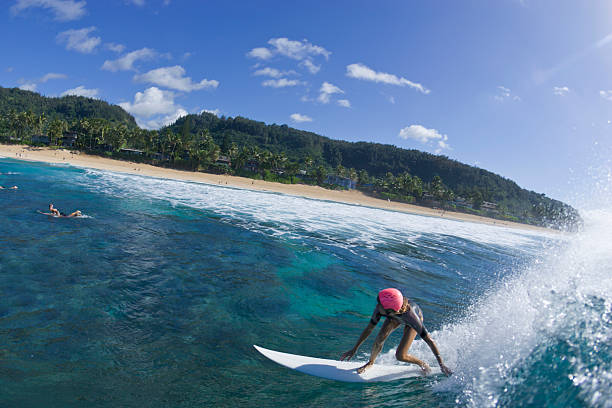
The bottom turn is the key to the whole thing. You can’t just paddle in and hope. You have to carve off the bottom with enough speed and angle to shoot you up and under the pitching lip. Too flat and you’ll blow the section, too steep and you’ll eat it over the falls. It’s a feel thing, like knowing exactly when to pump a skateboard to keep the speed alive. You want to come off that bottom turn with your rail locked, your eyes looking all the way down the line to where you want to exit, and your body coiled, ready to tuck. Then comes the magic moment when the lip throws over your head and you tuck. Chin to chest, knees bent deep, back arm trailing, grabbing rail or reaching up to touch the smooth, glassy ceiling of the wave. Time slows down.
Inside the barrel, everything changes. The sound is the first thing that hits you—a kind of pressurized silence, like being under a giant glass bell. The light filters through the back of the wave, making everything glow in those unreal shades of emerald and aquamarine. You can hear the hiss of the hissing backwash, the rumble of the impact zone behind you, but it all feels muted, as if the wave has put a blanket over the world. Your board hums and vibrates as it skims across the slick, glassy water. You’re not thinking about technique anymore. You’re not thinking about the crowd or your last failed session. There’s just the line, the pocket, and the tiny spot of sunlight at the end of the tunnel where you know you have to make it out.
The exit is the thing that separates the legends from the guys who just get a backstage pass. Some barrels just peter out, turning into a mushy inside section that spits you out like a watermelon seed. But the best ones—the spitting barrels—they have a definite end. A glassy, round door that you have to thread through right as the wave is closing. You feel the wave start to compress, the walls come closer together, and if you’ve done everything right, you pop out clean with a little spray, like a champagne cork. And if you’ve done it wrong, the lip catches you on the shoulder, or the whole thing just detonates on your head, sending you into the washing machine for the long hold-down that every surfer knows too well.
You can’t force a barrel. You can only ask nicely. That’s the vibe of it. The ocean decides if you’re worthy. Some days the waves are firing and every set has a hollow section. Other days the surf is fat and sloppy, and there’s just no tube to be found. That’s why barrel riding feels so addictive—it’s rare, it’s fleeting, and it’s totally outside your control. You just show up, paddle out, and try to be in the right place at the right moment. When the ocean gives you a good one, when you come flying out of the green room with a hoot that you didn’t even know you had in you, you realize why we all put ourselves through the hassles of dawn patrols, crowded lineups, and endless hold-downs. There is no drug on earth that compares to the pure, undiluted stoke of pulling into a well-worked barrel and coming out the other side. For that one moment, you weren’t just surfing a wave. You were riding the wave’s heart. And that kind of forever stays with you, salted into your soul, drawing you back to the lineup every single time the swell turns on.