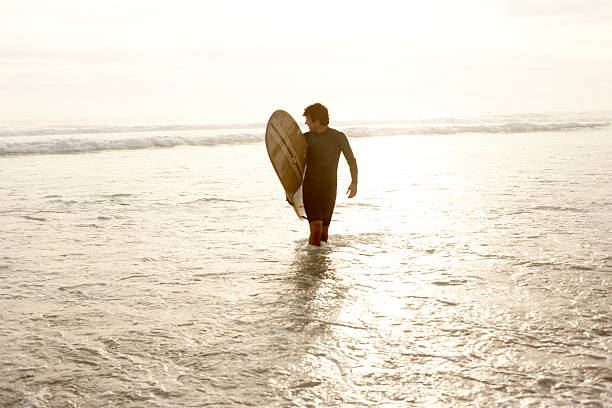
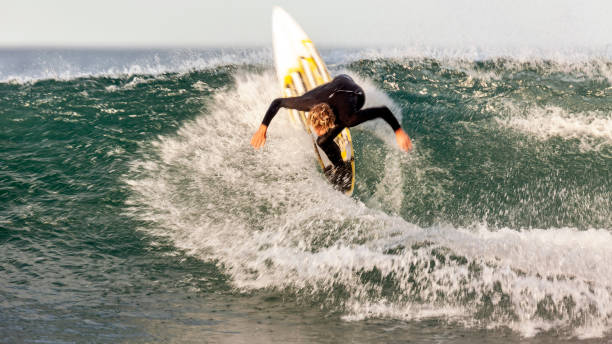
There is something sacred about the drive. The wax smells like hope, the boards rattle against each other in the truck bed, and the only thing that really matters is the swell chart on your phone. Most surfers fixate on the extremes—the perfect points of California, the hurricane juice of the East Coast. But the real soul of American surfing lives in the in-between spots, the sandbars that only fire twice a year, the jetties nobody photographs, the beach breaks where you might sit alone for two hours before a set rolls in that makes every flat day worth it. From the foggy cranberries of New England to the sun-baked points of Southern California, the United States is a tapestry of wave-riding diversity that demands respect, not just Instagram glory.
Drop a pin on the map of the Pacific Northwest and you will find a breed of surfer that wears a full-suit like armor. The water up there is cold enough to kill you if you are careless, but the waves at spots like Westport or Oswald West State Park carry a raw, oceanic power that the warmer climates can only dream of. These are not friendly waves. They jack up fast from deep water, pitch over shallow sandbars, and send you rag-dolling into a washing machine of whitewater. But the locals there understand something fundamental: the ocean does not owe you anything. You pay for your waves with shivers, with long paddles, with early mornings when the rain feels like needles on your face. And when you earn one, when you drop into a steep, hollow Oregon bowl and make the exit, the feeling is singular. It is not a party wave. It is a conversation with something ancient.
Slide down the coast to California and the game changes entirely. The point breaks of Santa Cruz, Malibu, and San Onofre are cathedrals of surf history. You can paddle out at Steamer Lane and feel the ghosts of Hoppy Swartz and Mickey Dora watching your every turn. The lineup etiquette is strict, the crowds are thick, and localism is not a myth. But here is the secret: California is not just the famous spots. The state is over a thousand miles of coastline, and most of it is riddled with forgettable beach breaks that can, on the right tide with the right swell angle, offer perfection. There is a particular feeling at dawn patrol when the marine layer burns off and the offshore wind begins to groom a chest-high peak that nobody else is sitting on. That is the real California. Not the lineups you see in surf films, but the empty peaks where you find your own rhythm.
Now cross the country to the East Coast and you enter a different kind of religion. East Coast surfers are the most resilient breed of wave riders on the planet. They deal with wind chop, short-period swell, shifty sandbars, and the constant threat of jellyfish and sharks. But when a hurricane sends a pulse of groundswell up the seaboard, the East Coast can produce waves of world-class quality. Spots like Cocoa Beach in Florida, the Outer Banks of North Carolina, and Montauk in New York are not just beach breaks. They are proving grounds. The best East Coast surfers have a backhand attack that rivals anyone from Hawaii, because they have spent years learning to extract power from waves that seem to have none. There is an honesty to surfing the East Coast. You cannot hide behind a perfect point break. You have to read the water, anticipate the closeout, and maximize every second of a fifty-yard ride.
The most overlooked coast is the Gulf of Mexico. Texas, Alabama, Mississippi, the Florida Panhandle. These are not states that come to mind when you think of epic surfing, but the locals know the truth. Matagorda Island, South Padre Island, and the forgotten jetties of Alabama can serve up clean, hollow peaks when the wind cooperates. The water is warm, the vibes are forgiving, and the lineup is a fraction of the size you would see in California or New York. There is a raw, frontier energy to Gulf surfing. You are not riding the legacy of a famous spot. You are carving your own story into a wave that might not even have a name.
The real beauty of surfing the United States is not the consistency. It is the discovery. It is pulling off the highway at a random exit, spotting a sandbar that looks fun, and scoring a session that has nothing to do with a surf report. Every coast has its personality, its dangers, its rewards. The best way to experience it all is not to chase the famous waves but to surrender to the journey. Pack the board, fill the tank, and let the swell be your compass. The endless summer is not a season. It is a mindset.