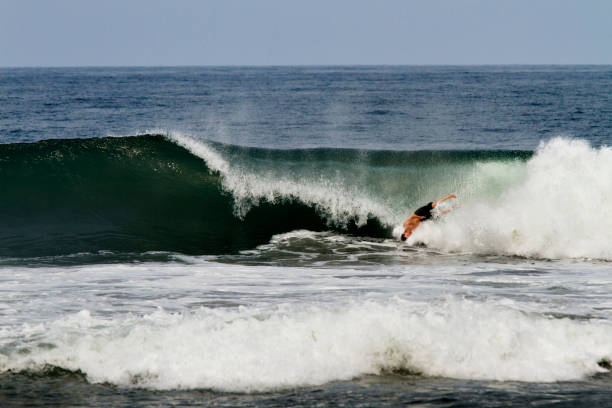
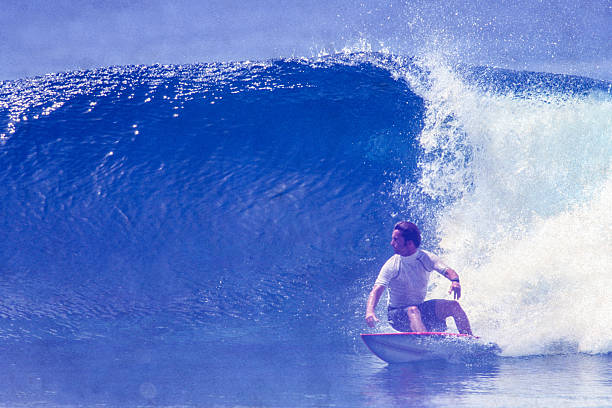
When you paddle out at a spot that earns the title of truly gnarly, you feel it in your guts long before you see the sets marching in. The word gnarly has been stretched and bent like a soft top in a parking lot wind, used to describe everything from a radical turn to a burrito that’s too spicy for the average soul. But in the real world of surfing, gnarly isn’t just an adjective. It’s a state of being, a threshold that separates the casual session from the raw, unfiltered conversation with the ocean’s darkest moods. It’s when the wave holds more power than you have courage, and you decide to paddle anyway.
The gnarly wave doesn’t ask for your opinion. It makes its own rules. Think of a heavy reef pass like Teahupo’o or the hollow winter dredge at Pipe, or even a deep-water slab in the middle of nowhere that only breathes when the swell angle is perfect and the wind is off. That wave is gnarly because it carries consequence. It’s not about the height of the face, though that’s certainly part of it. It’s about the thickness, the raw tonnage, and the location of the impact zone. A gnarly wave has a bottom that’s sharp and close, a lip that throws with malicious intent, and a lineup that humbles even the most seasoned charger. You don’t surf a gnarly wave. You survive it, or you don’t.
The psychology of dropping into something gnarly is a trip in itself. There’s a moment, maybe a split second, where your brain flickers through every option. You could pull back. You could wave off. The wave keeps moving, and your body, which knows fear better than your mind does, starts to shake. That tremor is the good stuff. It’s the signal that you’ve stepped past the familiar and into the extreme. The drop is the longest four seconds of your life. The face steepens, the lip starts to pitch, and you are committed. Your fins might skip, your eyes might go wide, but your soul is locked in. That is the gnarly moment. It’s raw, it’s real, and it’s why some of us keep paddling back out after a beating.
Getting worked in gnarly conditions is a rite of passage. A hold-down at a heavy slab teaches you things that no book, no video, and no coaching session can ever convey. You learn about air, about being patient, about the exact amount of energy you need to save for the surface. You learn that your core is stronger than you thought, and that the ocean has a long memory. It will hold you down for what feels like an eternity, and when you finally come up, gasping and dizzy, you are reborn. That is the gnarly cycle. You get humbled, you get scared, and then you get stoked. The stoke is different from the giddy joy of a playful point break. It’s a quiet, earned satisfaction. It’s the knowledge that you faced the ditch and came out the other side, if only just.
The culture around gnarly surfing is not about ego, despite what the crowd on the beach might think. It’s about respect. The most respected surfers in the gnarly realm are the ones who know when to say no. They understand the tide, the bathymetry, and the limits of their own breath. They don’t take unnecessary risks for a photo or a clout. They take calculated risks for a feeling that is indescribable to anyone who hasn’t felt the full force of a freight train of water landing on their back. The true gnarly charger is humble, often quiet, and always watching. They know that the ocean can kill you just as easily as it can give you the best wave of your life. That duality is what keeps the lineup healthy and honest.
Equipment matters, of course. A gnarly session calls for a board that is thick enough to hold into the face but refined enough to make the drop. Too much foam and you fight the wave. Too little and you pearl straight into the abyss. Fins are crucial. A big, upright template gives you the drive to escape the closing lip. A quad setup can give you speed, but a thruster offers the control needed to pull into the barrel and stay there. Wetsuits are part of the armor, especially in cold water slabs. You need flexibility, but you also need protection from the reef. A rash guard isn’t going to cut it when the coral is waiting with open arms. It’s all part of the preparation, the ritual that settles the mind before you push off the sand.
The aftermath of a gnarly session is as important as the surfing itself. You sit on the beach, hands shaking, muscles spent, and you don’t need to say a word to the friends next to you. They were there. They saw the same sets. They heard the same roar of the lip. The bond that forms in those extreme conditions is thicker than any friendship built in a calm channel. You share the silence, the sand in your hair, and the raw gratitude for still being above the water. That is the gnarly payoff. It’s not about the wave. It’s about the journey into the unknown and the return home. And that, my friend, is as endless a summer as you can get.