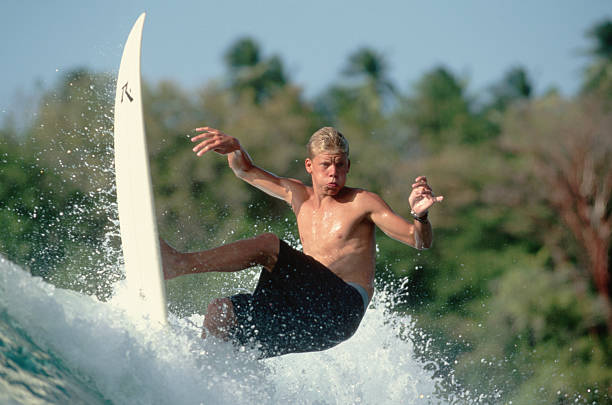
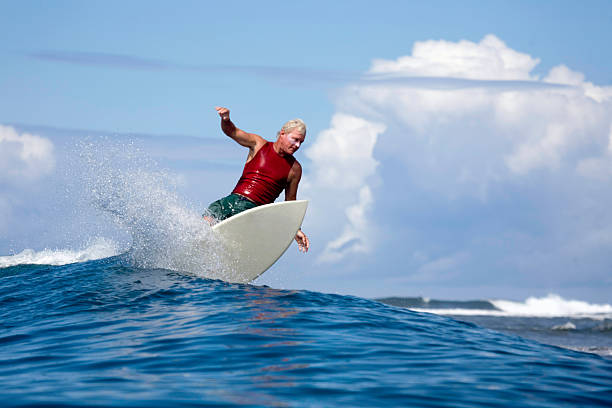
There’s a certain magic that happens when a low-pressure system churns up the Atlantic, sending lines of groundswell marching toward a forgotten pier. It feels different than the Pacific—grittier, more earned, a little less predictable. Out here, on the East Coast, we don’t have the luxury of endless point breaks peeling perfectly into the sunset. We have sandbars that shift overnight, onshore winds that howl straight into your face, and water that will make your extremities go numb before you’ve even paddled past the shorebreak. But for those of us who call these shores home, it’s the only kind of surf we want.
I’ve spent more dawn patrols than I can count staring at a grey Atlantic horizon, waiting for a set that might never come. When it does, it’s usually a shoulder-high peak that closes out faster than you can blink. But every once in a while, the stars align. The offshore winds groom the face to a mirror finish. The tide pushes in at just the right moment. And suddenly, you’re sliding down a wave that feels like it has no business being on this side of the country. That’s the addiction. That’s why we keep coming back.
The contrast between our coasts runs deep. Out on the West Coast, surfers grow up with a different kind of rhythm. The swell charts look clean, the buoys read solid, and the wind almost always seems to cooperate. When you paddle out at a spot like Malibu or Trestles, the waves have structure. They unfold with a grace that lets you map out your bottom turn three moves ahead. The lineup is crowded, sure, but there’s a certain order to the chaos. It feels polished, almost practiced. That’s not a knock—it’s just a different world. Out there, surfing is part of the culture, woven into the fabric of daily life. You see guys driving to work with boards on the roof, girls taking a quick dawn session before class, and seasoned veterans with salt-bleached hair reading the ocean like a sacred text.
But back here on the East, we’ve got something else. We’ve got the hurricane swell. When a storm spins up off the Bahamas, we paddle out with a mixture of fear and stoke. The waves are heavy, powerful, and raw. They don’t care about your style points. You either make the drop or you eat sand. There’s no backup channel to swim to. You have to fight through a relentless shorebreak just to reach the lineup, and by the time you’re out there, your arms are already burning. But when you paddle into a wave and feel that deep, rumbling power underneath you, nothing else matters. It’s you against the ocean, pure and simple.
The culture reflects that grit. Back east, we keep our sessions tight and our circles small. We don’t have the sprawling surf industry that props up Californian towns. Instead, we have local board shapers working out of dusty garages, aging lifeguards sharing stories between rescues, and a brotherhood of surfers who respect the struggle. If you paddle out at a spot like the Outer Banks or the Jersey Shore, you better bring your patience and your respect. The lineup is earned, not given. But if you put in the time, you’ll find a community that watches out for each other, that shares waves when the sets are firing, that celebrates the stoke without the pretense.
I remember one glassy morning in Lahinch—wait, that’s Ireland. Let me keep it stateside. One morning at a sandbar on the South Shore of Long Island, the stars just aligned. The swell was chest-high, the winds turned offshore right at sunrise, and the sandbar had formed a perfect peak. There were maybe six of us out there, total strangers, but we fell into a rhythm. Each wave was claimed by whoever was deepest, and when you kicked out, you got a nod of respect. It felt like that endless summer vibe, the same one Bruce Brown captured decades ago. That day, the coast didn’t matter. It was just us and the waves.
Whether you’re trimming across a California point break or battling an East Coast hurricane swell, we’re all chasing the same feeling. The salt in our hair, the burn in our shoulders, the moment of weightlessness as we drop into a green face. The ocean is a serious instructor, but it’s also a generous one. It gives back exactly what you put in. So get out there. Find your spot. Let the current teach you something new. The waves are waiting, and the stoke is real.