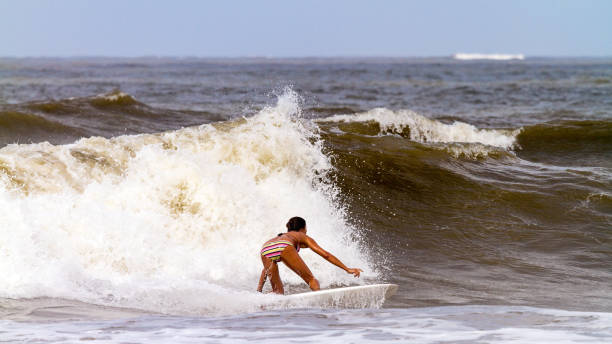
The sun hasn’t even blinked over the Koʻolau range yet, but the air already smells like salt, wet sand, and the faintest hint of plumeria from somebody’s backyard garden. You roll out of a dusty Jeep that’s seen more sandy floors than a beach shack, bare feet hitting the cool pavement of Kam Highway. This is the moment. Not the wave itself, but the walk down to the water at first light. Out here, on the North Shore of Oʻahu, the waves aren’t just something you paddle into—they’re something you offer yourself to. It’s a trade. Aloha for respect, humility for a pulse-pounding drop. And if you come with the wrong energy, believe me, the ocean will let you know.
People hear “legendary waves” and they think of Pipeline’s barrel, the kind that swallows you whole, or Waimea Bay’s bone-crushing thirty-foot faces. Sure, those are the headliners, but the real legend of Hawaii isn’t just the size of the swell. It’s the soul of the lineup. You can’t buy your way into that. You can’t log a certain number of Instagram posts or flash a pro jersey. The local crew, the watermen who have been sitting in that same spot since they were kids on foam boards, they watch. They watch how you paddle, how you handle yourself when a set swings wide, how much stinkeye you throw or don’t throw. That unspoken communication in the lineup is what separates a hollow session from a full-on humble pie.
Now, there’s a word that floats around every surf town, but on the North Shore it carries a heavy mana—hoʻokipa. Hospitality. It sounds simple, but it cuts deep. When you paddle out at a place like Rocky Point or Off the Wall, you’re not just entering the ocean. You’re entering somebody’s childhood playground, their home break, their living room. And you wouldn’t walk into a stranger’s house and start rearranging the furniture, right? So you sit a little wide. You watch. You let the local guys take the first wave of the morning. You smile. You nod. And more often than not, somebody paddles over and gives you a tip—“take the second wave of the set, the first one always jacks up weird on this reef.” That’s aloha in action.
The magical thing about chasing waves here is that the water temperature is so warm you forget you’re even wearing a rashguard. You float like a cork in a bathtub. But never mistake that warmth for softness. Hawaii’s waves pack a wallop. The reef is shallow, sharp, and unforgiving. I’ve seen guys get rag-dolled on a wave that looked clean from the beach, only to pop up with reef rash that looks like somebody took a cheese grater to their back. You learn real quick that the ocean doesn’t care about your ego. It’s a pure mirror. If you’re tense, it throws you. If you’re patient, it opens up.
One of the best feelings in the world happens late afternoon at a break like Sunset Beach. The trade winds kick up a little chop, the sun turns golden, and the whole lineup gets a second wind. Everybody’s been sitting for hours. Arms are tired. Eyes are salty. But then a set rolls in that lines up perfectly, and suddenly nobody cares about fatigue. You paddle hard, feel that deep thrum of energy lift your board, and then you’re flying. For those few seconds, it’s just you, the green face of the wave, and the echo of the reef below. That’s the endless summer right there. It’s not a season on a calendar. It’s a feeling that hooks you and never lets go.
And here’s the thing about travel and lifestyle around these legendary waves. You can’t rush it. You can’t schedule a perfect session like a flight connection. You gotta live in the rhythm. Early mornings for glassy conditions, long afternoons for trading waves with strangers who become friends, evenings eating plate lunches from a food truck while watching the sunset turn the ocean into lava. Every day is different. The swell charts lie. The forecast shifts. But the spirit of the place stays steady. It says, “Be humble. Be grateful. Share the stoke.”
So whether you’re a grom renting a board for the first time or a surf veteran who’s seen every break from Tavarua to Jeffreys Bay, the North Shore will remind you why you started this whole obsession in the first place. It’s not about the size of the wave. It’s about the way the water feels when you’re in rhythm with it. It’s about the nod from a local who respects your hustle. It’s about the long walk back to the car with sand caked in your hair and a smile you can’t wipe off. That’s the real legendary wave.