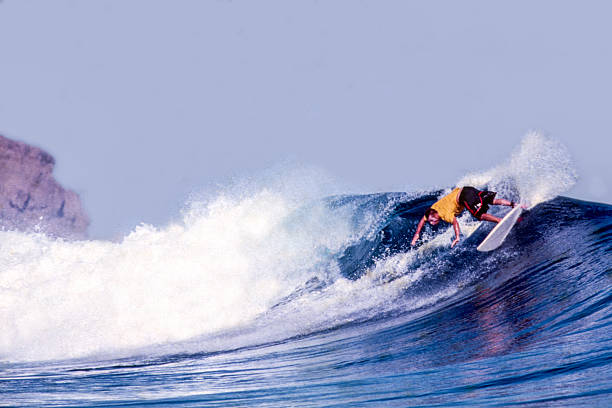
When you paddle out at first light and the horizon is stacked with lines of moving energy, your eyes scan for one thing more than any other: the shape. Sure, you check the size, the wind, the tide, but what really gets a surfer’s heart hammering is when those lines start to reveal a wall. We talk about walls all the time in the surf lingo, and for good reason. A wave without a proper wall is like a bar without a cold beer – something fundamental is missing. The wall is the wave’s backbone, the vertical face that gives you something to lean into, to draw off, to carve across with your whole soul. It’s the difference between a bumpy ride and an epic session that stays in your memory like a dream you can still feel in your muscles the next morning.
You hear old salts and groms alike tossing around gnarly terms to capture that feeling. When a wave offers up a clean, steep wall, you might hear someone holler “It’s shacking!” as they drop in. That’s the ultimate compliment. A wall that allows you to tuck into the barrel, to feel the compression of the ocean’s energy folding over your head, is the holy grail of surfing. But the wall isn’t just about getting barreled. It’s about the endless possibilities it presents. A fast, racing wall that lets you make long, drawn-out cutbacks is just as sweet as a pitching wall that forces you to commit to the cover-up. Each type of wall has its own name, its own character, its own promise.
When the swell is on the money and the bathymetry lines up, you might get a wall that stands up vertical and steep right off the takeoff. That’s what we call a “pitching” wall. It throws you down the face and asks you to make a decision instantly: drive down the line, or eat a serious beating. There’s no hesitation on a pitching wall. Your body knows what to do before your brain catches up. Your board finds the rail, your back foot loads up, and you’re flying down that wall with the spray blowing off your fins. It’s pure instinct, a conversation between you and the moving water that has no words.
Then there are the walls that offer up different sections. You might get a long, mellow wall that lets you do a few turns, then suddenly it steepens up and starts wedging with the backwash. That’s when you have to adjust your line, maybe put in a pump to get some speed for the upcoming bowl. A good surfer reads the wall like a musician reads a score. They know where the beat is going to drop, where the melody changes, where the crescendo hits. The wall tells you everything if you know how to listen.
Beyond the physical act of riding, the concept of the wall speaks to something deeper about the surfing life. We chase the endless summer not just for the warm water and good weather, but for those perfect walls that seem to go on forever. The wall is purity in motion. It’s a clean slice of power that hasn’t been chopped up by wind or jumbled by a shifting swell. When you find a spot with a good wall, you don’t leave. You stay until your arms ache and your legs shake. You stay because that wall keeps offering you another chance to get it right, to make that one perfect turn that feels like you’re touching the source of everything.
The wall also reminds us that surfing is about balance. You can’t overpower a wall. You can’t bully it. You have to work with it, understand its rhythm. A wall that is too fat and mushy won’t allow you to do much. A wall that is too steep and hollow might close out on you before you can make a move. The perfect wall is like Goldilocks – not too fast, not too slow, just right. And when you find it, you know in your bones that this is why you paddle out, why you travel to distant coasts, why you spend hours waxing your board and checking surf cams. Because a proper wall is a gift from the ocean, and it asks nothing of you except your full attention and your willingness to ride it with style.
So next time you’re sitting out in the lineup and you see a set approaching, watch how it rises up. Look at the shape of that face. Is it offering you a wall you can trust? Can you see the line you want to draw across it? If you can, then you know you’re in for a treat. Take the drop, feel the bottom of your board connect with that steep, clean energy, and go. Commit to the wall, all the way to the end, and let the ocean carry you home.