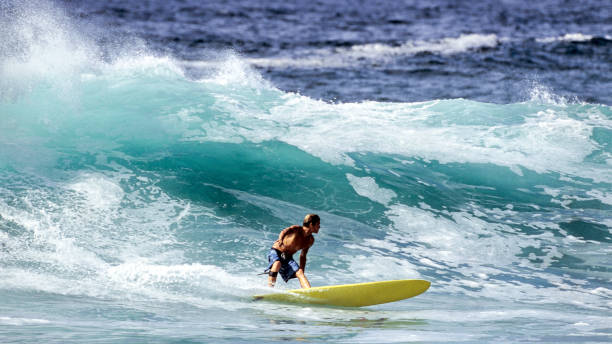
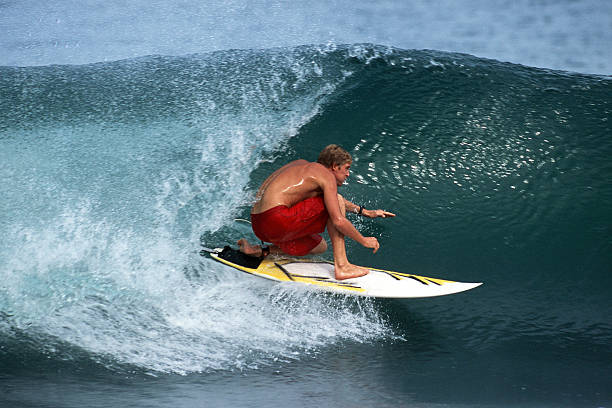
If you paddle out on a modern shortboard and feel that first bottom turn hook up, that spray shearing off the top rail like a freshwater hose, you’re riding a ghost. You’re riding the ghost of a hundred surfers from the late 1960s who got sick of the log and dared to shape something faster, looser, and meaner. The shortboard revolution wasn’t just about chopping a few feet off the nose. It was about a complete rewrite of how a board touches the wave, and at the center of that rewrite sat a bottom shape that looked simple but changed everything: the V-bottom.
Before the revolution, everyone was trimming. Longboards were these big, heavy balsa and foam sleds, twelve feet of pure glide, and the game was all about getting to the nose, hanging ten, and riding down the line with your toes over the edge. It was beautiful, sure, but it was also straight. You didn’t carve so much as you leaned. You didn’t snap, you just wrapped. The wave was a runway, not a playground. Then a few restless souls, especially Bob McTavish in Australia and George Greenough on the California coast, started looking at the water differently. Greenough was riding these tiny kneeboards, all tucked down low, with a deep fin that looked like a dolphin’s dorsal, and he was doing things on a wave that nobody thought possible. He was climbing, dropping, and hitting sections with a kind of explosive speed that made the longboard crowd scratch their heads.
The big secret wasn’t just the length. It was the bottom. A flat-bottomed longboard generates lift. It wants to plane, to stay on top of the water, to go straight and stable. But for turning, a flat bottom is like trying to pivot a slab of plywood on a wet lawn. The suction is enormous. The water grabs the whole surface and holds on. McTavish and Greenough realized that if you put a V shape into the bottom, running from the nose down through the tail, you change the water flow completely. Instead of one big flat panel gripping the ocean, you get two angled planes. Water sheds off the center spine and releases the board. That release let a surfer break the board loose, slide the tail, and pivot around the center fin like a fulcrum. All of a sudden, you could turn from the back foot, bury the rail, and carve a full arc back into the pocket with zero effort. It felt like the ocean suddenly had a clutch.
That little V changed the whole vibe. Surfers started riding more upright, with their back foot planted over the fin, their front foot lighter. They didn’t need to run to the nose anymore. They could stay in the power zone, drive off the bottom, hit the lip, and come back down with speed. The sport shifted from standing and gliding to pumping and attacking. The terms we still use today — bottom turn, top turn, cutback, off-the-lip — all got their real workout in that era because the boards finally allowed them. The V-bottom was the first bottom contour that let you go rail to rail without fighting the board tooth and nail.
But the V didn’t work alone. It came with other changes that made the shortboard revolution a complete package. The longboard’s thick rounded rails became thinner, harder rails near the tail, giving the surfer a sharper edge to bite into the wave. The rocker increased, especially in the nose and tail, so the board could fit into the curve of a steep face without pearling. The fin got bigger and more upright, then later the single fin became twin fins, and then thrusters, but back then that lone fin was a revelation. Greenough’s flex fin, in particular, acted like a spring. It would bend under load and then kick back, releasing energy that sent the board forward. Combine that with the V bottom, and you had a machine that felt alive.
People forget how much resistance there was. For a few years, the old guard scoffed. They said shortboards were unstable, ugly, and impossible to ride. They missed the glide, the early morning trim, the long noserides. But the younger crew didn’t care. They were pulling into barrels that nobody could reach on a log. They were stalling and dropping in with their back foot screaming for traction. They were doing something new: surfing with intention, not just transportation.
The V-bottom didn’t last forever. By the mid-1970s, it got refined, blended, and eventually replaced by more complex bottom contours like the concave, which gave even more lift and speed in the modern shortboard. But the V is still there, hiding in the tail of most boards, in the subtle double concaves and spiral vee, as a reminder that revolution is not about a single shape but a single idea: let the surfer be part of the wave, not just a passenger.
So next time you pump down the line and feel that board release under your feet, give a little nod to the V. It was the bottom that taught surfing how to turn, and once we learned to turn, everything else was just spray.