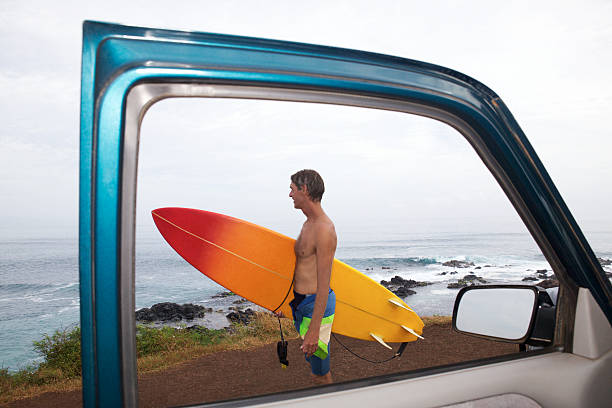
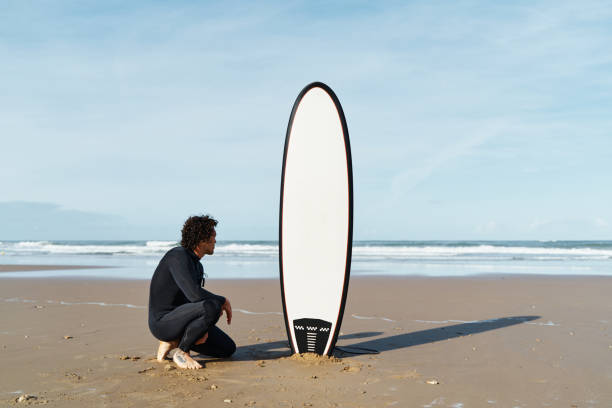
You paddle out on a frosty dawn in Northern California, and the first thing that hits you ain’t the sting of the morning air. It’s the way your suit kisses your skin. That second skin. You feel the seam work, the flex panel across your shoulders, the flush of a well-designed neckline. And you catch yourself thinking about how far we’ve come from the days when a wetsuit was just a slab of black rubber meant to keep you from hypothermia. Now, it’s the foundation of your day, your style, and your own personal statement on the water. Think about it. When you see a dude in a full-length, faded, checkerboard-patterned Hyperfreak, you know something about his vibe. When you see a lady in a muted, forest-green chest-zip with a minimalist logo, you get a read on her approach to the lineup. The wetsuit isn’t just function; it’s the most honest piece of surf apparel you will ever own. It cannot lie.
The functional side of the wetsuit is the bedrock. It’s pure engineering meets the ocean. The early suits were clunky, cold, and restrictive. You felt like a stiff mummy trying to duck dive. But the boffins in the R&D departments at brands like Rip Curl, O’Neill, and Patagonia have turned the wetsuit into a high-performance tool. They took a block of neoprene and asked, “How do we make this bend like a spine but keep out the Atlantic’s bite?” The answer came in the form of super-stretch limestone-based neoprene, glued blind stitched seams, and internal taping systems that feel like a second layer of skin. The industry essentially learned to let you move. A good suit now allows a full, deep arch in your back for a late drop, a full rotation for a cutback, and a flexible knee pad for that deep, inside rail carve. The function is not just about warmth anymore. It’s about performance. You don’t have to fight the rubber to get into the wave; you just go. You can thank the latest wave of tech for that. You can thank the fact that some company spent a million dollars figuring out how to let your shoulder rotate without letting a single drop of water through. That’s the unsung architecture you never see, but you sure feel it when you’re holding your breath for the fourth wave of a set.
But here is where the culture kicks in. Surfing has never been about just being warm. It’s about how you look doing it. Style. It’s the car you drive, the way you wax your board, and the logo that sits on your chest. The wetsuit became a billboard for the soul. In the early days, it was all about branding. The patch. The O’Neill diamond. The Rip Curl wrist logo. It was a sign of tribe membership. You wore a certain brand because you resonated with their team riders or their home break vibe. But then, around the turn of the millennium, things got wild. The sublimation printing revolution hit the neoprene world. Suddenly, companies could print any pattern, any color, any design directly onto the rubber without it peeling off. The wetsuit stopped being a piece of gear and became a canvas of expression. You started seeing full floral patterns, Hawaiian prints on guys from New Jersey, neon stripes that screamed in the fog, and checkerboards that honored a specific era of SoCal cool. The suit became a way to tell your story without saying a word. It was gear that allowed you to stand out in a sea of black rubber, or conversely, to blend in with the mist if you chose a subtle, monochrome camo.
This interplay between style and function is the soul of the modern surf apparel company. A brand like FCS, for example, will put the same amount of tech into a simple 2mm spring suit as a 5/4 hooded winter tank. The panels are laser cut for precision. The zipper is a no-snag, high-end YKK. And the print on the chest? It’s a classic, nostalgic graphic that makes you feel like a 1970s longboarder even when you’re riding a high-performance thruster. The style is not separate from the function; it’s the proof. You are wearing a suit that works so well, you can afford to look good in it. It’s the final touch on the whole “surfer” package. You look at a dude walking down the beach with his board under his arm, wearing a full-length, ribbed slate suit with a single thin neon stripe down the leg. He looks confident. He looks connected. His gear is a sign that he respects the cold and the wave, and he’s doing it without sacrificing his personal visual flow. That’s the balance. That’s the wetsuit as a piece of art. You don’t need a board bag that costs a grand. You don’t need a quiver of custom boards. You just need that one suit that fits like a dream and looks like a story. So next time you suit up before your first paddle, take a second and feel the stretch. Look at the print. Appreciate that you are wearing a piece of equipment that is equal parts science, art, and pure, unadulterated soul.