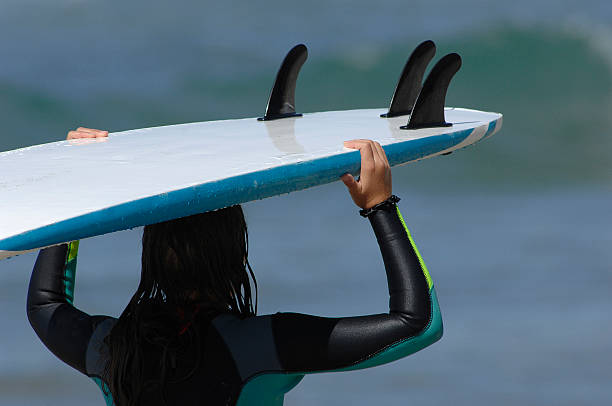
There is a certain kind of stoke that hits you when the highway opens up, the boards are strapped tight to the roof, and the only thing on the horizon is saltwater and possibility. That feeling, that restless itch to chase the next peak, is the very heartbeat of the American surfing experience. We talk a lot about perfect waves, about hollow barrels and long, peeling rights, but the real treasure of surfing in the United States is the journey itself, the raw, unscripted road trip that stitches together a patchwork of coastlines as diverse as the waves that break upon them. This isn’t about finding the single, world-class break. It’s about the soul of the in-between, the unexpected sandbar, the dawn patrol that nobody else bothered to make. It is the soul of the endless summer, coast to coast.
The East Coast gets a bad rap from the boys out west, and that is a beautiful, beautiful thing. It keeps the crowds thin, or at least thinner, and it forges a surfer who is equal parts meteorologist, oceanographer, and optimist. You cannot just show up and expect a point break to deliver. You have to read the sand, feel the tide, and understand that the Atlantic is a moody, fickle mistress that gives up her secrets only to those who are patient. A road trip up the Outer Banks is a masterclass in this. You might wake up to a flat, glassed-off ocean, a mirror reflecting the hazy sunrise, and by lunchtime, a distant depression spinning off the coast has sent a pulse of long-period swell your way. The wind shifts, the sandbars that have been holding for a week suddenly square up, and you are scratching into a waist-high wedge that throws a lip like it means it. That is the East Coast magic. It’s not the size, it’s the sincerity. It is the grind that makes the score so sweet.
Then you cross the slow, swampy hum of the Gulf Coast, where the water gets bathtub warm and the vibe slows down to a crawl. This is the land of the log, the long, drawn-out nose ride that feels like a meditation. The waves here aren’t heavy, they’re soulful, rolling in with a gentle, forgiving slope that allows you to hang your toes over the nose and watch the beach drift by. A trip to the Texas coast or the Florida Panhandle isn’t about charging closeouts. It is about the community that forms around a slow, peeling right at a place like Matanzas Inlet. It is the old-timer on a classic 9’6” who tells you the story of the hurricane swell of ’92, the guy who shares his cooler of cold drinks because the surf is too small to be territorial about. It is a lifestyle built on patience and the understanding that every wave, no matter how small, is a gift.
Of course, the Siren call of the West Coast is always there. The Pacific is a different beast entirely. It is colder, bigger, and holds a deeper, more ancient power. Driving the Pacific Coast Highway, the cliffs drop away into a churning, blue abyss, and every pullout promises a different kind of wave. You have the machine-like perfection of California’s points, places like Rincon or Malibu where the wave is a predictable, hydraulic marvel, a canvas for a high-performance shortboard. But the real journey here is about the semi-secret spots tucked between the famous ones. It’s the cove you find by scrambling down a cliff at low tide, the reef that breaks heavy and shallow only on a specific south swell. This California surf lifestyle is a paradox of accessibility and secrecy. Everyone knows about the famed beaches, but the true stoke is earned by the surfer willing to walk a little further, paddle a little harder, and read the subtle shifts in the lineup.
What ties it all together, from the gnarled, wind-whipped sandbars of Cape Hatteras to the deep aquamarine point breaks of Southern California, is the common language of the road trip. It is the smell of wet neoprene drying in the back of the van, the sound of reggae mixed with the static of a 1970s radio, the ritual of changing into a wetsuit in a parking lot while the wind whips your hair. It is the way a stranger becomes a friend when you trade waves on a forgotten peak, or how a shared meal of gas station burritos on a cliff overlooking a sunset session can taste like the finest meal in the world. This coast-to-coast journey isn’t just about surfing the water; it is about surfing the land. It is about the different sunrises and the different accents, the different ways of paddling out and the same, universal smile after catching a ride.
The best trip you will ever take is the one you haven’t planned yet. You might be chasing a hurricane swell on the East Coast or a glassy morning on the Central Coast of California. You might end up with the waves of your life, or you might end up with flat days, broken fins, and stories about the one that got away. That is the point. The surf lifestyle is not about perfection. It is about the pursuit. It is the endless search for that ghost of a wave, the one that exists only in the split second between your heart beating and your feet finding the sweet spot. It is the machine of the road and the soul of the ocean, running together, coast to coast, just waiting for you to strap on your board and go.